

April 16, 2025
You know one of the worst parts about traveling halfway across the world?
The jetlag.
ESPECIALLY when crossing the International Date Line.
The first morning Carlos and I were in Japan, we woke up around 4 am. We were 16 hours ahead now compared to back home! Of course, there wasn’t much to do this early, so we basically just had to chill in the room for a couple of hours. Though I will say, I at least had one new experience while I was in there – using the bidet.
I won’t go into detail there, but I will give tips based upon it. I was warned to research Japanese toilets before visiting, though they were pretty easy to figure out. Regardless, to make it easier for any readers, here’s a short tutorial.
While some have more buttons than others, the most important things to look for are the ones labeled “large” (大) and “small” (小) – these are for flushing, depending on the nature of your bathroom visit! You can also adjust the water temperature and spray level, and many bidets have heated seats – something which is especially nice when you’re cold in the morning. There are plenty of other options as well, but they have icons you can easily understand. To learn more, you can check out this article.
When it finally hit around 6:30, Carlos and I finally decided to venture out and explore.
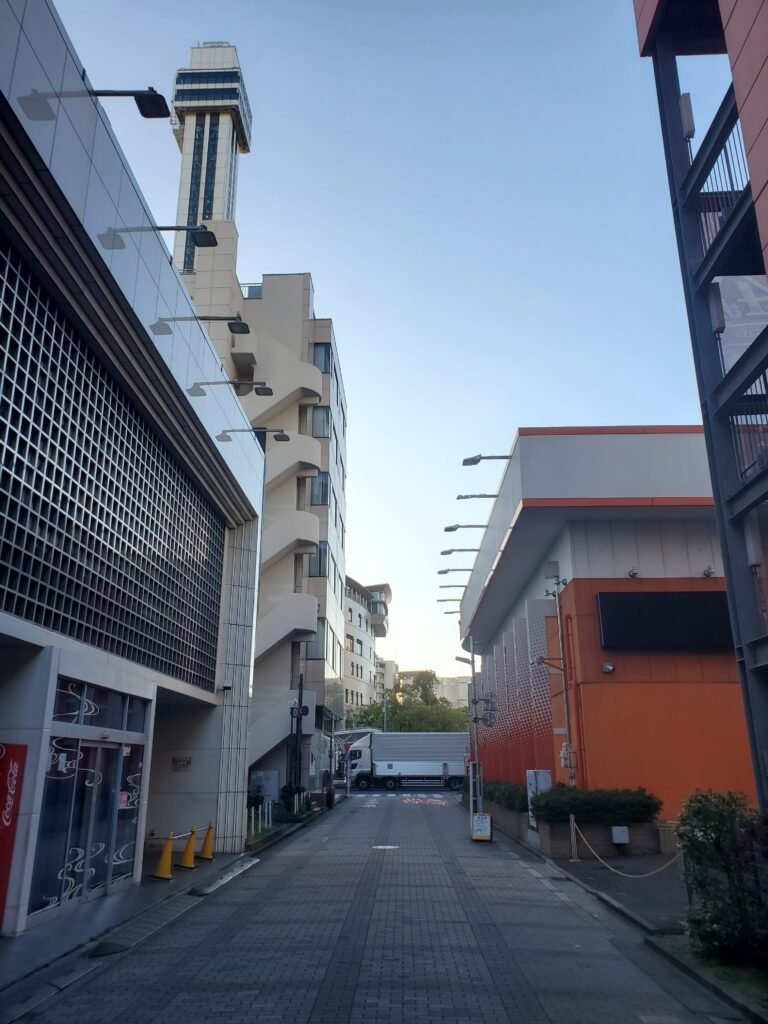
After walking a short distance, we had our first 7-Eleven experience. If you visit Japan, konbinis (Japanese for “convenience store”) will probably be something you go to quite often! We normally went to 7/11 or FamilyMart, though there are several other chains you can choose from.
For us, the konbini would often function as a “recharge station.” All of them have ATMs, so we could recharge our physical funds there. At this point we had not gotten any Japanese currency yet, so I withdrew ¥30,000 (two ¥10,000 bills and ten ¥1,000 bills, just over $200 USD at the time) and split it up between us. We could use this money to recharge our IC cards for public transportation as well – Carlos was able to check their balance on his phone.
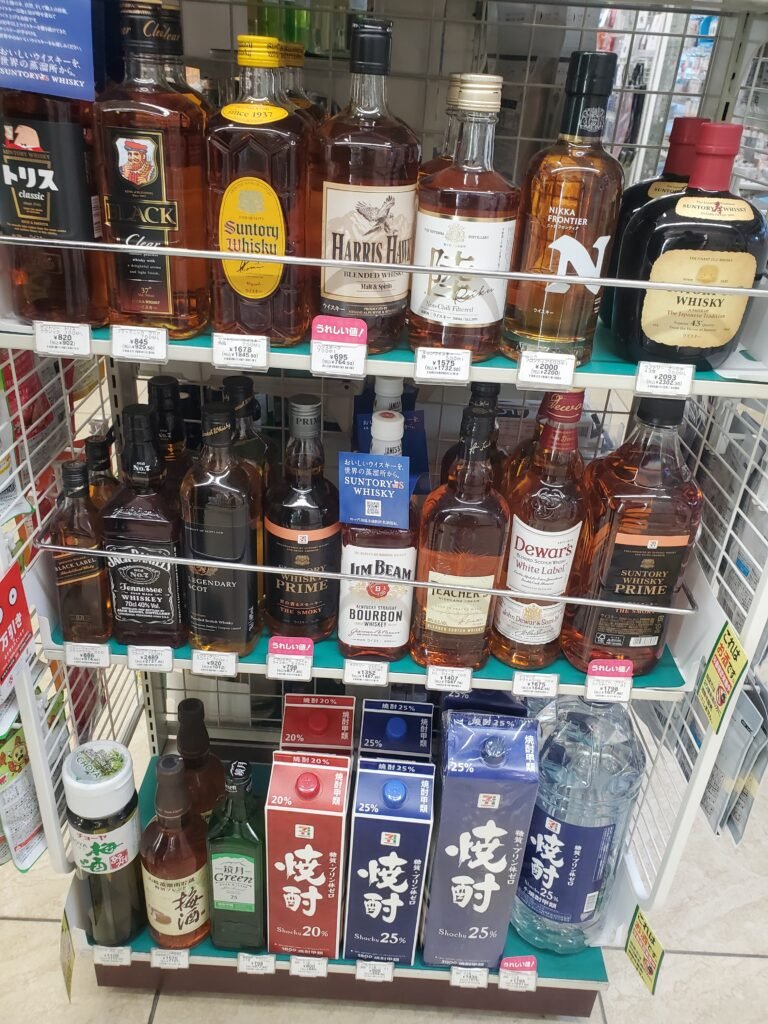
And of course, they were great places to recharge ourselves! We tried tons of different snacks throughout Japan, though we started with a small supply here. They even had a shelf of alcohol, though we did not get any!
Fun fact: I actually took Japanese for 4 years in high school, getting to an intermediate level at my best. Unfortunately I’ve lost most of it since then, but it was still pretty helpful for this trip! I got to use a little bit with the cashier, though I had to figure out how to use the cash machine.
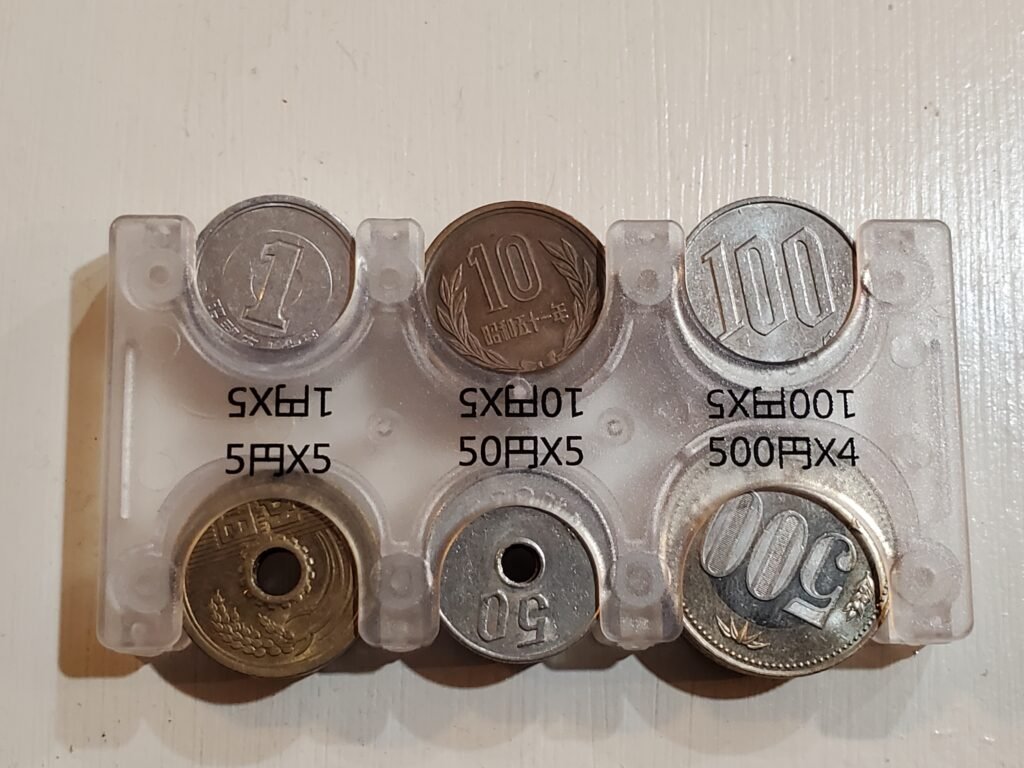
Speaking of cash, we were actually collecting Japanese coins! One of my coworkers back home gave me a couple plastic collectors which hold each type of yen coin, so it was fun to fill up over time.
As we returned with our 7/11 haul, we noticed a lot of pachinko parlors near the hotel, which might explain why it was cheap and allowed smoking. These are basically just casinos, with pachinko machines being functionally the same as slot machines – a legal loophole allows these to exist and it is a very lucrative market in Japan.
Back at the hotel, we discovered that our room had an electric kettle. That meant Carlos could try one of the Nissin instant ramen bowls he had just picked up, as he was pretty hungry by this point. It is very common for hotels to have kettles for guests, due to the popularity of tea and ramen, and we loved the convenience of it through our other stays as well! We just used the tap water from the bathroom since, like in most places across Japan, it’s perfectly safe to drink and cook with.

This ramen turned out to be surprisingly impressive for an instant meal. It came with several packets of seasonings and toppings that he added during prep, creating a flavorful broth with a noticeable kick and a variety of textures. There were slices of dehydrated meat, vegetables, tofu, dehydrated egg, and spices that rehydrated nicely, making it more than just basic noodles.
I wasn’t super hungry, so I just grabbed a Kagome berry smoothie drink I’d taken the night before from the free mini fridge in the lobby – part of that drink-a-day perk the hotel offered. I also tried one of the 7/11 snacks we’d picked up and had a couple of bites of Carlos’s ramen. It definitely hit the spot and made me appreciate just how varied and tasty even Japan’s convenience store food could be.
After this, we made the mistake of trying to head out during rush hour, not realizing how bad it would be. An important note: this is generally from about 7:30-9:30 am, so you’ll want to plan your mornings around that.
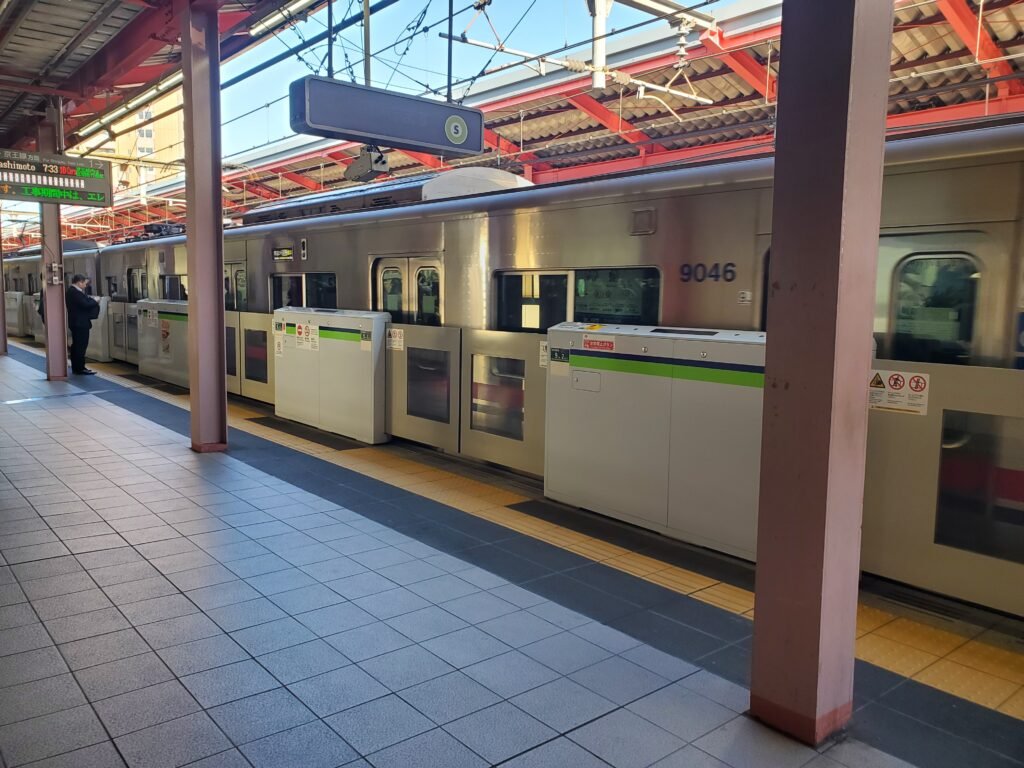
We got to the station around 8:15 a.m. but had to wait over an hour for a train that wasn’t completely packed, and finally left around 9:20-9:30. It was certainly frustrating, but we really didn’t want to be squeezed in like sardines – it was crazy to see how full those trains got. In the meantime, though, we realized that hardly anybody was taking the train southeast towards Chiba, which would bode well for us as that’s where Star Wars Celebration would be held, starting a couple days later.
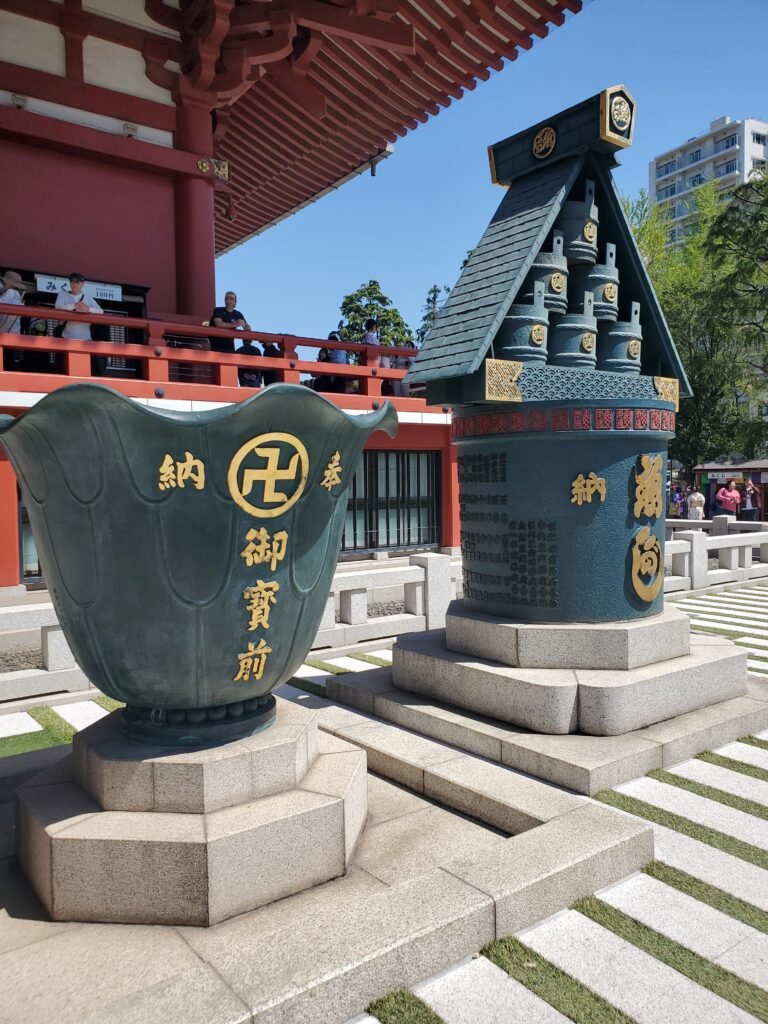
We transferred twice on the train to reach Asakusa Station. Our destination? Sensō-ji – our first stop and the oldest temple in Tokyo. We walked through the main gate next to the road and along the famous shopping street leading to the temple. It was very lively, with lots of shops and food stalls, though there were way too many tourists! We were constantly squeezing by people, and it was just way too packed for us to do anything there.
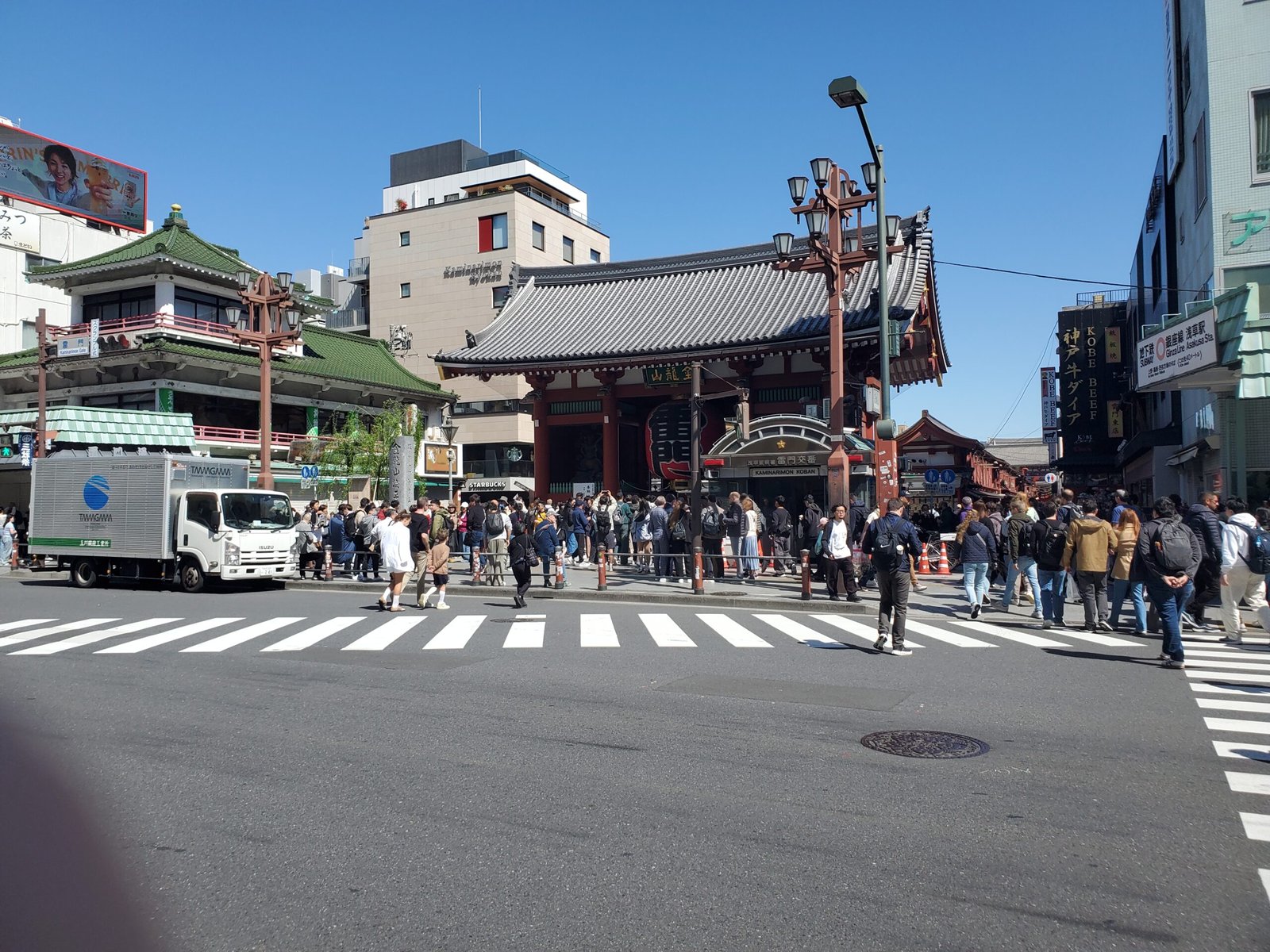
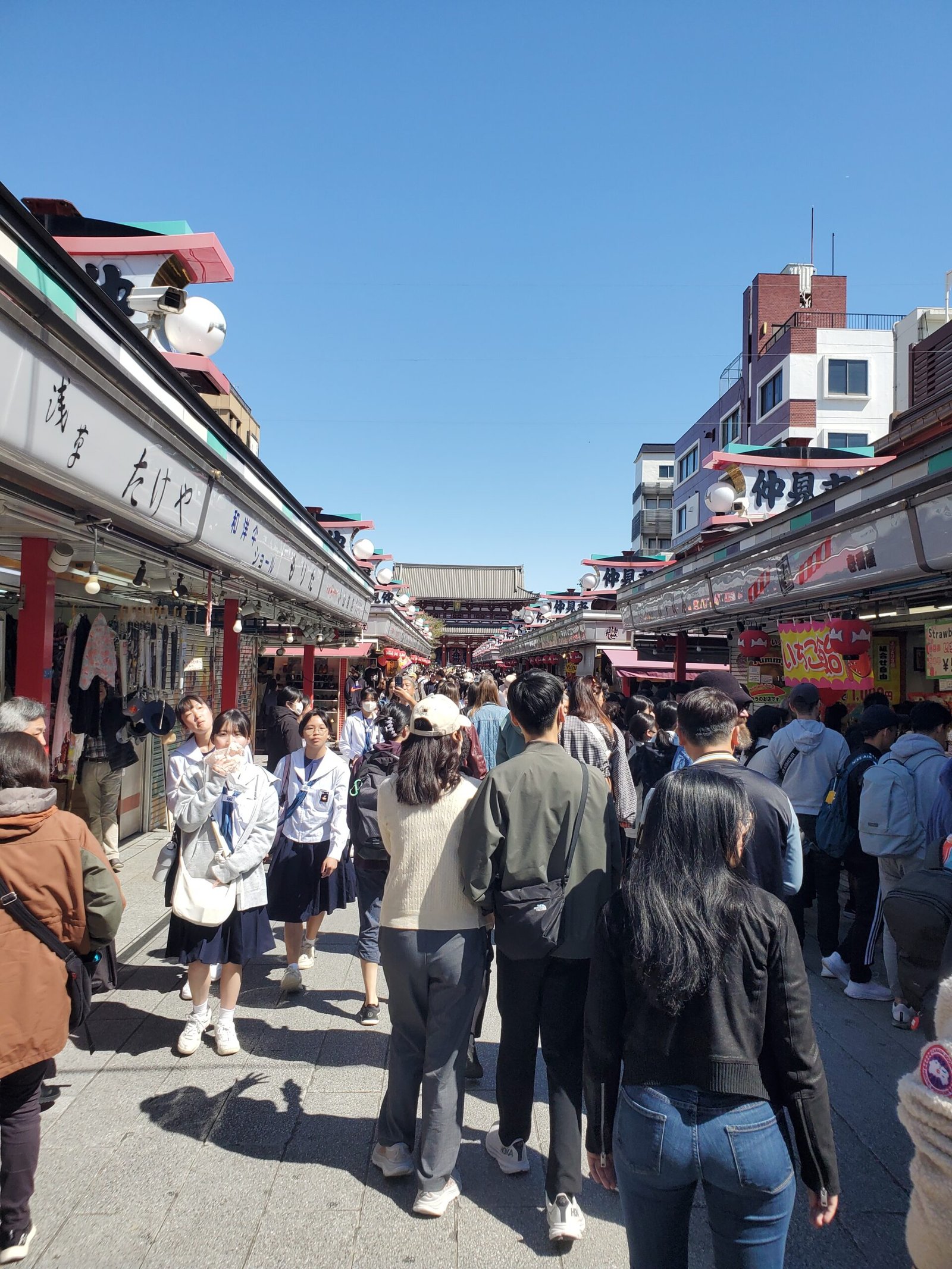
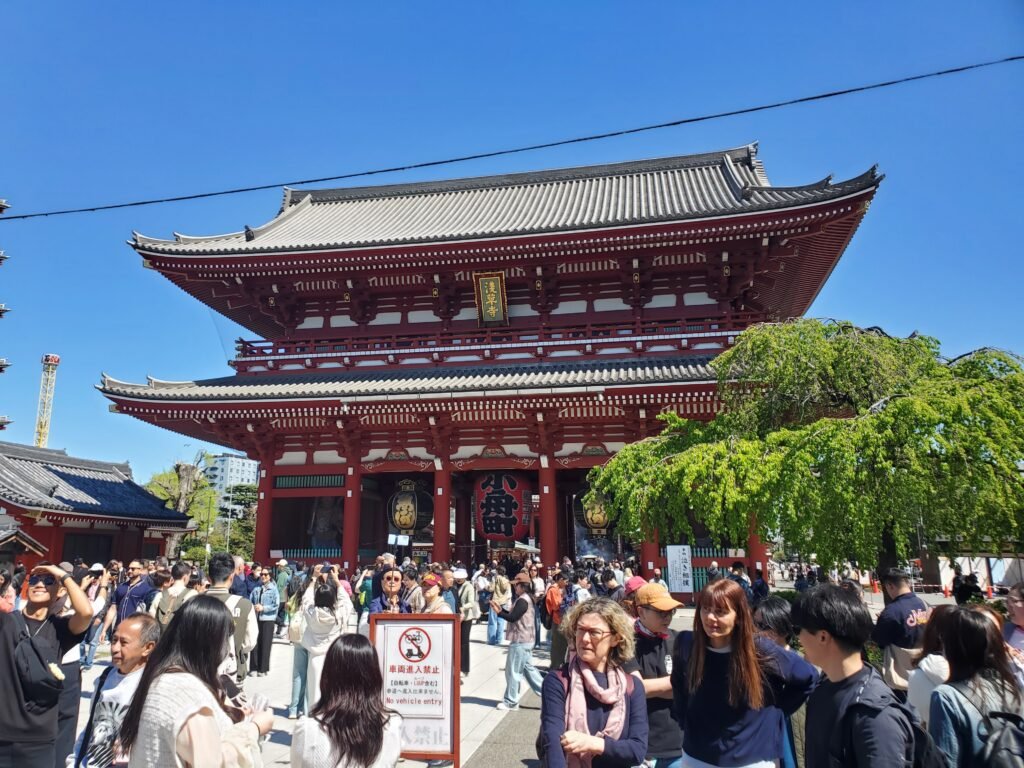
From there went through the main gate into the temple complex, and at one of the stalls inside I bought an omamori (protective charm) for my friend Isaiah for ¥1000. There were a variety of things being sold here, and this would be the case at many shrines and temples throughout Japan – it is a major way in which they are funded. (Also, when I finally gave it to him several months later, he found out it was actually glow-in-the-dark!)
We visited the main temple after that, smelling the incense and watching the people as they paid respects. Something important to note: do not take any pictures of the central shrines – this is considered the most sacred part of a temple. We saw several tourists doing so and we were glad we had researched this beforehand.

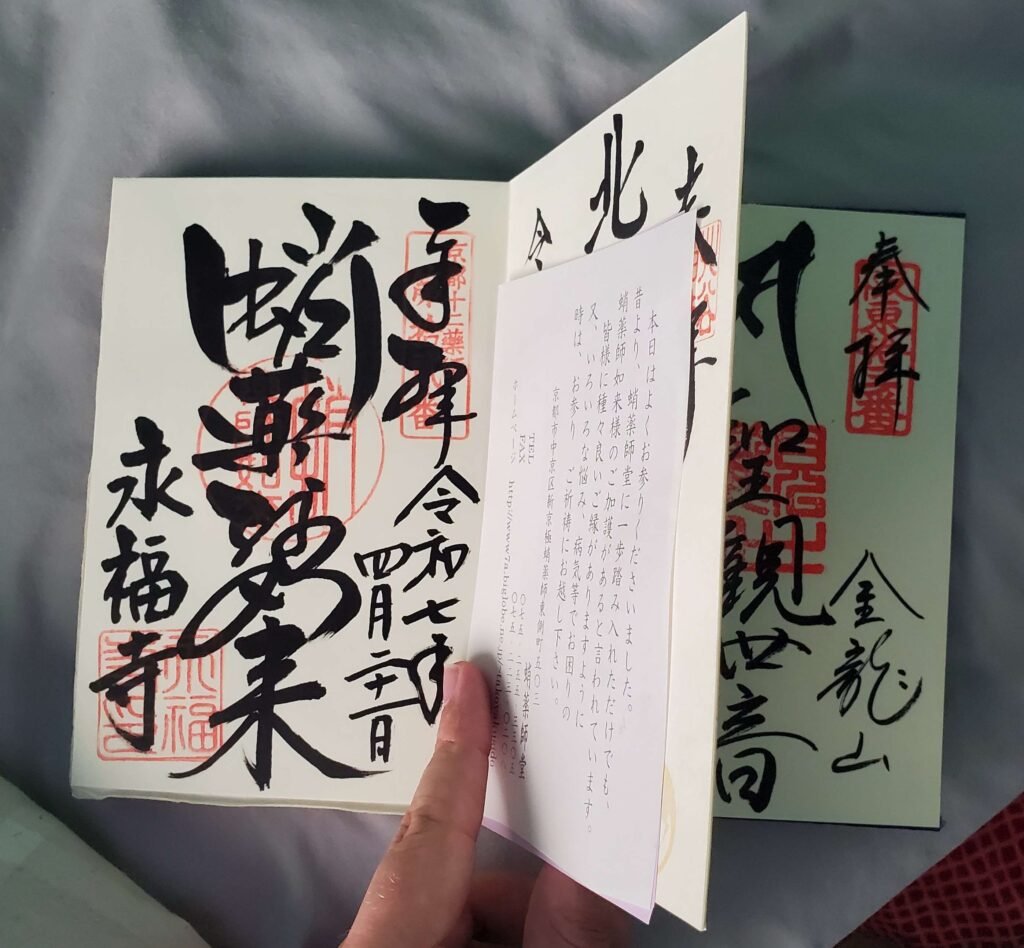
Then we waited about 30 minutes in line to get a goshuin stamp in our new goshuinchō books. This was one of my favorite aspects of the entire trip. Shrines and temples across Japan often have unique stamps, which become amazing mementos as your book fills over time. Generally these are either ¥300 or ¥500 apiece, and the book itself was ¥2500 – another way in which temples are funded.
We wandered around the various temple buildings and grounds for a while. While the site itself had to be rebuilt after Tokyo was bombed in World War 2, the temple was founded in the 700s AD, and you could feel the history of the complex.
Afterward, we started walking toward Tokyo Skytree, another popular destination, though it was funny how quickly we got away from the crowds! We took a break at a small park with a playground, and what I really loved was how normal it felt. We saw a Japanese mom playing with her kid, and there was fresh gravel being laid by construction workers on a nearby path. Just everyday people living their lives.
As we looped around the path underneath a bridge, we also passed what looked to be a homeless man with a large collection of belongings – an extremely rare sight in Japan. I found it quite interesting, given how uncommon “visible” homelessness is there compared to many other countries.
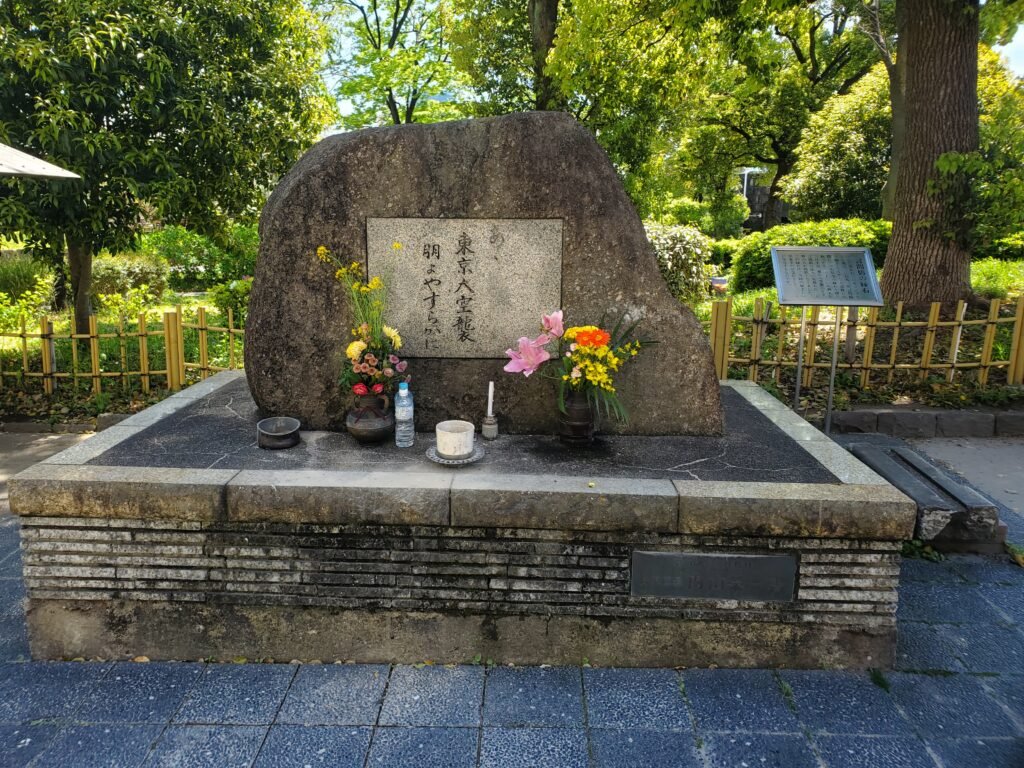
We circled around and walked past a small shrine dedicated to the firebombing of Tokyo which I had found on Google Maps. It didn’t have an English translation, but it was clearly a memorial. It made sense too, as the bombings were actually the most destructive aerial bombing raid in human history, taking the course of only 2 days and killing over 100,000 people.
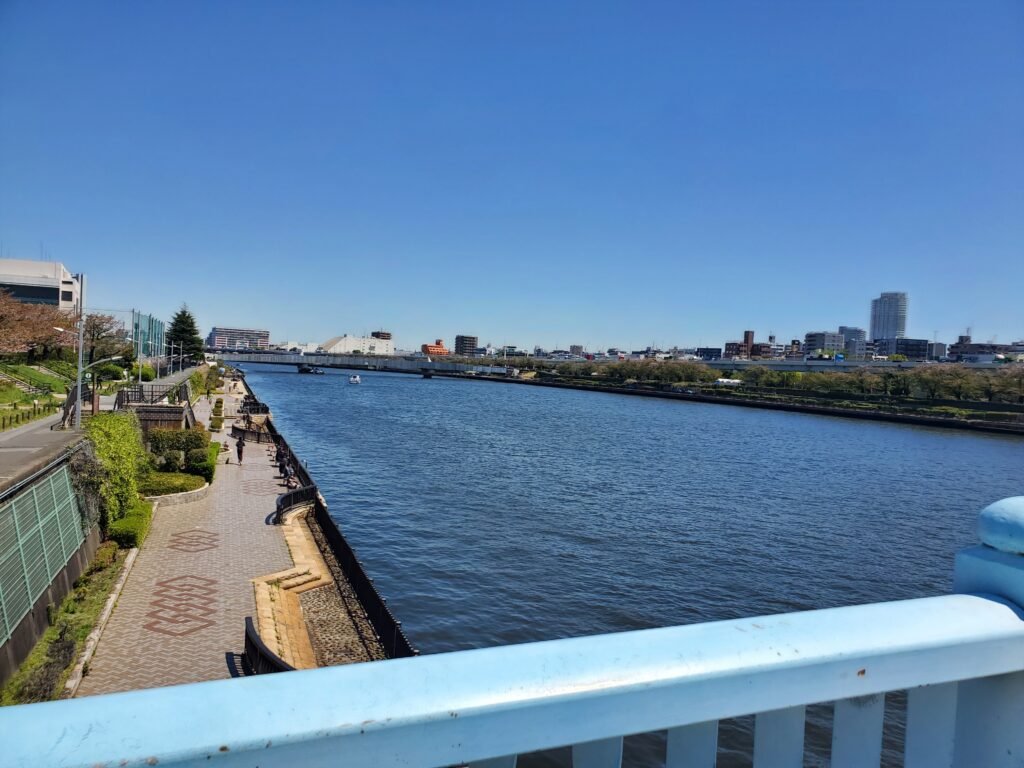
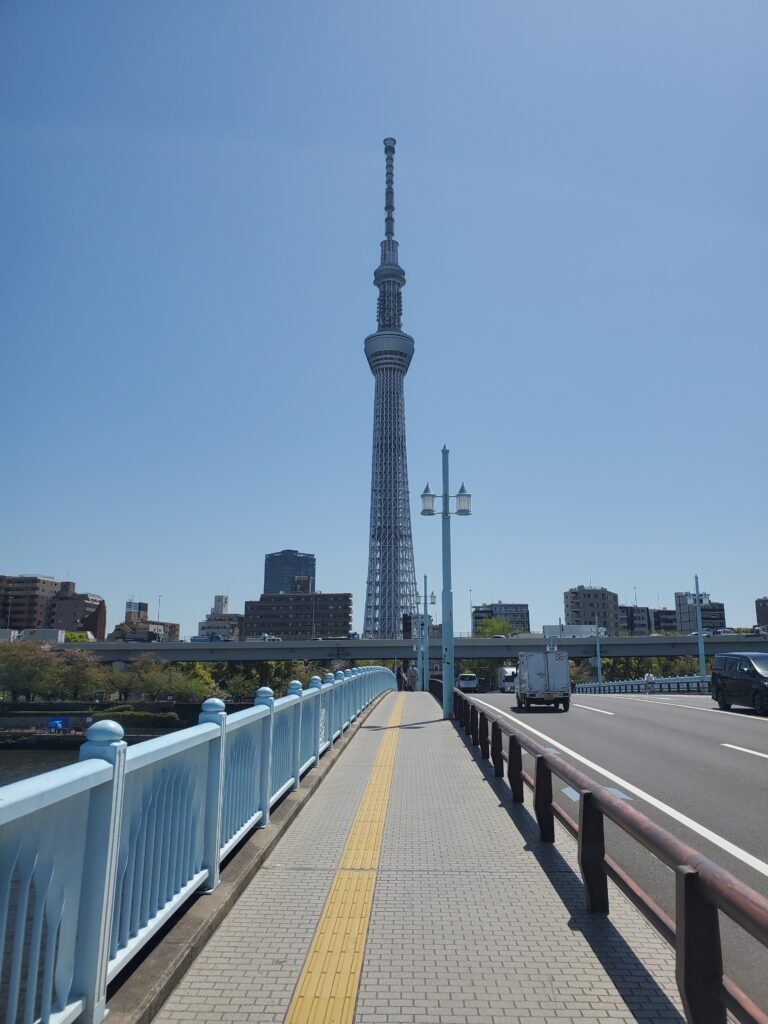
We walked across the Kototoi Bridge over the Sumida River and had some great views of the Skytree as we made our way south. Along the way, I noticed an overpass and was stunned by how intense the traffic was. It really made me appreciate Tokyo’s public transportation system; no wonder everyone relies on it!
After crossing the pedestrian bridge, we spotted a Pokémon-themed vending machine! We were both thirsty anyway, so we decided to grab a drink. I got a Pocari Sweat, which I thought was water but turned out to be a sports drink. Quite the shock when I drank it!
A quick note about vending machines: first of all, they are everywhere. You’ll find them anywhere from random street corners to shopping streets, with all sorts of different things. While some only take cash and coins, many take IC cards – far more convenient than digging for money!
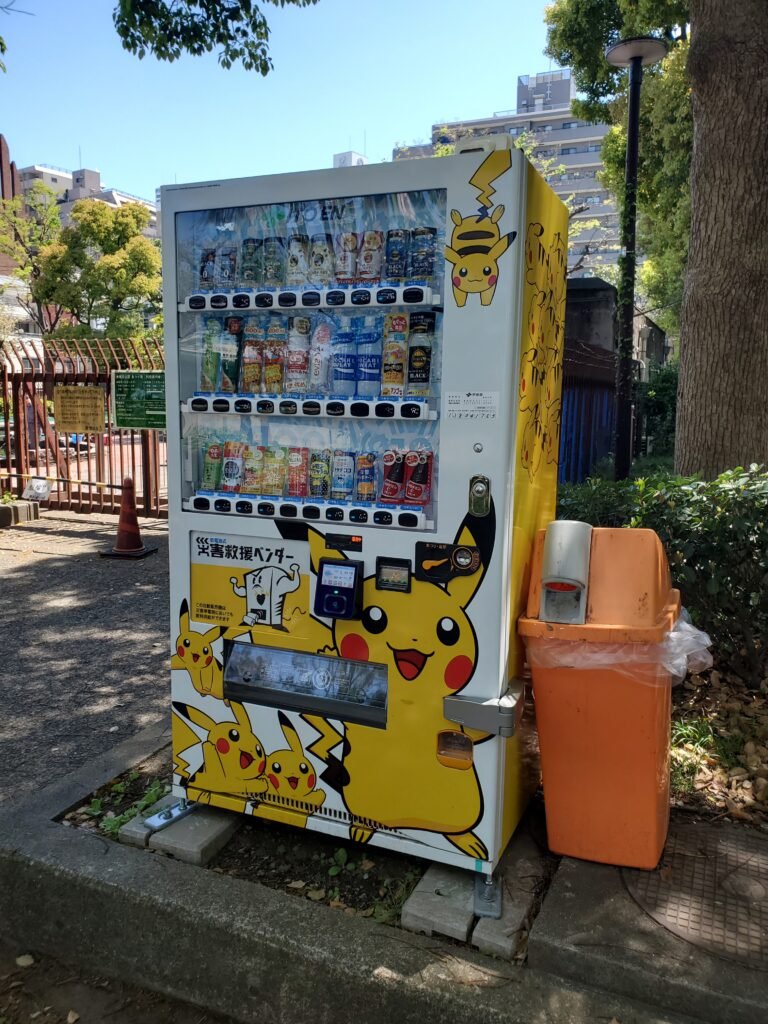
fairly common throughout Japan.
After this, Carlos and I stumbled upon what would end up being a major highlight from our trip: Ushijima Shrine. A beautiful and quiet place tucked between Sensō-ji and the Skytree, it was actually originally built in the 800s! Remarkably, there were hardly any tourists around. We both got goshuin there and were also given free bookmarks, which we presumed was due to the general lack of visitors. The woman at the booth seemed genuinely happy to help us, which made the experience feel even more special.
After she stamped our books, she walked to an area we did not see, presumably to the monks, who are traditionally the only ones permitted to write the goshuin calligraphy itself. This is because the written portion is considered a sacred offering, and it’s believed that only those with religious training should inscribe the characters. While we waited for our books, we just stood and enjoyed the ambience of the shrine, and watched a few people come make offerings. (I did not get any pictures as there was a sign prohibiting it.) While we really didn’t spend much time there, the vibe was simply unlike anything we had experienced so far, and it just felt so peaceful. I think what stood out was just how hidden it felt – it felt like we truly found a gem there.
From here we headed to the Tokyo Skytree, arriving around 11:30 a.m. It is built above a large shopping complex, so we followed the signs through the mall area to reach the entrance.
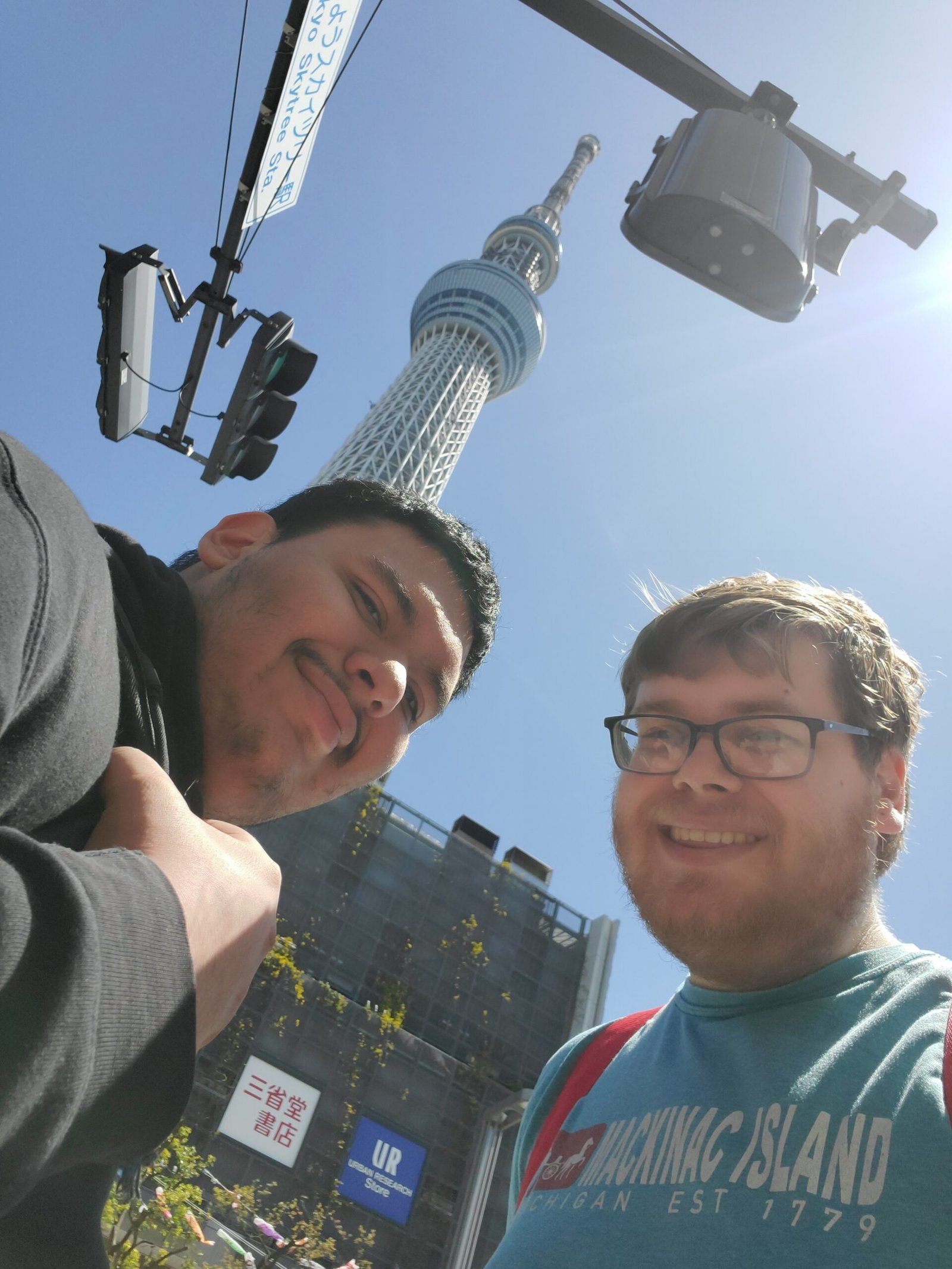
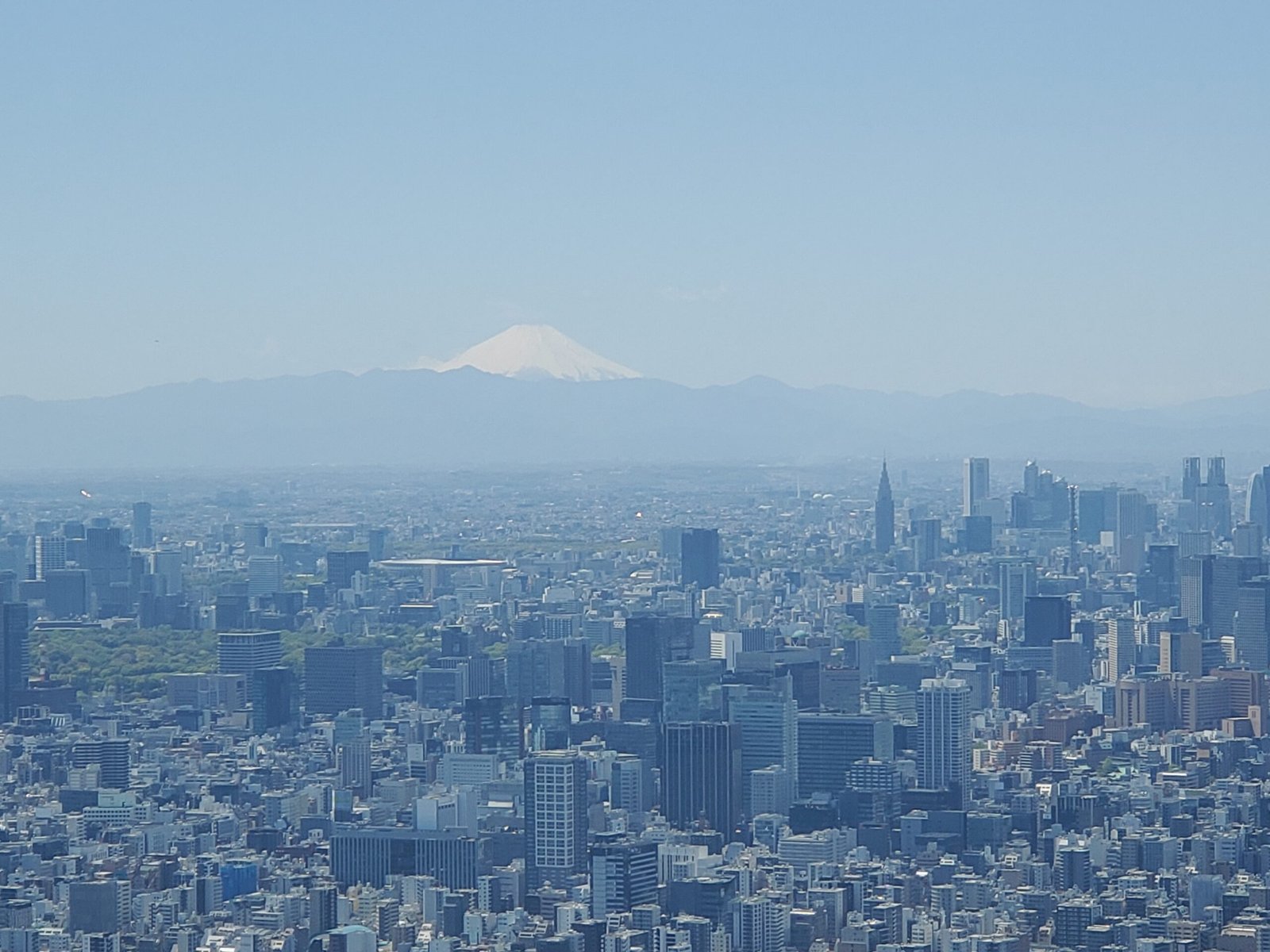
Originally, we wanted to go all the way to the top at 450 meters, but that would’ve meant waiting an extra hour for available tickets. Instead, we chose the 350-meter observation level, known as the Tembo Deck, which allowed us to head straight in. Tickets were ¥2,400 each (around $16 USD at the time). It took a little while to get through the line, but the elevator was incredibly fast. The view from the top was absolutely phenomenal. It was surreal to look in every direction and see nothing but city stretching to the horizon. After all, Tokyo is one of the largest cities in the world. The only natural features we could make out were the rivers, Tokyo Bay, and the mountains in the distance.

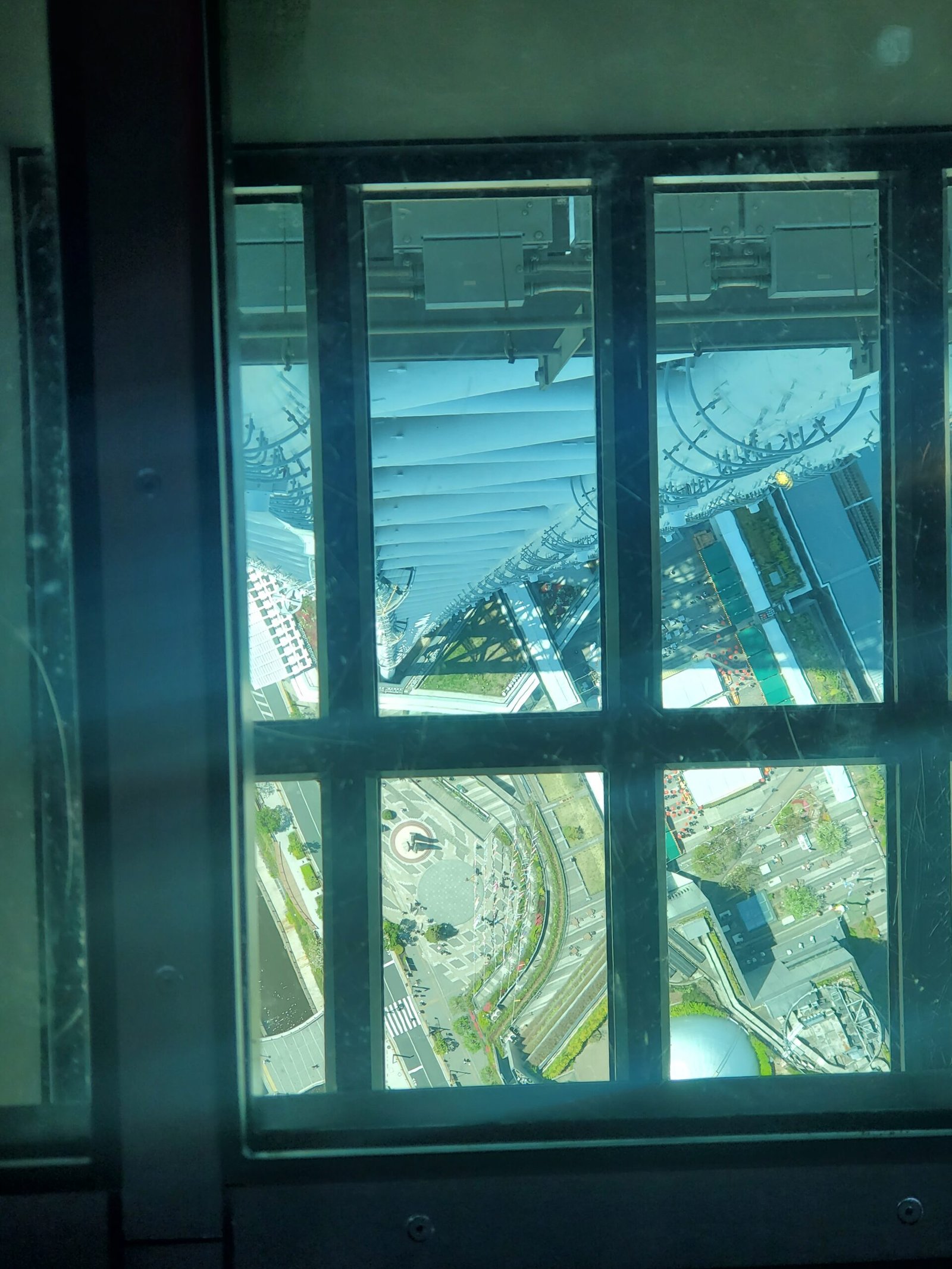
We were lucky – it was a cloudless day, so visibility was excellent, and we were even able to spot Mount Fuji. One section had a glass floor that let us look straight down, which was a little nerve-wracking but very cool. We stayed up there for quite a while, just hanging out and taking in the view.
Afterward, we headed back down and passed through an open-air space at the top of the shopping complex that seemed to be hosting a food festival, with all kinds of stands set up. We headed into the mall to shop for some gifts for friends and for Carlos’s girlfriend, Taylor – whom he had been calling since we were sitting on a bench inside the Skytree, as the time back home was around 8:30 p.m. the previous night. Inside the mall, we visited a Hello Kitty store and a Pokémon Center, and we wandered through a few other places looking for souvenirs. Carlos ended up buying several things for Taylor at Chiikawa Land.
Once we wrapped up, we went down to the subway station underneath the complex and took the train to Akihabara, another iconic location in Tokyo. We came out of the station into a small plaza near Akihabara Park and realized we were both pretty hungry – it was about 1:30 p.m. by this point. There happened to be a ramen shop right there called Ifu, so we decided it was the perfect time to have our first bowl of ramen in Japan.
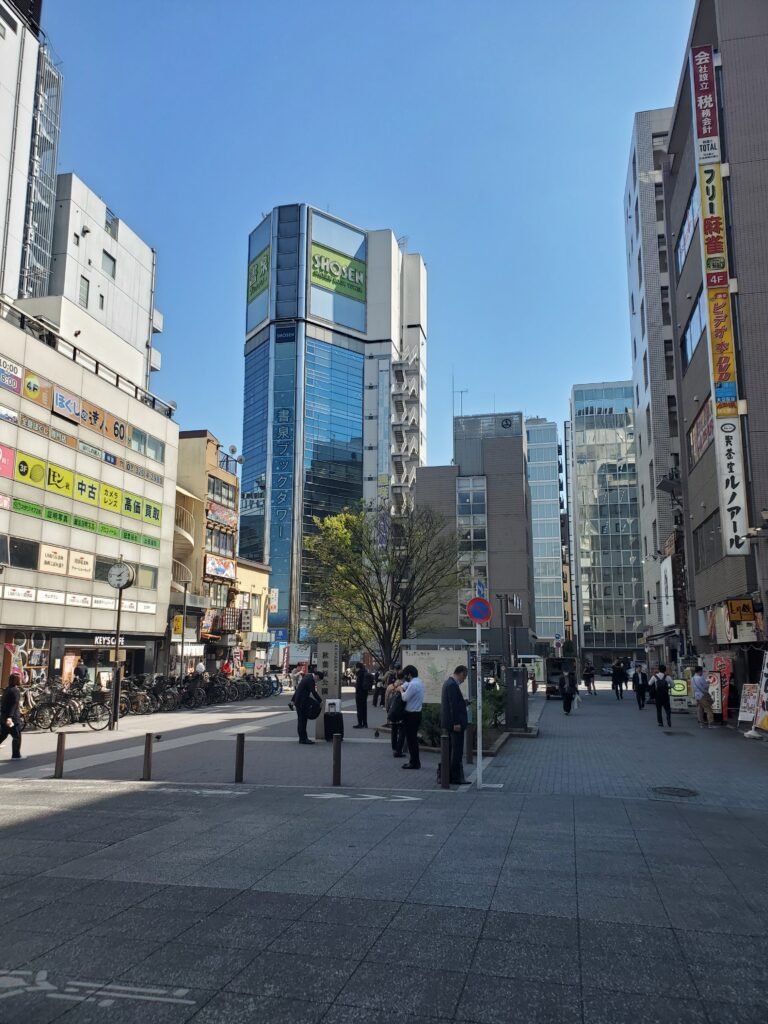
Ordering was done at a kiosk, and the prices were really reasonable – about ¥800 for a bowl of extra rich miso ramen (tonkotsu-style). This style involves a thick and creamy broth made of pork bones (which is what “tonkotsu” means), simmered for an extra long time. It was absolutely phenomenal -you could really taste the texture and richness in both the broth and noodles. We also ordered lemon sours. Interestingly enough, our IDs were not checked – there was simply a popup if we were 18 or up (the legal drinking age in Japan) – another facet of a high-trust society! Carlos really liked his, but I wasn’t a big fan – not surprising since I don’t enjoy most alcohol. The place was small and cozy, with a few seats arranged around a central prep area where staff would refill our water and bring out our food – a great choice for our first restaurant experience!

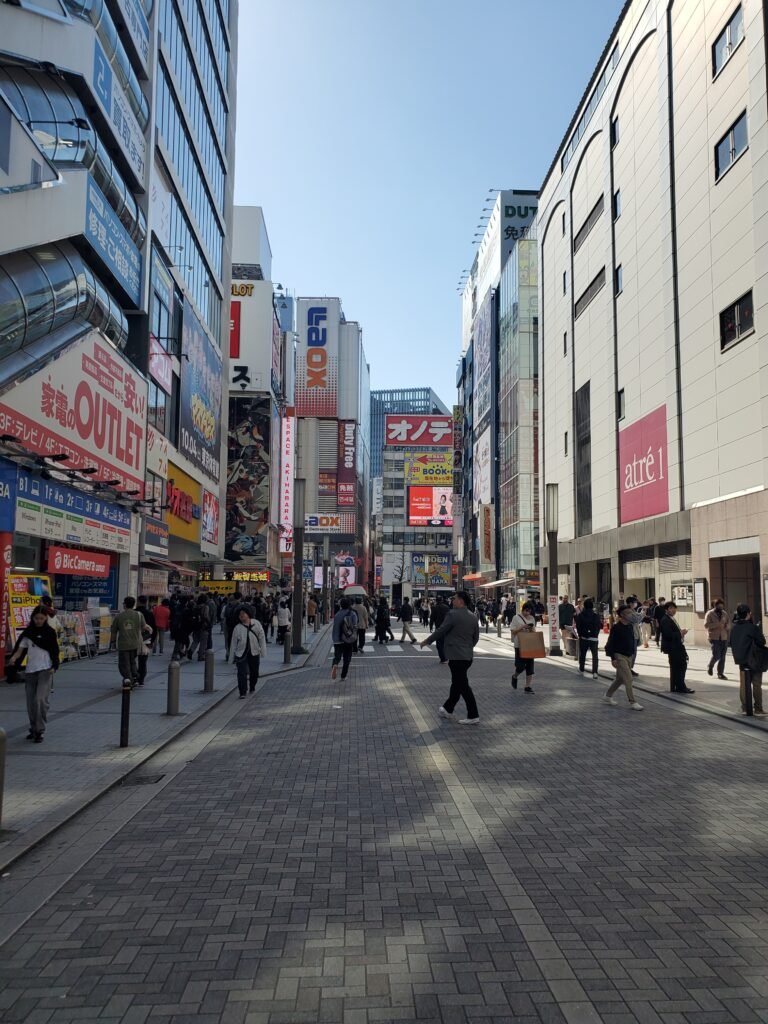
After eating, we walked over to a nearby 7-Eleven in the Akihabara Center Place Building to grab some drinks. We then walked over to the area near Akihabara Station, heading beneath the train tracks to Akihabara Radio Kaikan to do some more shopping. While there, we called a mutual friend, and Carlos picked up a few figurines for him.
Inside, we explored several of the building’s different themed floors, searching for merch for another friend who is a fan of the VTuber Mumei (who had recently retired). We were only able to find a sticker – most of her merchandise seemed to be sold out. We were actually calling him at the time, and he was kind of annoying with how adamant he wanted us to find more Mumei stuff – we were already tired and searched multiple floors just to find the sticker so we basically just said no.
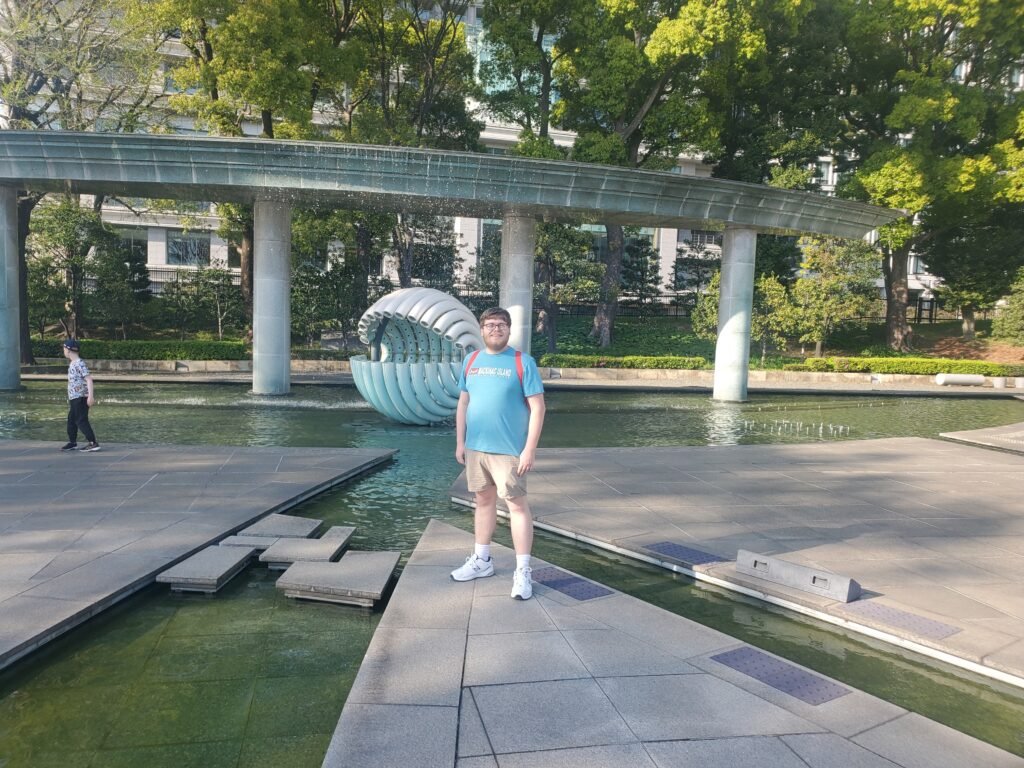
From Akihabara, we made our way on foot to the Imperial Palace garden area, specifically Wadakura Fountain Park. The walk took about 30 minutes with a few short breaks along the way. We didn’t visit the main Imperial Palace grounds since it was a little too late in the afternoon (just after 4:00 p.m.) and Carlos was feeling pretty tired. Rush hour was also approaching, so we decided to keep it simple. This park is near the east gardens of the palace, and mainly functions as a peaceful public plaza. There is a fountain area with water displays as well as reflecting pools and some shaded seating areas – a surprisingly quiet and scenic spot in the middle of Tokyo’s government district. We spent some time relaxing there and watched the fountains.

From the park, we started heading back to the hotel. One great thing about Japan is that the trains were pretty much always on schedule, and Google Maps is actually an excellent tool to help with planning – it was consistently accurate throughout Japan. We returned to our hotel around 5:15–5:30 p.m. and stayed in for the night. We were pretty tired and thirsty, but I had packed a couple boxes of liquid IV packets, and these ended up being super helpful overall throughout the rest of the trip (they were pretty tasty too). We went to bed early again, around 7 or 8 p.m., still adjusting to the new timezone.

Overall, we had an incredible first day in Japan, and we had one more full day to explore Tokyo before Star Wars Celebration began.
[…] Japan – Day 1 […]