

If you’re traveling to Japan for the first time, the idea of navigating the train systems may seem intimidating. You’ll probably be using trains every single day, and even locals rely on them for their daily commutes.
The good news? Japan’s train system is far easier to use than it looks, even if you don’t speak any Japanese! In this guide, I’ll walk you through how to pay, get in and out of stations, transfer between lines, avoid rush hour, and more, while answering some of the questions you may have for your first Japan trip.
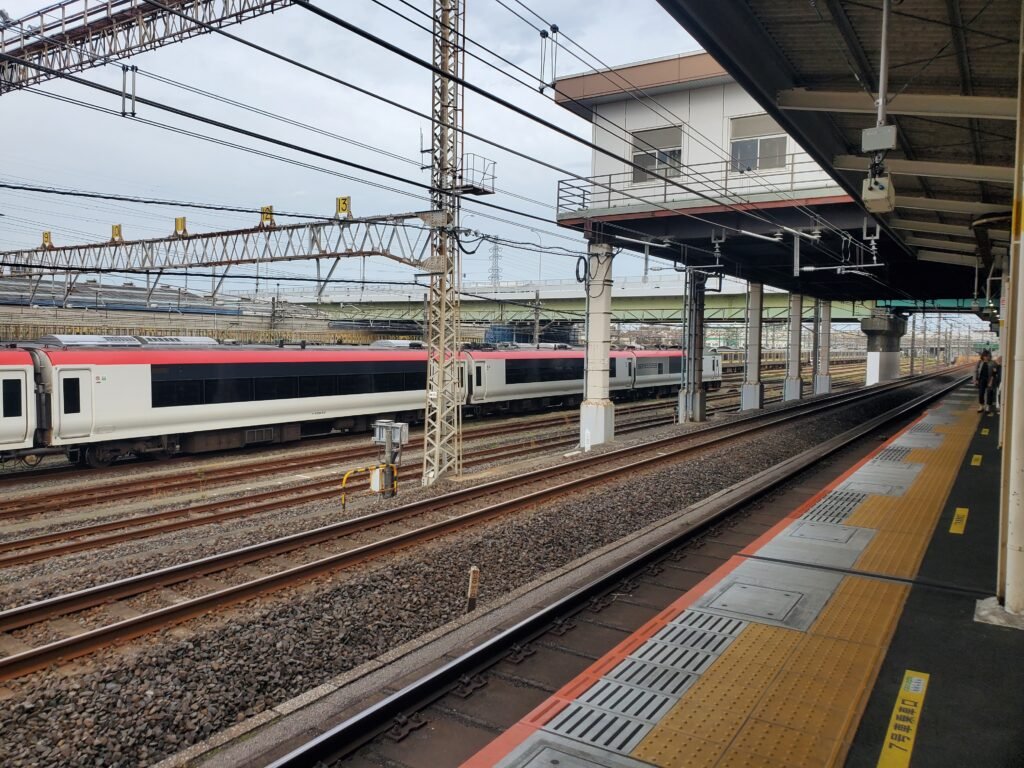
Why trains are the best way to get around Japan
Train lines are one of the most well-developed pieces of infrastructure across the country, especially in major tourist areas. If you are visiting any of the “big 3” most-visited cities (Tokyo, Osaka, Kyoto), they are some of the most convenient ways to get around. Tokyo especially has an extensive subway system, and you can basically get anywhere in the metropolitan area.
Not only can you easily get around cities, but also between them. Sometimes this is via the shinkansen, or bullet train, but other times there are limited/express lines which are slower but cheaper, such as between Kyoto and Osaka.
Besides the shinkansen, taking the train is very cheap – it has to be for local students and businesspeople to use them every day for their commutes. To illustrate an example, my train from Narita Airport to my hotel in Edogawa City, Tokyo was less than ¥1500 (about $10 in USD) for a ride that was well over an hour. Overall, it’s a very affordable way to get around.
How do you pay for trains in Japan?
Speaking of costs, paying for your transit is very straightforward. You basically have 3 options: buy a ticket at the station, get a physical IC card, or load a digital IC card if you have an iPhone.
The first option is the least convenient. While there are ticket machines you can use to buy one-time fares, as well as manned ticket booths, having to do this every time is going to take away from your overall experience. That’s where the other options come in: IC cards.
How IC cards work
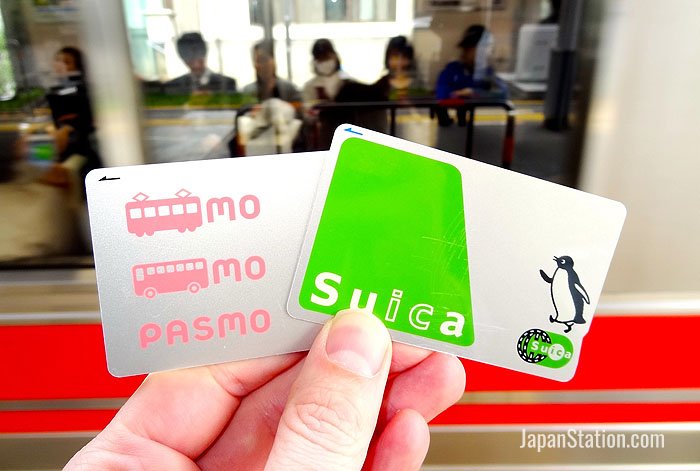
IC cards are the best way to get around Japan. They are basically smart cards which can hold transit funds – they can be used for trains, buses, and even some vending machines! Suica and Pasmo are two of the most common and best options to use throughout Japan, and physical cards can be bought at both Narita and Haneda airports after you get through customs.
One thing to keep in mind: while credit/debit cards can be used to initially buy the cards, they must be reloaded with cash! This can be done in train stations and practically any convenience store, such as 7/11 and FamilyMart, and is a very easy process. These machines can also be used to check your balance, as well as some smartphone apps.
There are also virtual card options, but keep in mind this can only be done on iPhones! This saves having to reload on an ATM, and you can simply top up with a connected bank or credit card.
Entering and exiting train stations
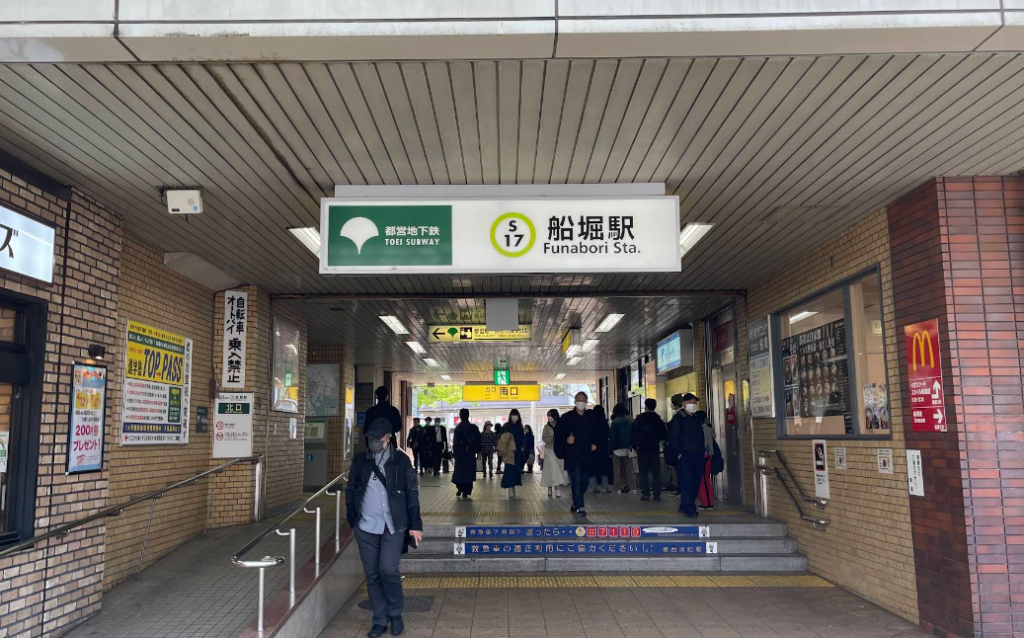
Getting to the train station is simple. All of them have multiple entrances and exits, but there are signs in both Japanese and English which display the name of the station as well as the train lines that connect through there.
If you want some extra help, Google Maps will show you the optimal entrances and exits to use, often with convenient numbering systems. These are displayed on signs within the train stations, and can also correlate with specific landmarks (for example, the Hachikō exit from Shibuya Station takes you toward the famed Hachikō statue).
Once inside the station, you will find the ticket gates. Simply tap your IC card and you’ll be able to get through, and it will also show how much money is on your card.
Once on the train, there are signs which display the next few stops, and they are also announced in Japanese and English. After you exit the station for your stop and go through the ticket gates, it will subtract a certain amount and display your remaining balance.
Transferring between train lines
If you need to transfer to a different line after taking a specific route, the task is simple. Train stations and even the trains themselves have maps on them which show every stop along specific routes. These maps indicate exactly where transfers are, which are also announced on the speakers in both Japanese and English.
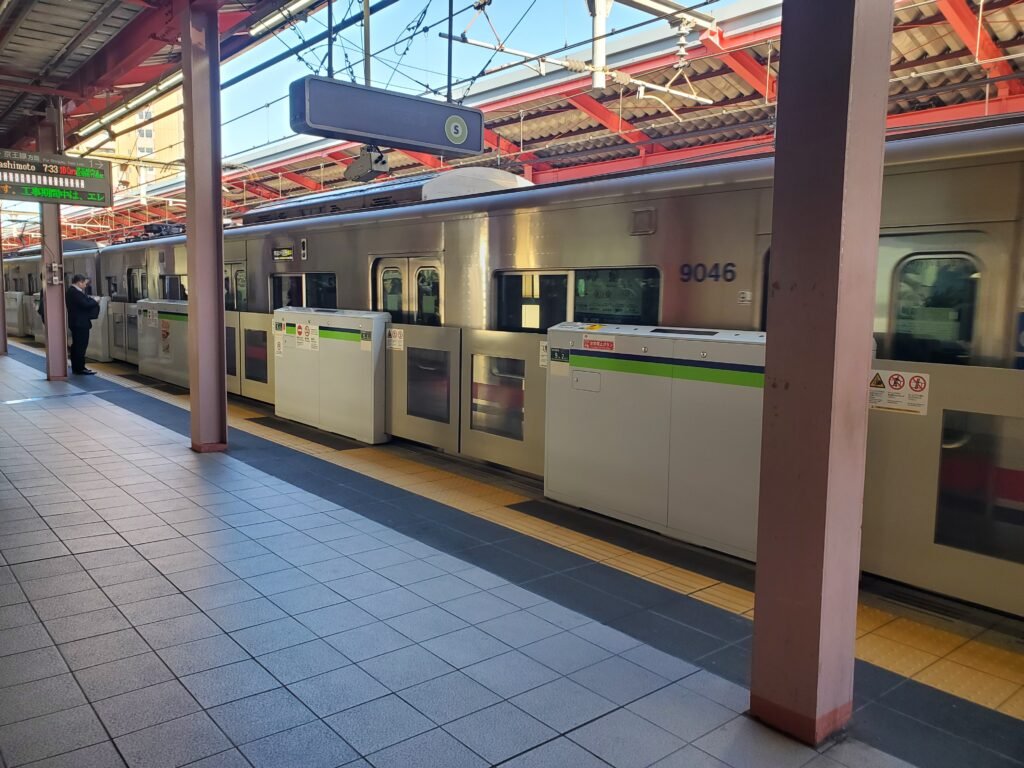
Within the stations, there are plenty of signs pointing to which direction to walk for the other lines, which even show the distance away in meters. Each line also has a specific color, and the signs are bilingual. Each line also has its own platform, clearly numbered and marked, so it’s hard to go wrong. You should have no problems navigating once you’re in the station.
Transfers are also easy when it comes to your IC card – it calculates fares automatically. If you transfer within a station, you do not need to tap out and back in. Just follow the signs!
Why you should use Google Maps
Google Maps is an excellent tool for planning out your transit routes. As previously mentioned, it is great when it comes to knowing which entrances and exits to use when going through train stations. However, it also is very accurate when it comes to timing. I was in Japan for nearly 2 weeks, and the train times were always correct.
Not only that, but if you happen to miss one, it shows you a complete list of times a train on that route will arrive. Additionally, it will display a variety of other routes you can take. Some of these might use buses, but they are also easy to use with an IC card tap system.
Google Maps also has the train lines color-coded as they are within the metro system, to clearly distinguish what you take and where you transfer to. While not entirely necessary, it is a very helpful tool to utilize during your stay.
Rush hour: what to know
If you don’t want to be packed into a train like a can of sardines, you are going to want to avoid rush hour. If you really want the local experience, then it can definitely be interesting – but it’s not all that fun, especially if you’re claustrophobic.
Rush hour occurs at two times of day from Monday to Friday – morning and evening. In the morning, this is from around 7:30-9:30 a.m. In the evening, it is around 5-7:30 p.m.
Make sure to plan your weekday travels around this – the train stations completely fill up with people, though it is surprisingly quiet and organized. Make sure you always have a bit of buffer time just in case. However, for the weekends, you won’t really need to worry.
Shinkansen – bullet train basics
If you go to Japan, I would recommend taking the bullet train at least once. It is a pretty cool experience, and you can go very far quite quickly. You’re most likely to use this if you go between Tokyo and Kyoto or Osaka, as you can technically fly but it’s more convenient to take the shinkansen. Luggage can be stored in a designated area, so you won’t need to worry about extra fees.
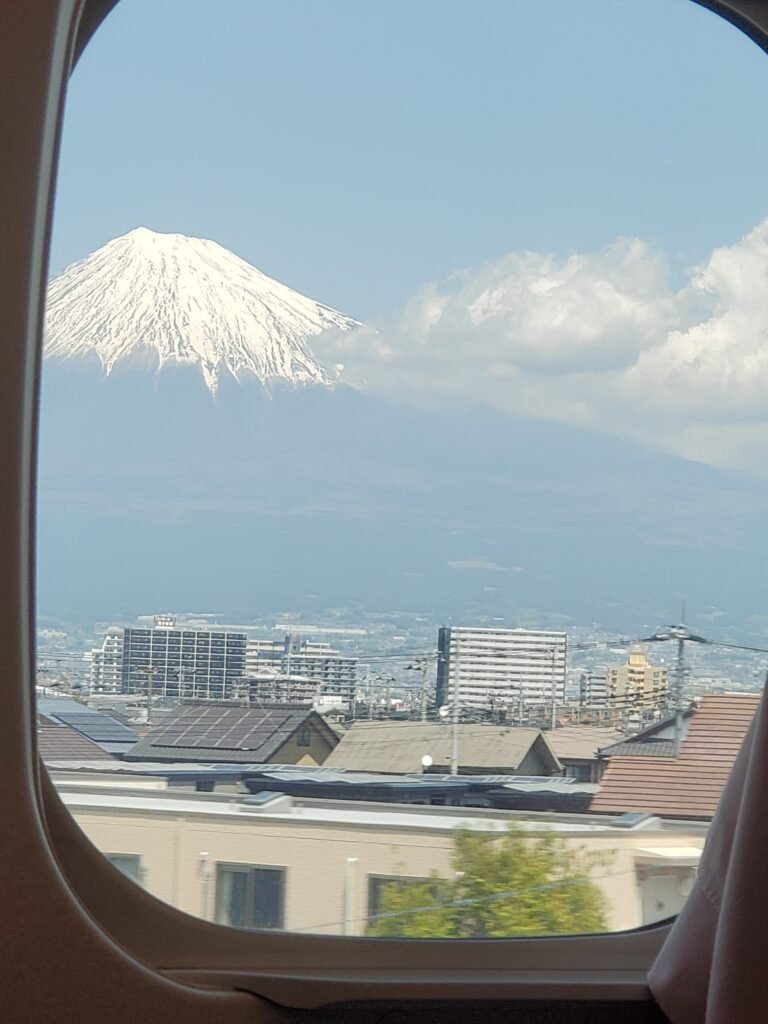
Do be aware that it is significantly more expensive than the regular trains. For example, from Tokyo to Kyoto it is about $100 USD. But in my opinion it is absolutely worth it – not only is it a great experience but you can also get some great views, especially passing Mt. Fuji.
As for getting tickets, there are dedicated areas in the larger train stations where you can buy tickets from kiosks. Trains run frequently, so there are plenty of options. You can choose seats in designated train cars for more money, or try and fight for good seats on the unassigned cars. I personally recommend spending the extra cash – you also might want to reserve spots more in advance, especially if you want a window seat passing Mt. Fuji. You can do this on the website here.
You can also get the Japan Rail Pass, but I personally wouldn’t recommend it. This gives you unlimited rides on the shinkansen, but you probably won’t be using it enough for the cost to balance out. It is more for travelers doing long-distance train rides multiple times in a short period.
Common questions (and answers)
1. Is it hard to use trains in Japan if you don’t speak Japanese?
No! There are bilingual Japanese and English signs everywhere, with easy-to-follow color-coding and clear directions. Additionally, announcements are made in both Japanese and English, which mention the upcoming stop and any transfers to other train lines.
2. Do I need to buy tickets in advance?
For local trains, not at all. However, for shinkansen (bullet trains), I would recommend buying in advance and choosing seats – especially if you want to see Mt. Fuji on the Tokyo-Kyoto route. You can do that here.
3. Is the Shinkansen worth it?
Yes. While being more pricey than regular trains, taking the bullet train is a quintessential experience of visiting Japan in my eyes – it’s a method of travel like you’ve probably never seen. It’s also very comfortable and roomy, and you get to see some great sights.
4. Can I bring luggage on trains?
Yes. Bullet trains have designated areas in the train cars for suitcases and large bags. Local trains have luggage racks for smaller bags, but if you have larger ones you should stand in the back of the car to save as much space for other passengers as possible. You can also use luggage forwarding services, but in my opinion this is unnecessary and can be a bit expensive.
5. What’s the difference between Suica, Pasmo, and other IC cards?
Functionally, there is no difference. Suica and Pasmo are generally the most common IC cards, and are taken everywhere you will be traveling, especially as a tourist.
6. Can I use cash instead of an IC card?
Yes, though I would highly discourage it. Getting an IC card saves time buying a ticket every single time you go anywhere, as it calculates all the fares automatically.
7. How do I recharge my IC card?
IC cards can be recharged with cash at any train station and most convenience stores around Japan. If you are using a virtual IC card on an iPhone, you simply need to connect a valid credit or bank card to refill it.
8. What happens if I take the wrong train or miss my stop?
Not to worry, if you miss your station all you need to do is take the train back one stop. Otherwise, you can use the maps located in the stations to figure out an alternate route. Google Maps is especially helpful in this field. If you still have problems, station staff are always helpful, even with a language barrier.
9. Are trains in Japan really that crowded?
Yes. However, this is typically only at peak times on weekdays. Make sure to avoid taking the train during rush hour, around 7:30-9:30 a.m. and 5-7:30 p.m.
10. What is the proper train etiquette?
Please be quiet, and pause any conversations you may have been having until you are off the train. Remember, many of the people on your trains are commuting between home and school or work. They are tired, and don’t want to deal with loud and annoying tourists. Additionally, try not to eat anything while on the train, as it can be considered as both rude and messy.
11. Do trains run late at night?
Trains typically run from around 5 a.m. to midnight. Make sure to plan around this.
12. Are trains safe in Japan?
Yes. Along with basically all of Japan, especially the tourist areas, you do not have to worry about safety.
While Japan’s train system may feel overwhelming, you don’t need to worry. With plenty of English signage, easy-to-use IC cards, and tools like Google Maps, you’ll become a pro in no time. Taking the train was one of my favorite aspects of visiting Japan, and I’m sure you will feel the exact same way after spending some time there.
Very nice.