

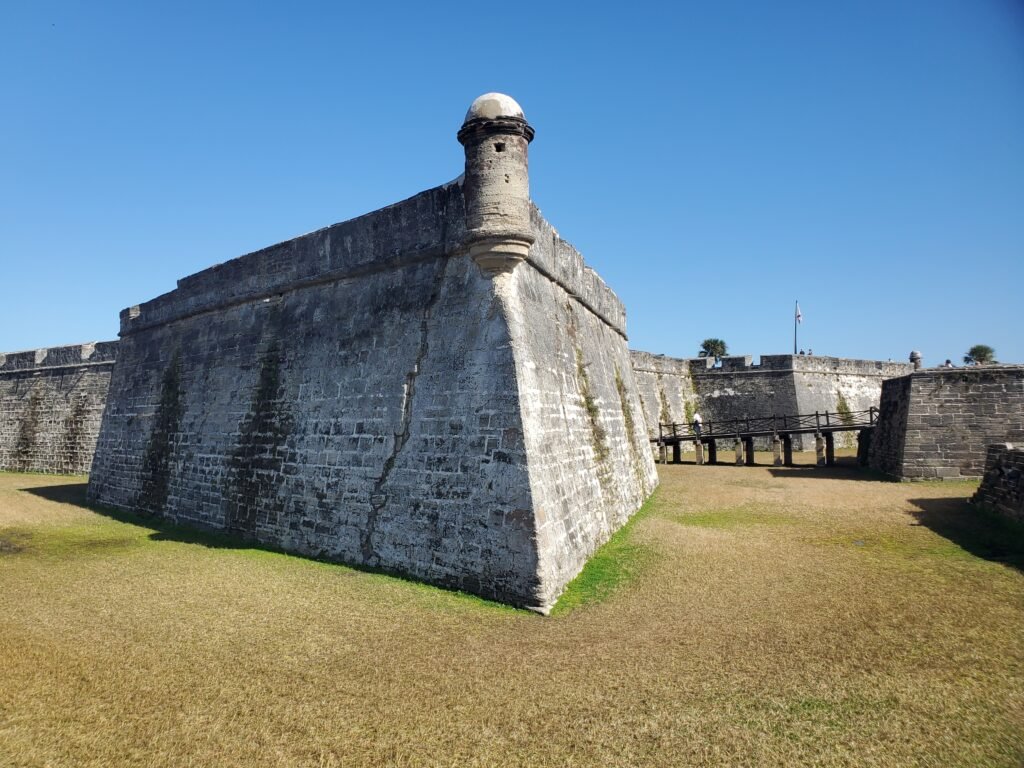
Most Americans know about the British colonies at Jamestown and Plymouth, but fewer are familiar with the Spanish history in Florida – which actually predates the other settlements by a significant margin. In fact, you can still visit one of the major sites in St. Augustine – the oldest masonry fort in the continental United States.
The Oldest City in the U.S. – A Brief History
St. Augustine, on the northeast coast of Florida about an hour north of Daytona Beach, was founded in 1565 by Spanish settlers – over 50 years before Jamestown and 65 years before Plymouth! It was the capital of Spanish Florida for over 200 years, seeing several major battles and sieges.
For about two decades between the Seven Years’ War and American War of Independence (1763-1783), Florida was ceded to the British as part of treaties signed between them and the Spaniards. It returned to Spain in 1784, before being ceded by the USA in 1821 and becoming a state in 1845.
Castillo de San Marcos National Monument
After several raids which left much of St. Augustine destroyed, the Spaniards began construction on a sturdier stone fort in 1672, with the first iteration of Castillo de San Marcos being completed in 1695.
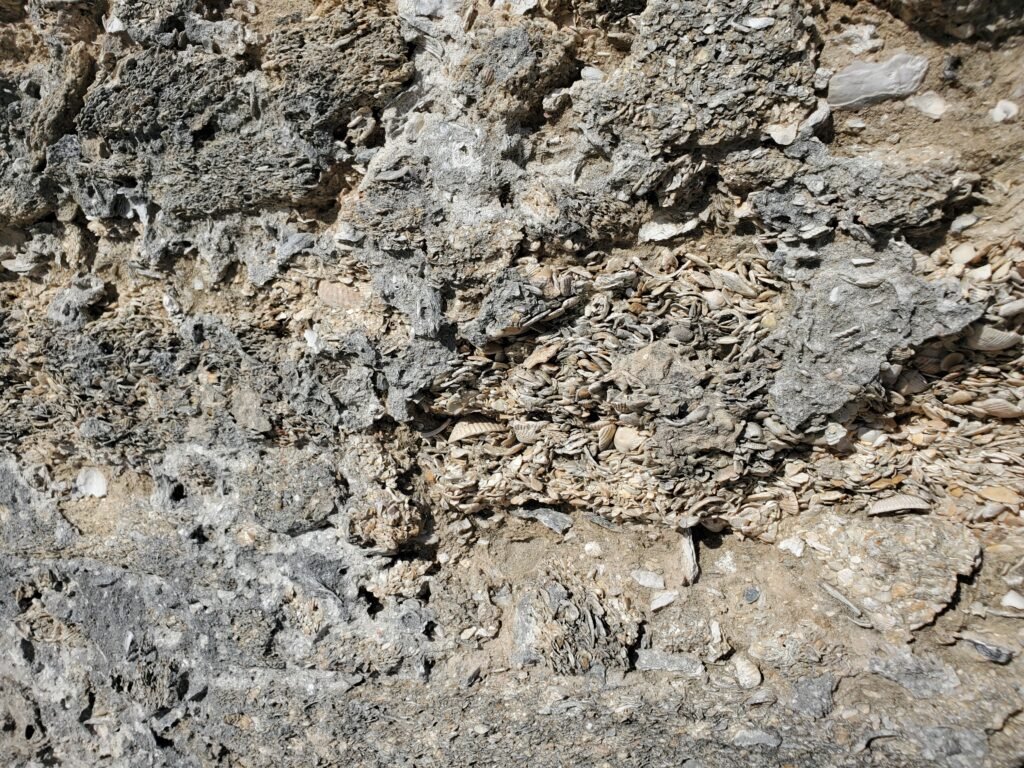
One of the unique aspects about the fort is the building material used. Much of it is comprised of a stone called coquina (which means “small shells” in Spanish), similar to limestone but made from ancient shells. It certainly makes for an interesting texture, but also proved extremely useful when defending against sieges – cannonballs would simply sink into the walls due to their softness.
Castillo de San Marcos ended up withstanding two sieges without being taken, and from there would only change hands peacefully.
The Americans changed its name to Fort Marion upon Florida’s cession, and made some modifications such as filling in part of the moat to replace it with an artillery battery. The Confederate States briefly took control during the Civil War, but only for about a year.
Ultimately, its last use as an operational base was during the Spanish-American War, where it held over 200 deserters, and it was decommissioned in 1900.
In 1900, Fort Marion was designated as a National Monument, and was transferred to the National Park Service in 1933. It was officially returned to its original name of Castillo de San Marcos in 1942.
What to See
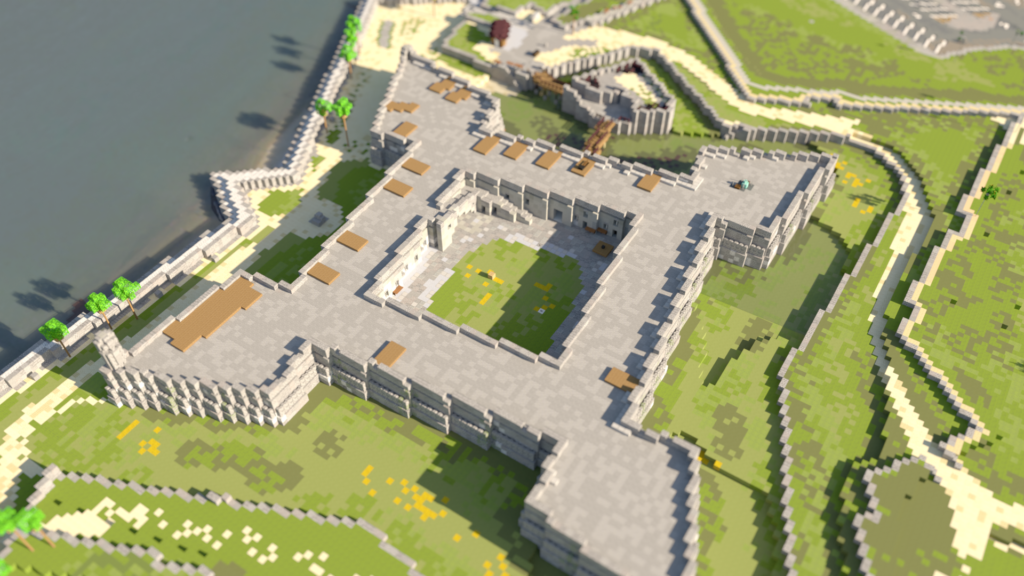
One of the features you’ll notice almost immediately is the distinct star shape, with angled bastions at the four corners. These allowed for a complete view around the fortress, as well as being able to fire at attackers from multiple angles.
The ground level of the fort has a series of rooms all around, many of which are interconnected. Some focus on the history of the structure, ranging from its original construction to use as an American fort. There are a few with reconstructions, such as what British barracks would have looked like, while others include artifacts. One room plays a few different videos, such as how artillerymen test-fired cannons.
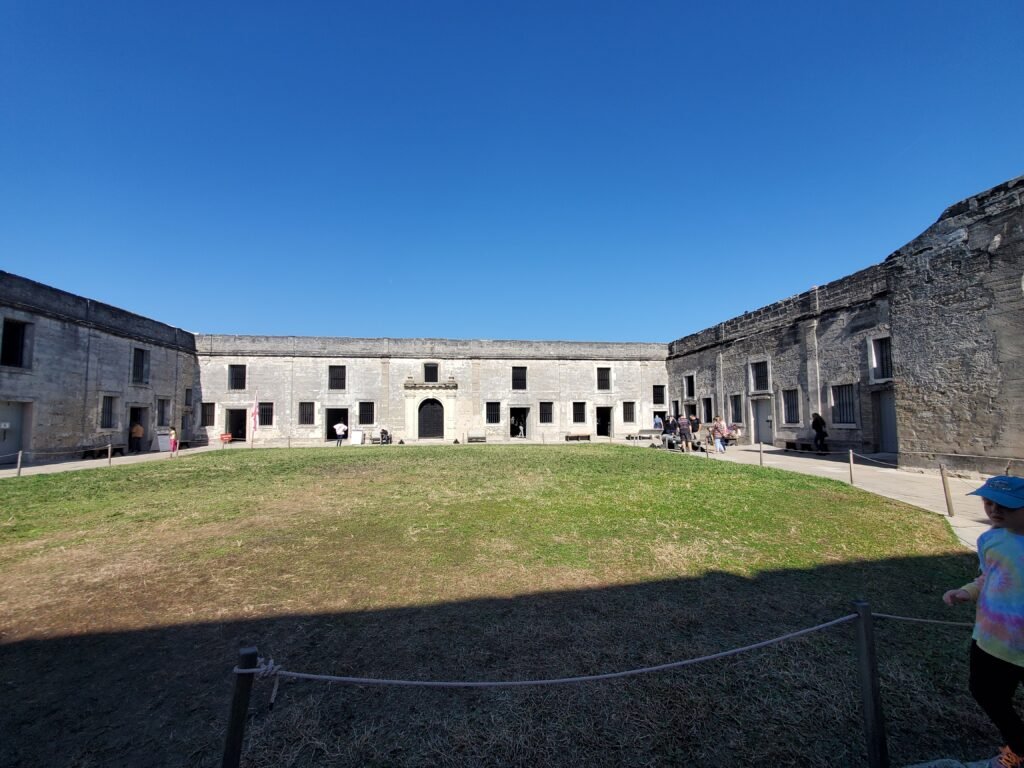
In fact, they often do demonstrations of firing muskets and cannons – generally this is on the weekends, so make sure to check the timing in advance.
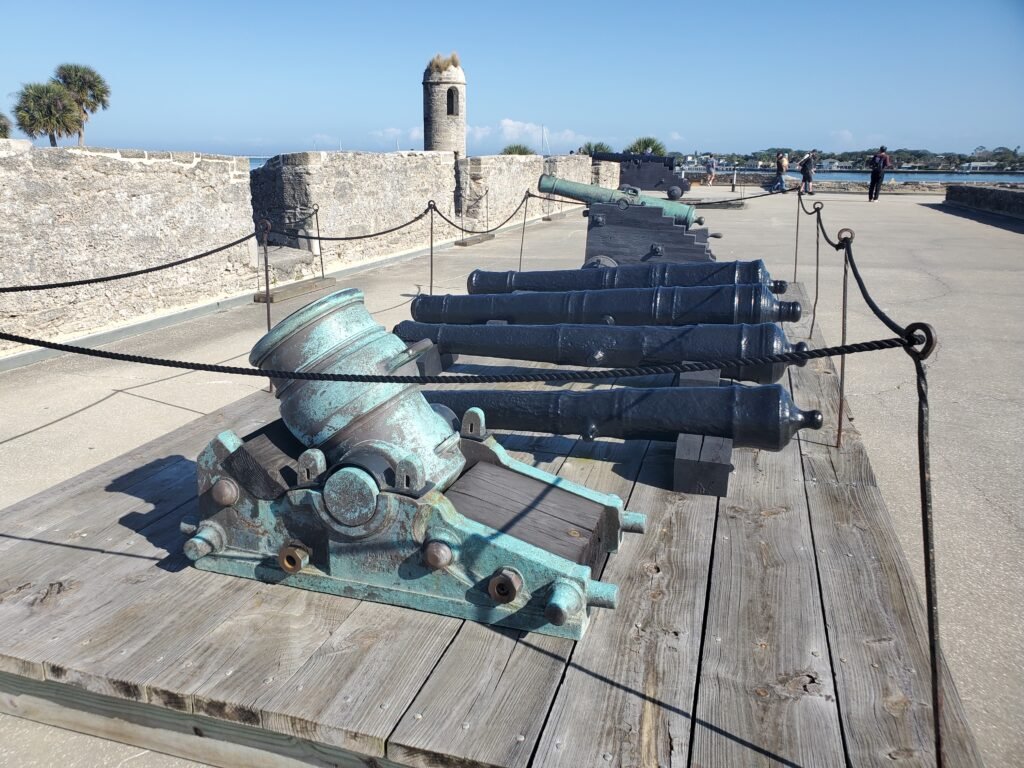
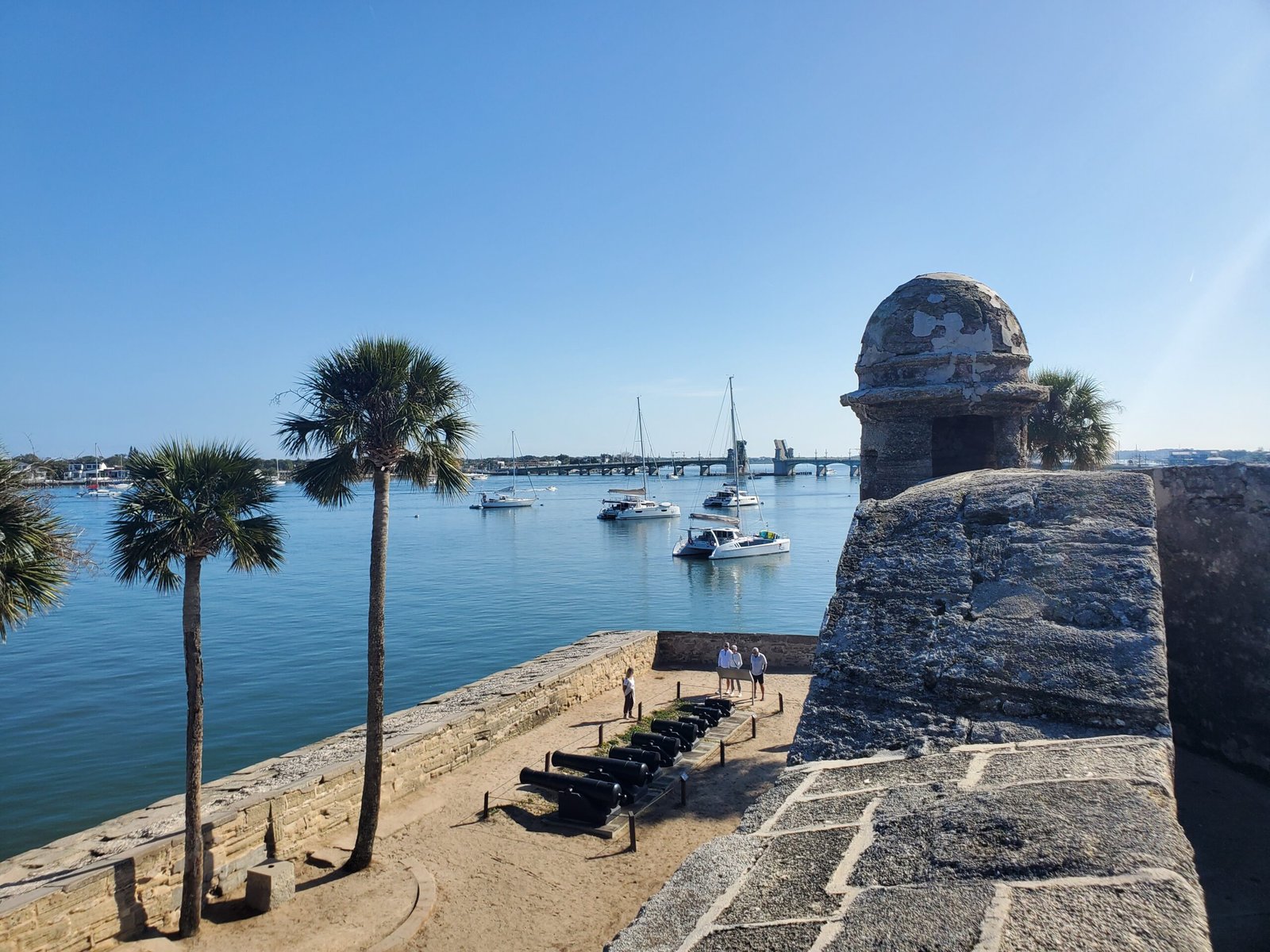
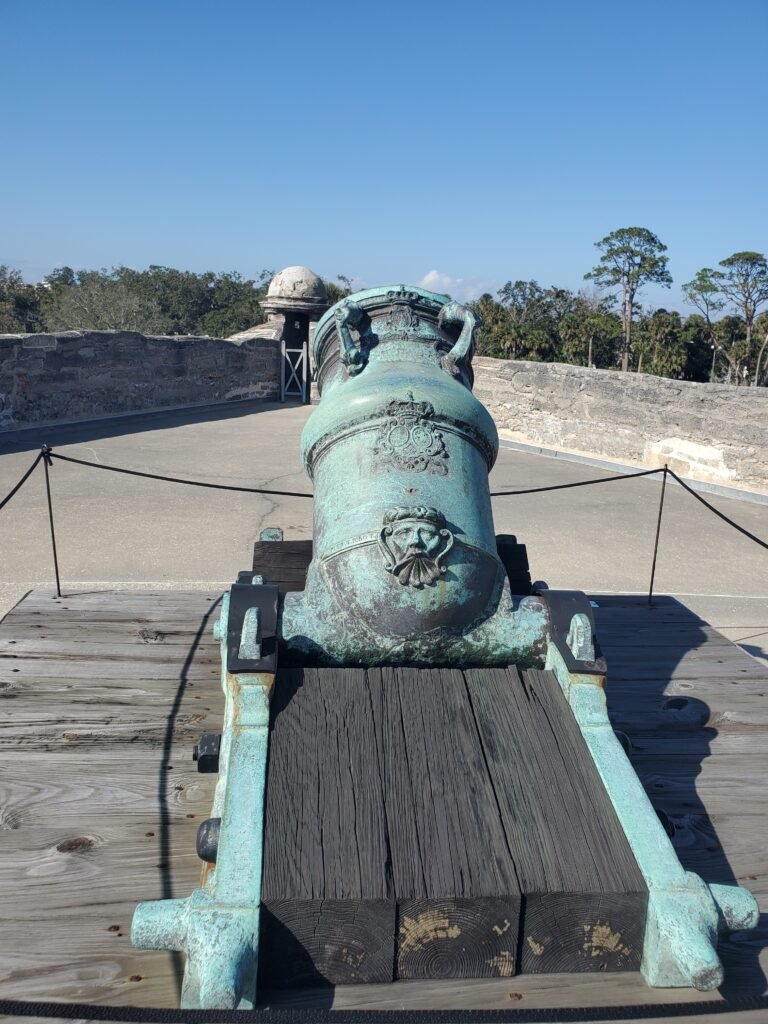
On the upper level you get a great vantage point of St. Augustine. It’s not terribly high, but you can see much of the old city as well as the Bridge of Lions, a drawbridge over the Matanzas River. There are cannons and mortars throughout this area as well as the ground level, most of which are original – with a range of 1690-1846.
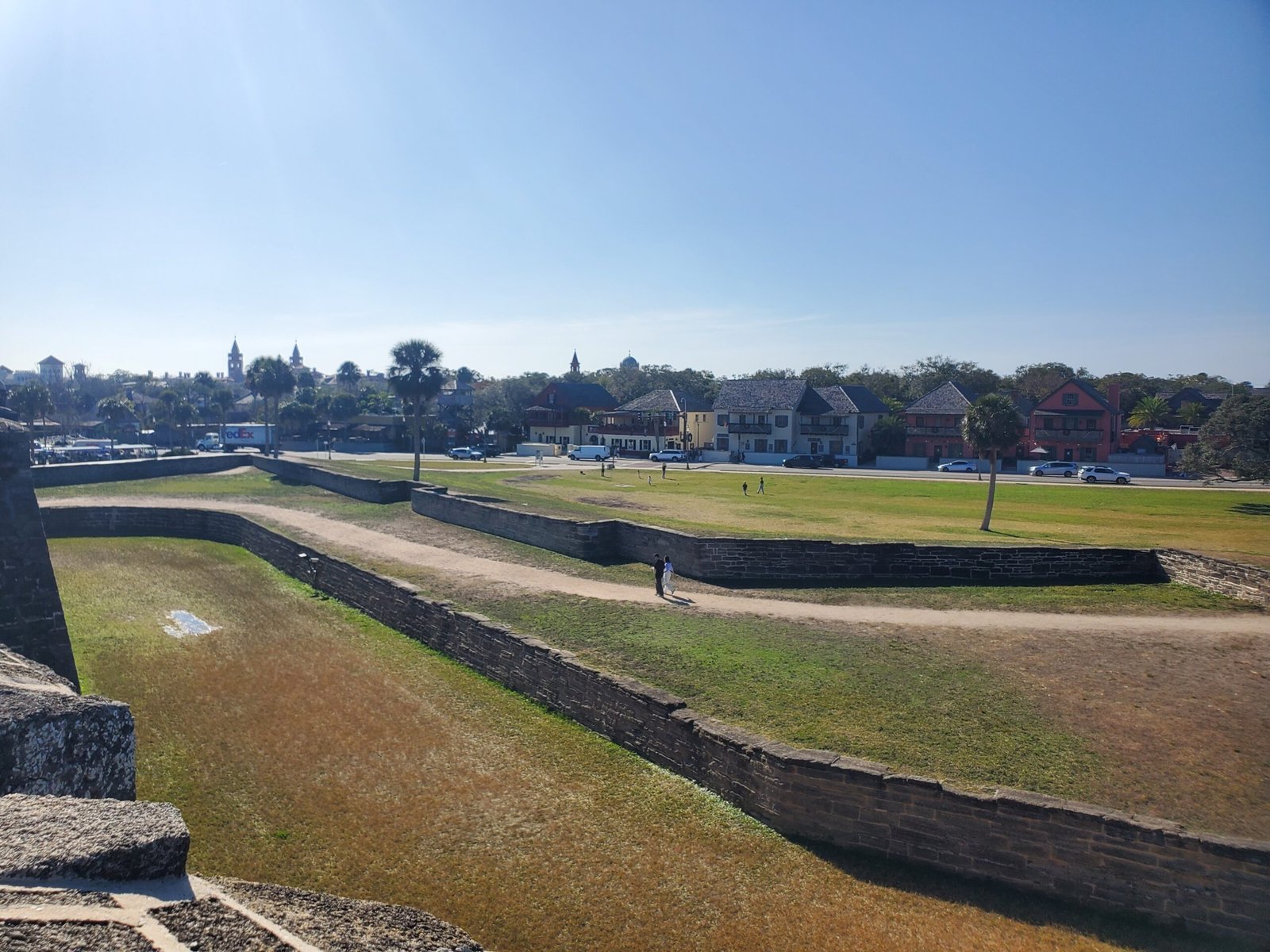
The grounds themselves are very nice to walk through, assuming it’s not too hot out. There are a few pathways and you can see the old walls and moat. You can also go down near the water, passing by a few more cannons and a “hot shot” furnace built in the 1840s to heat up cannonballs. This is actually all free as well, though you do need to pay to enter the fort itself.
What to Know Before You Go
To enter, there is a booth where you pay $15 a person – though if you have an America the Beautiful National Park Pass, it does work here.
You cross a bridge to enter the fort, and from there you walk through a hallway. On the left is the gift shop where you can get a stamp for your National Parks passport book. After that is an open courtyard with tons of different rooms to check out. On your right you can find the stairs up to the top, as well as the restrooms behind them. Do be wary that the way up is not wheelchair-friendly.
It’s probably best to visit in the morning. You might see more people, but you’ll probably want to avoid the heat of the afternoon, especially in the late spring and summer. Budget about 1-2 hours for the site – it’s not terribly large but it will definitely keep you busy for a while.
One thing you need to know is that the parking situation isn’t great in St. Augustine. Do your research in advance so you aren’t just driving around to try and find something. It will likely be decently expensive, so just be aware and compare different prices.
You’ll be doing a lot of walking on stone, so make sure to bring a good pair of shoes and a water bottle. The humidity can really be a killer and there is no interior air conditioning.
And if you’re in St. Augustine, you should check out some other parts of the town. It’s really nice to walk around and see the old architecture, especially the Spanish influences, and there are a few interesting museums and attractions.
What I Enjoyed About Visiting
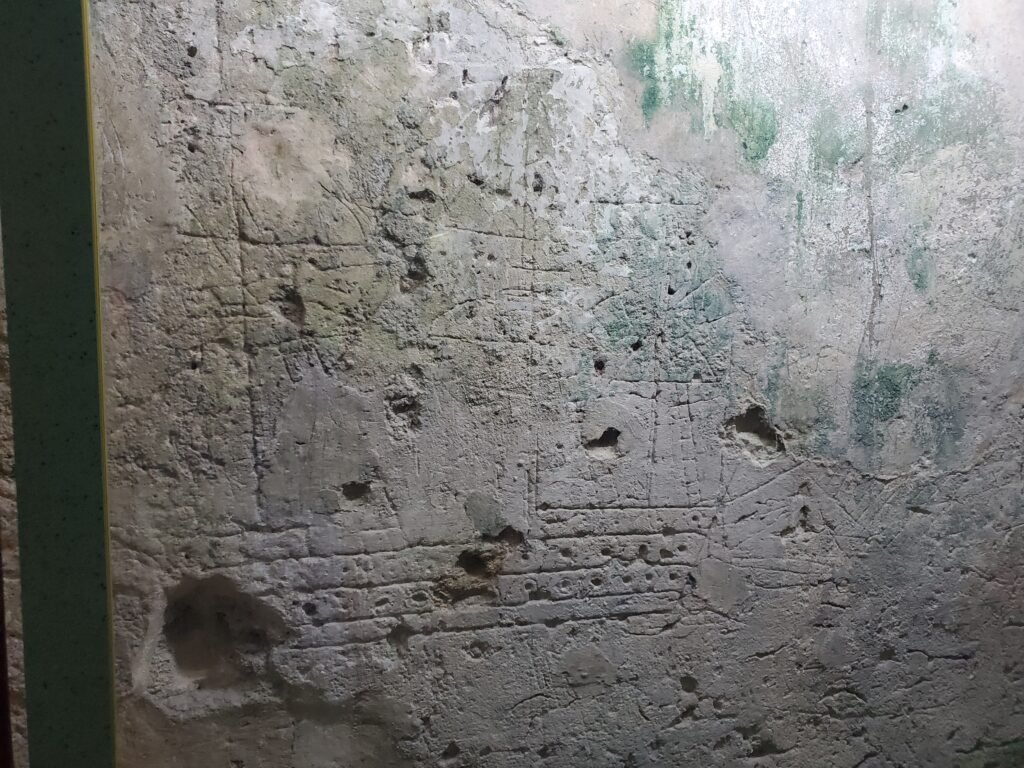
One of my favorite parts about Castillo de San Marcos was the physical history I saw. The stone I was standing on had been there for centuries, built by names I will never know. Not only that, but there are a series of different carvings throughout the building.
First of all, I learned about the Native Americans imprisoned there, both in the 1830s after the Seminole Wars as well as in the 1870s after the Indian Wars in the west. They left their own marks on the walls, which you can still see to this day. Additionally, there was one room where you can see carvings of ships originally made by the British, and some were even modified to add American flags later on! Archaeologists have apparently found over 20 ship carvings, though I only remember seeing about 4 or 5.
It was also cool to see all the original artillery throughout the complex. There are cannons and mortars that are older than the United States!
I also visited at a very nice time of year, January. It wasn’t too humid and the temperatures were quite pleasant, around 75 degrees. There were a good amount of people but not as many as I expected – though we did go on a Monday so expect more on weekends.
Overall, Castillo de San Marcos National Monument is a great destination for history lovers, though there is a bit of something for everyone – whether that be walking the grounds, seeing the artillery, checking out the different rooms, or even marveling at the unique coquina stone. St. Augustine is a beautiful city worth visiting – full of stories from well before the Declaration of Independence.