

April 23, 2025
After 2 days in Kyoto, Carlos and I were set to head down to Nara in the late morning. Nara is one of the most popular day trips from Kyoto, and while many people visit for just a few hours, we decided to take a slower approach and stay overnight.
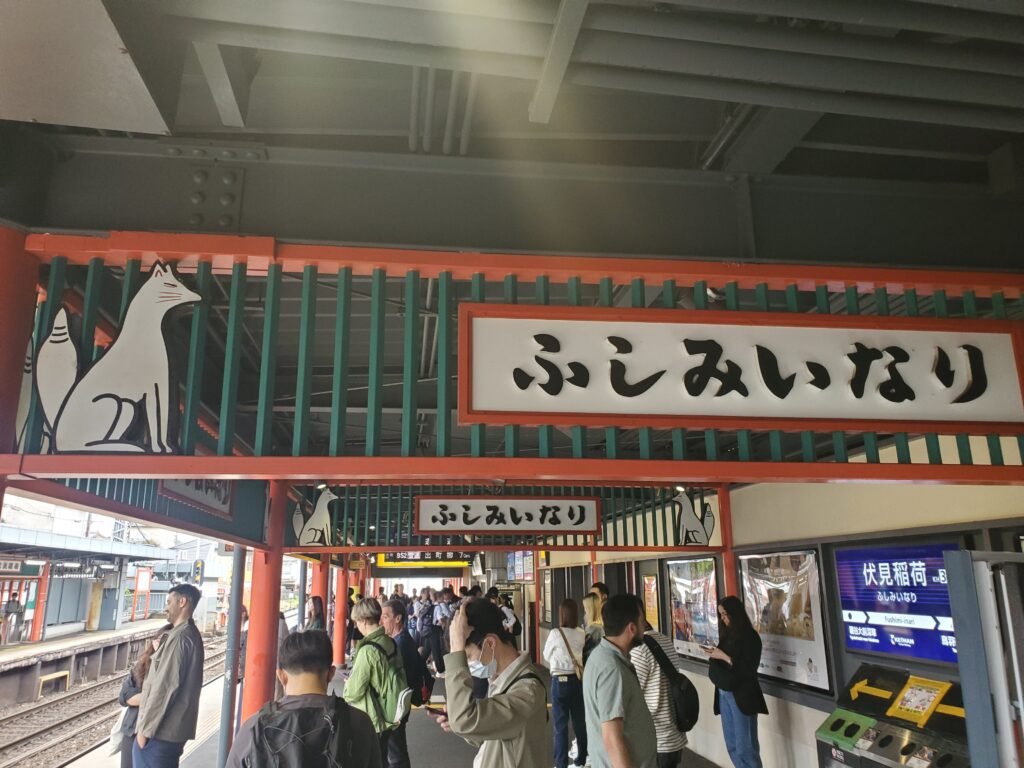
But first, I caught the train down to Fushimi Inari Taisha, one of the most iconic shrines in Japan. It was one of our only days in Japan without clear skies, with rain throughout the day – though I really loved seeing the low clouds hovering over the mountains.
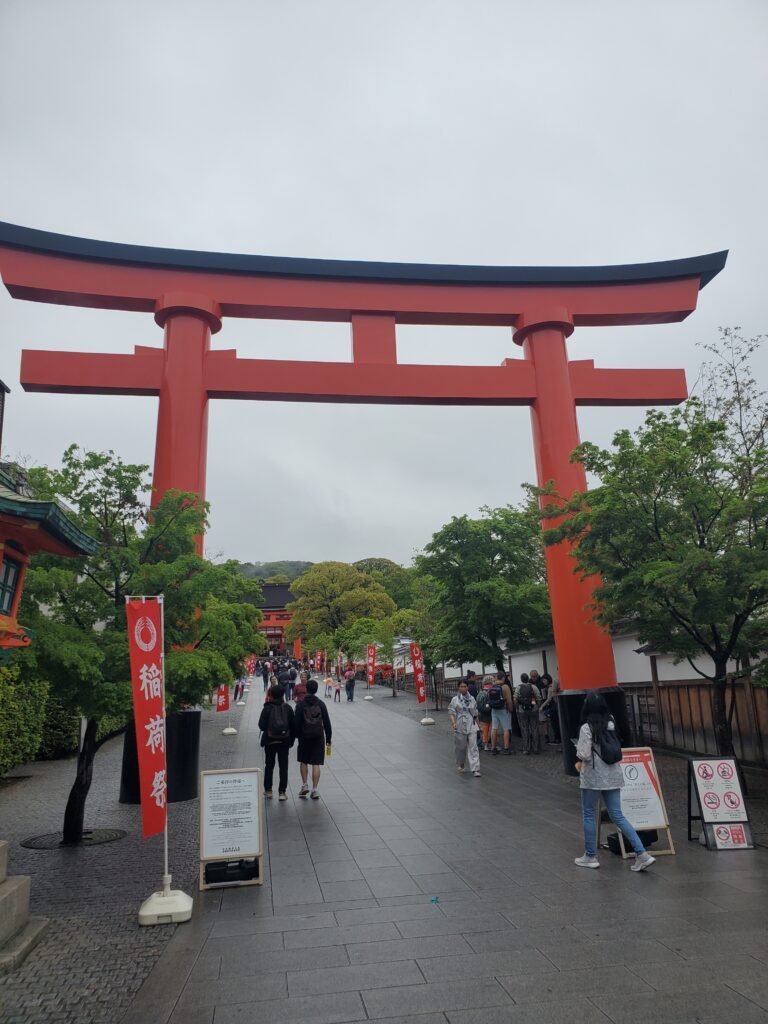
After a short walk from the station, I entered the complex under a massive torii gate. This was just a small foretaste of this shrine – there are over 1000 torii gates here which wind up through the mountain, creating an incredible tunnel of bright red. While it was a bit loud due to all the tourists, it was surreal to see in real life.
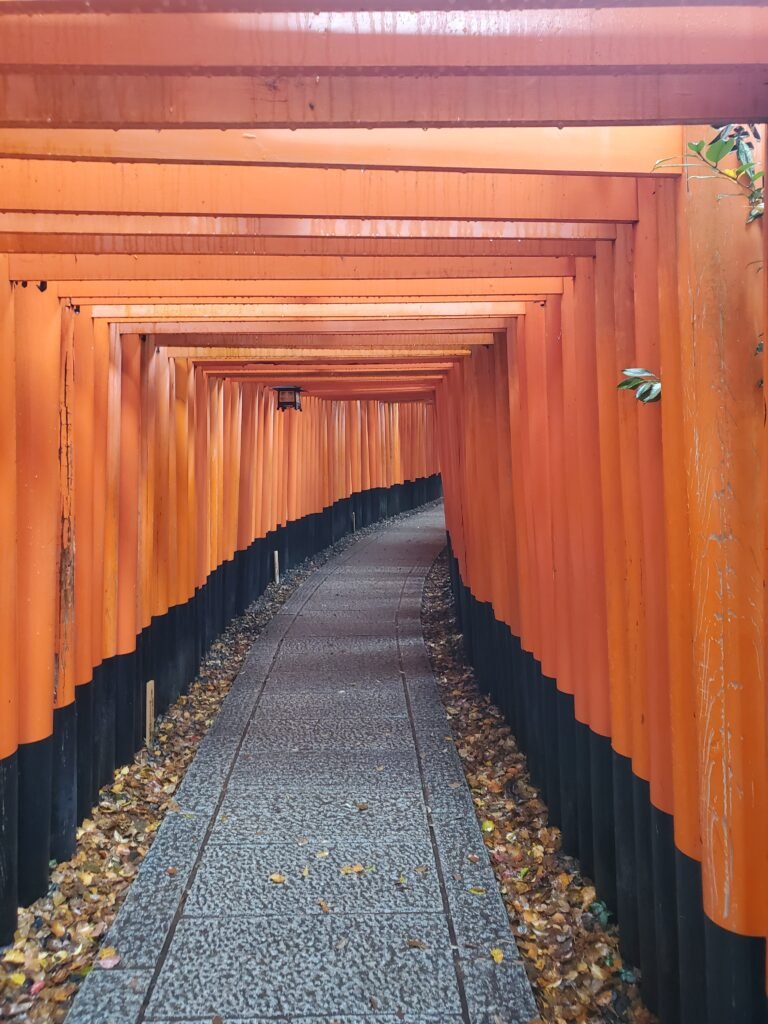
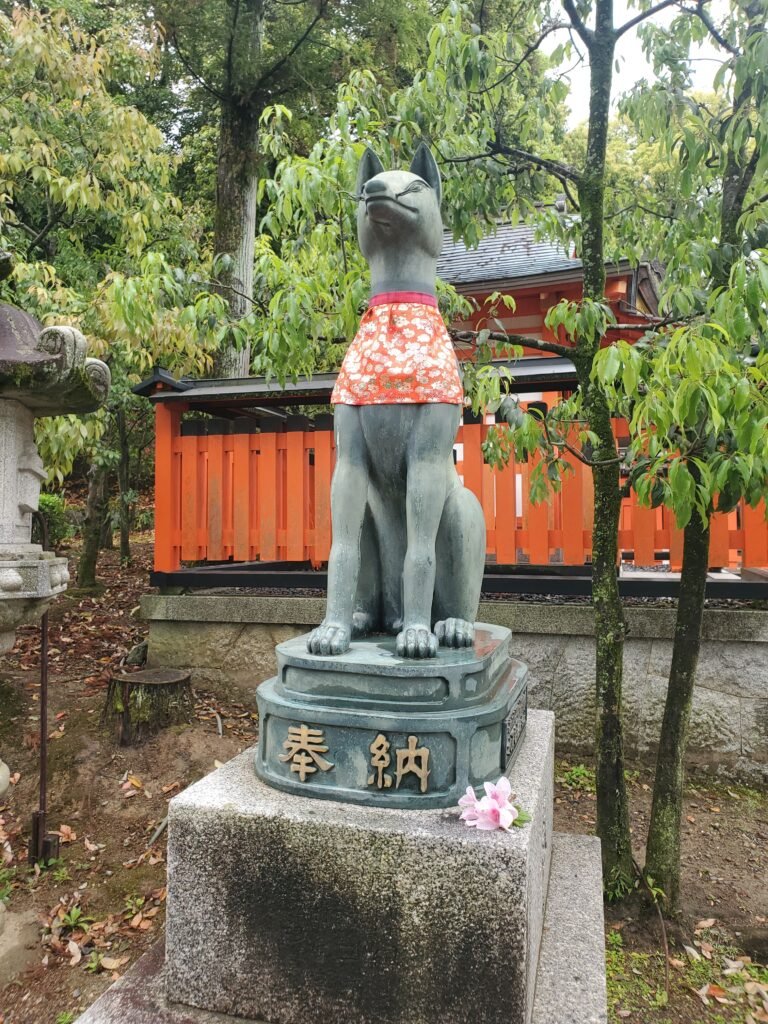
Since I didn’t have time to climb the whole mountain, I cut across a side path and found a quieter stone walkway lined with lanterns and walls as I headed back down. I also spotted quite a bit of kitsune (fox) imagery, as they are deeply integrated in the culture of this shrine.
Of course, I had to get another goshuin stamp before heading out! Each new stamp was like another personalized piece of Japan coming home with me – I cannot recommend it enough.
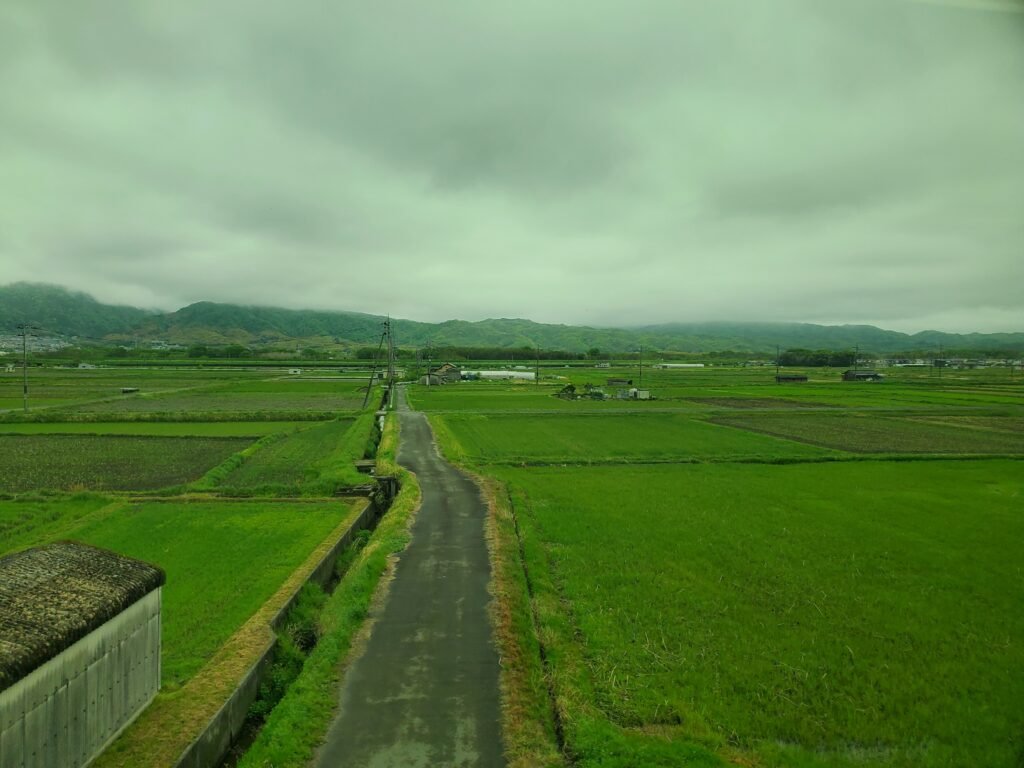
After I returned to the hotel, Carlos and I headed off to Nara around 11 am. It was a very pleasant ride, with beautiful views of the distant mountains, winding rivers, quiet little towns, and stretches of green fields.
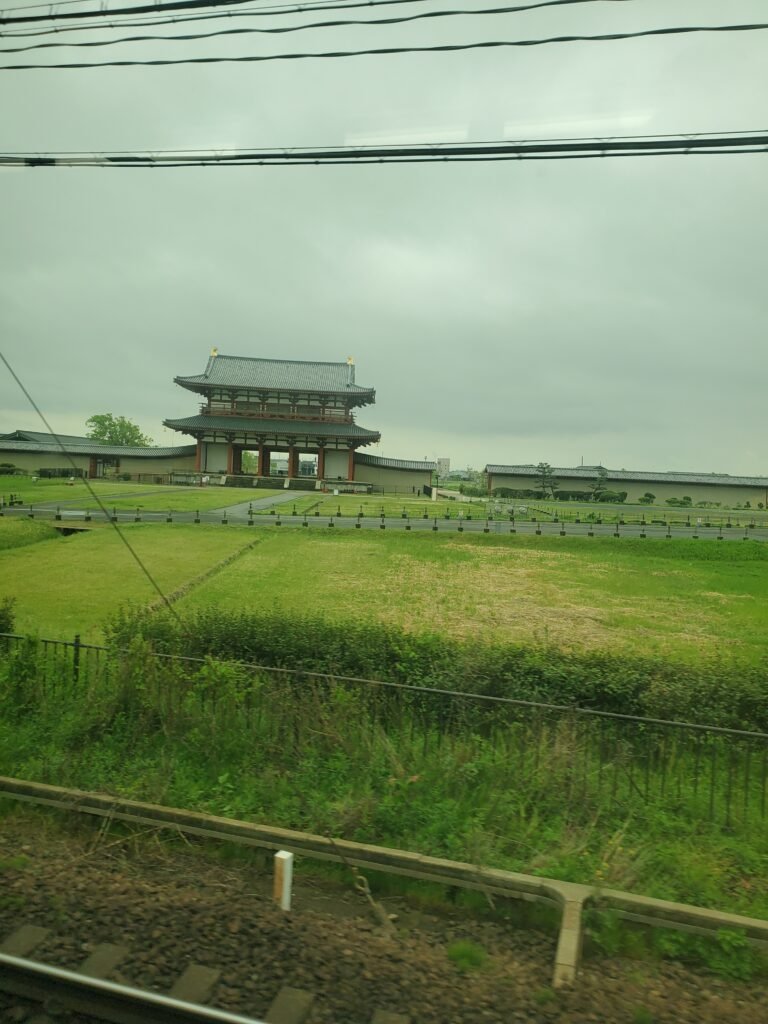
As we drew closer to Nara, we also spotted the Suzakumon Gate, a massive reconstruction of the grand gate that once marked the southern entrance to the imperial capital during the Nara period. It took us by complete surprise amidst its humble surroundings.
After arriving, we walked a few short minutes to our hotel – Iroha Grand Hotel Kintetsu Nara Ekimae. It turned out to be an excellent choice – modern, comfortable, and with staff who were very proficient in English. We got there around 12:30, a little early for check-in, but the hotel kindly stored our bags so we could go explore. By that point we were hungry, so lunch came first before sightseeing.
Luckily, just like in Kyoto, we had a shopping street right nearby! For lunch we found a place called the KIZUNA Café, a cozy spot leaned heavily toward curry-based dishes, which surprised me – I hadn’t realized how popular curry is in Japan. The staff were very polite, service was quick, and despite being busy there was plenty of seating.
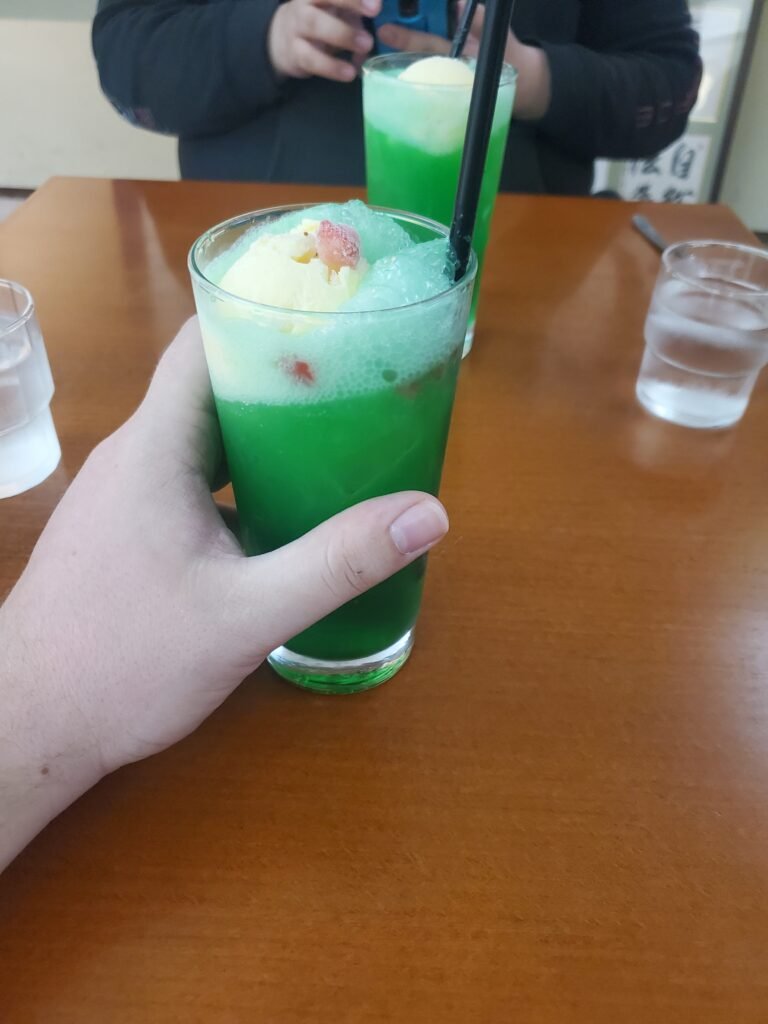
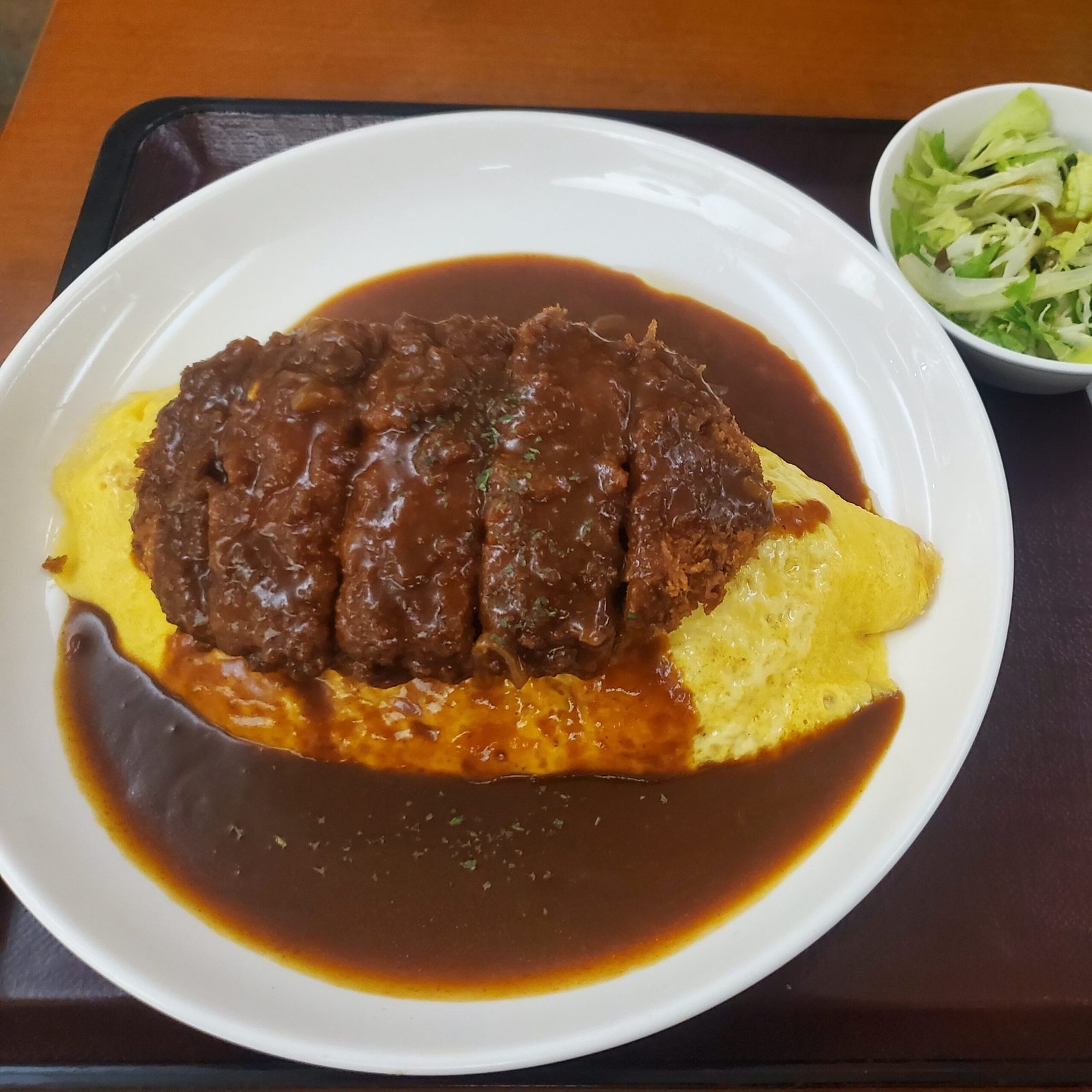
Carlos and I both went for melon soda floats, a neon-green Japanese classic topped with vanilla ice cream – sweet and refreshing! We also ordered the same thing for our main dish: fried pork loin (katsu) served on top of omurice (an omelet wrapping rice), with a sweet glaze and curry sauce. The portions were huge, yet a really good price! Everything was delicious, and it ended up being one of the most satisfying meals of the trip. Now, we were fueled up and ready to start exploring.
We first walked up toward Kōfuku-ji, a sprawling temple complex with several impressive buildings. As we approached, we had our first encounters with Nara’s famous deer. These deer are surprisingly calm, almost like stray dogs or cats – wandering among visitors and sometimes just lounging on the paths or grass. It was fascinating to see them so calm, even with people walking right past!
Nearby was the goshuin booth, offering a variety of stamps – one for each temple or shrine in the complex. We decided to get just one, so while Carlos sat on a stone wall, I waited in line. It was interesting watching people make offerings and burn incense at the adjacent shrine in the meantime – it made the queue feel much shorter. When I returned, Carlos told me something funny: while he was sitting, he was confused that a bunch of people were taking pictures of him – only to turn around and see a deer right behind him!
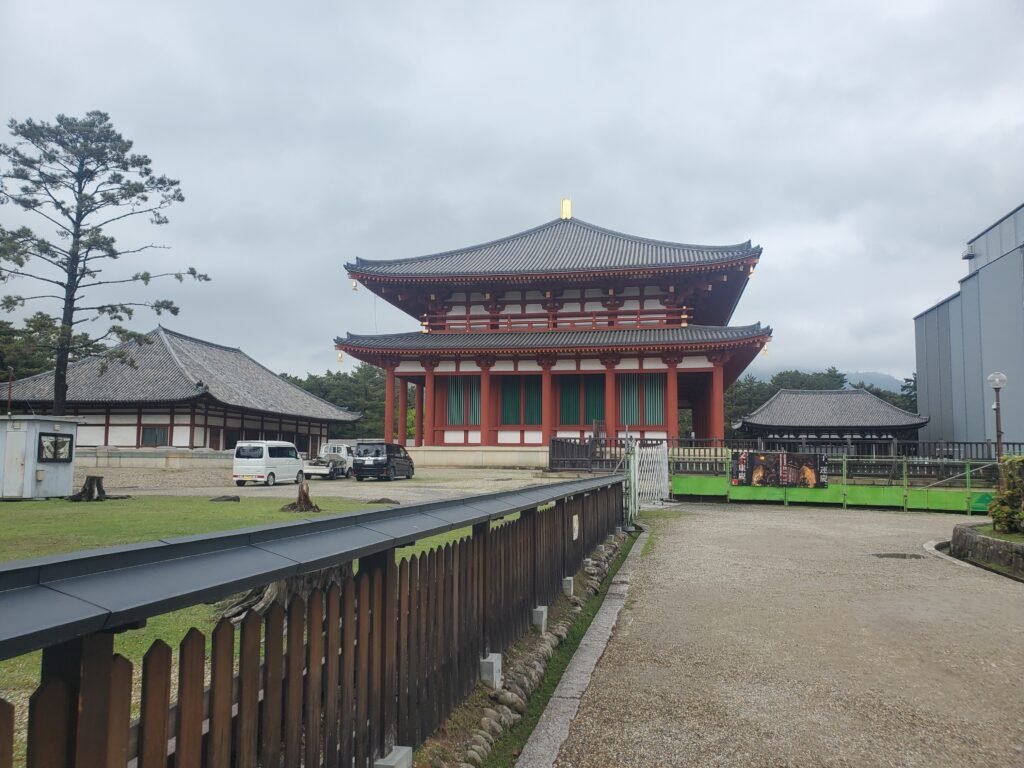
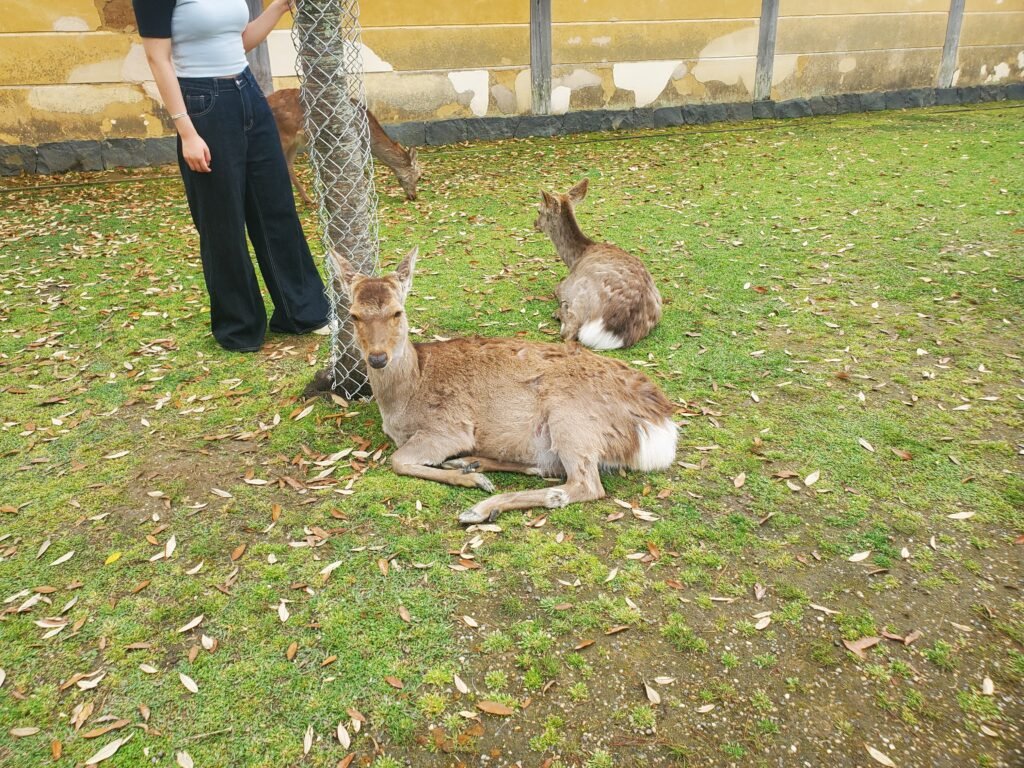
From there, we set off to explore more of Nara on foot, which ended up being a theme of the day. We didn’t use any public transportation after arriving, which let us soak in the atmosphere of the city at our own pace. We wandered out of the Kōfuku-ji complex and started making our way toward Nara Park, and the walk was full of sights. The landscaping was gorgeous, with tall trees, moss-covered grounds, winding paths, and scattered cherry blossoms – it really felt peaceful and almost otherworldly.
We passed through Noborioji Park, a small but beautiful green space that connects the city streets with the larger Nara Park area. It was here that we first encountered a massive number of deer – probably at least a hundred in this small park alone! Some people were feeding and petting them, as there are designated spots to buy deer crackers, and I even got a chance to pet one myself (and a few more later on).
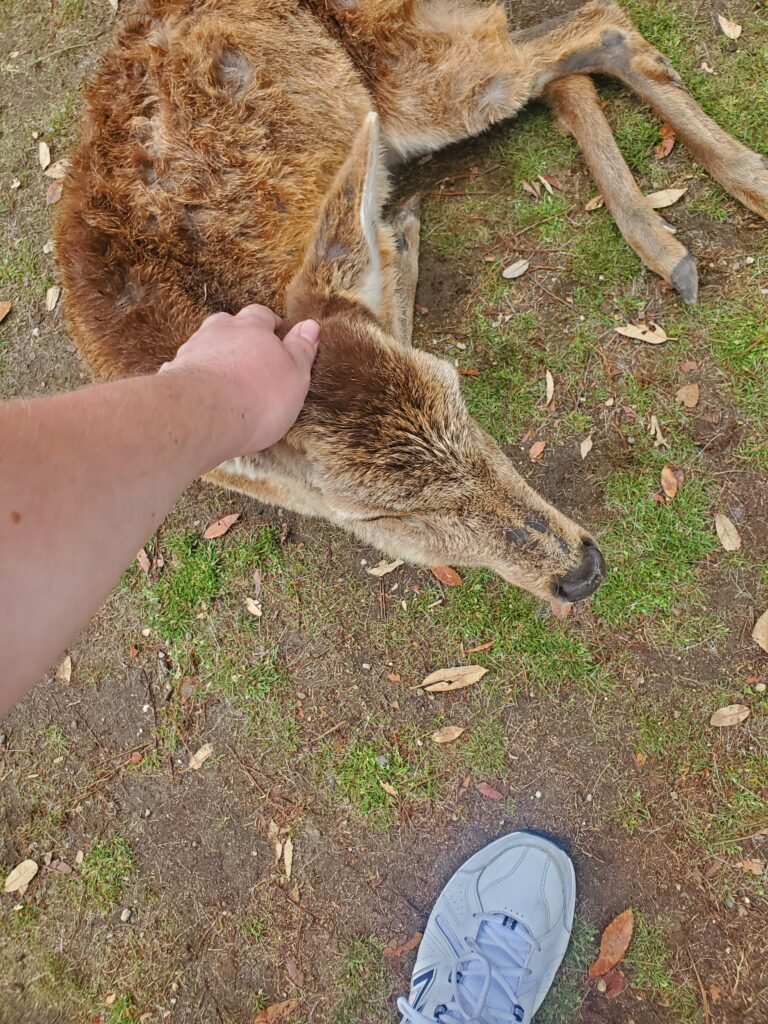
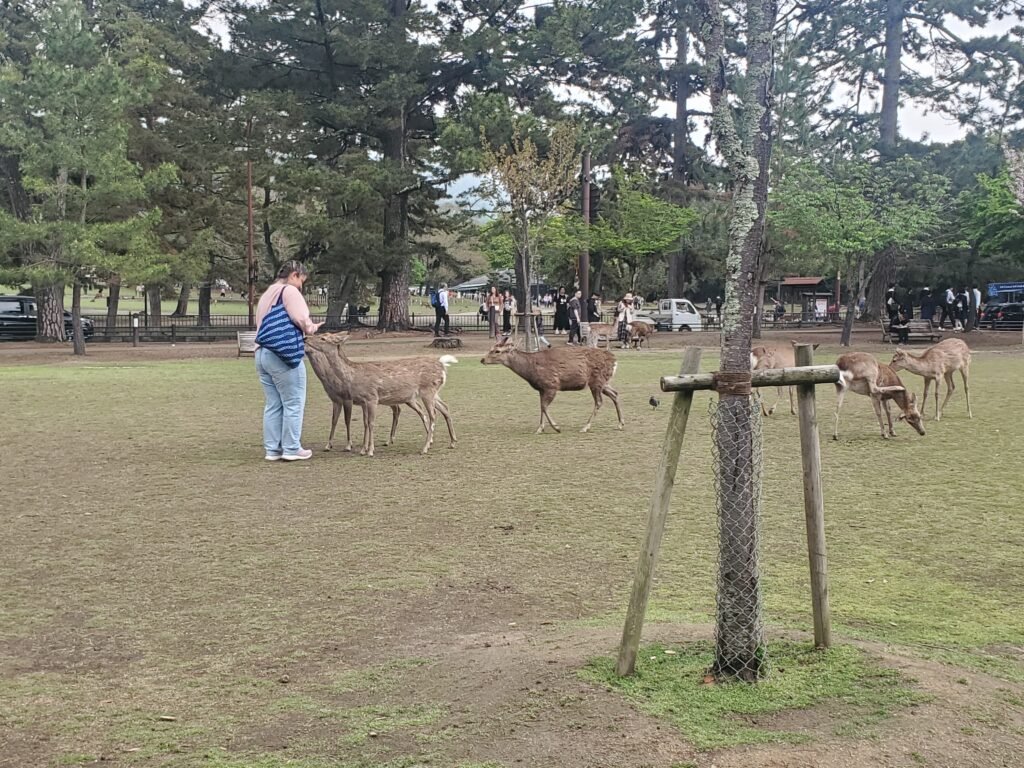
Continuing along the path, we walked past the Nara National Museum as well as some old ruins. Nearby, we paused on a bench in front of a small pond as we watched the deer and the tourists’ interactions with them.
From there, we finally approached Nara Park proper. As we crossed the street, we noticed people being pulled in rickshaws – bet that’s not cheap! After this we walked down a sloped sidewalk toward a large parking area. Looming above the trees was a massive gate, signaling we were getting close. At this point, just after 2 pm, Carlos mentioned he was pretty tired, so he decided to chill on a bench by one of the nearby buildings while I explored for a while. I also brought his goshuin book with me so we could get the same stamps, as I had done in Kyoto that morning.
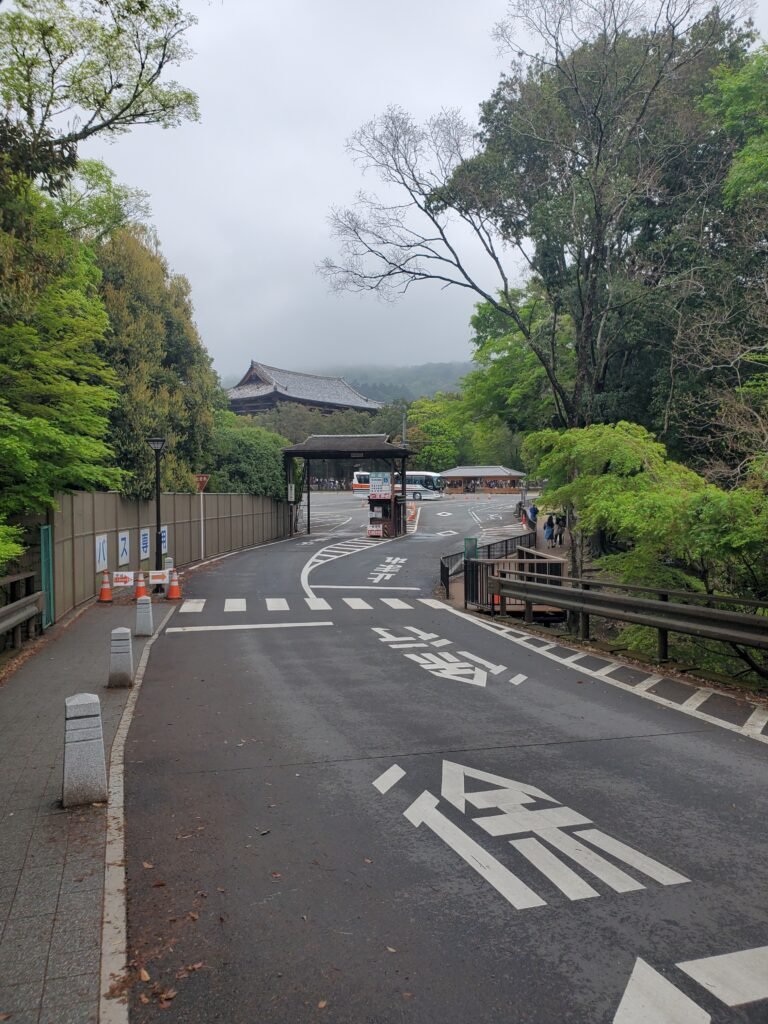
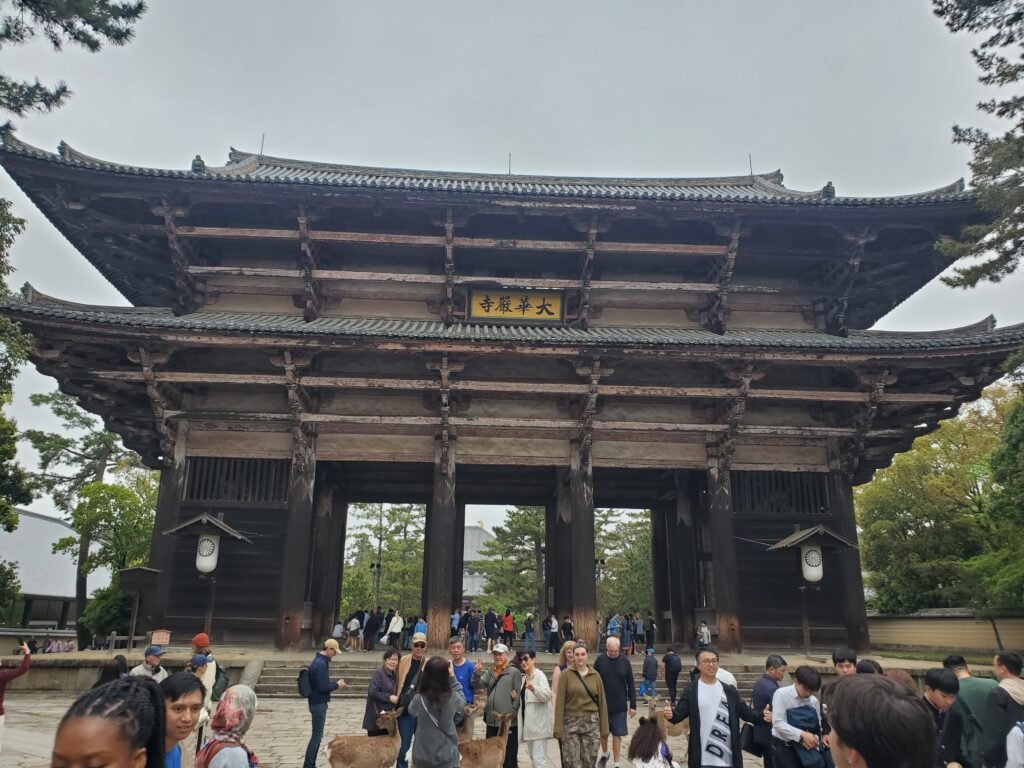
Soon enough, I headed under the Grand South Gate of Todai-ji Temple – a massive wooden gate dating back to the 13th century. Along the way, a few people were feeding the deer and getting absolutely swarmed, which was hilarious to watch!
From here, I walked by a large pond which was seemingly having its central platform restored by some workers. However, rather than visiting the Todai-ji Temple complex in front of me, I veered right onto a path heading up the hillside.
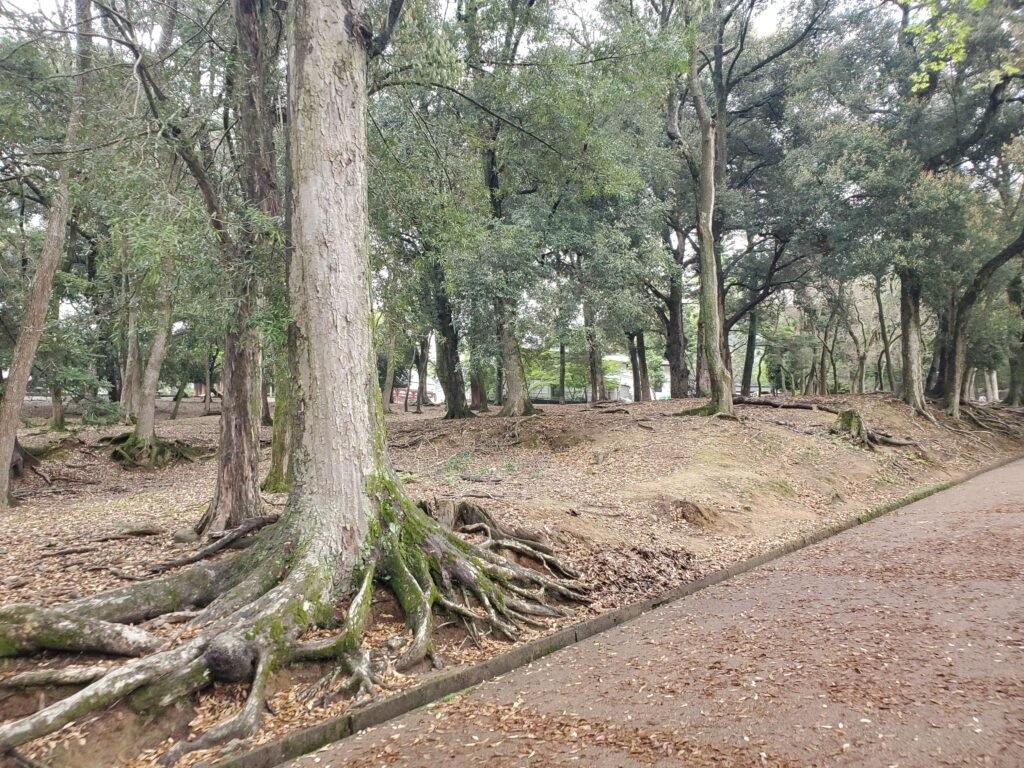
As I ascended, the path unfolded through lush woodland, with scattered roots weaving across the trail – and, of course, more of those friendly deer.
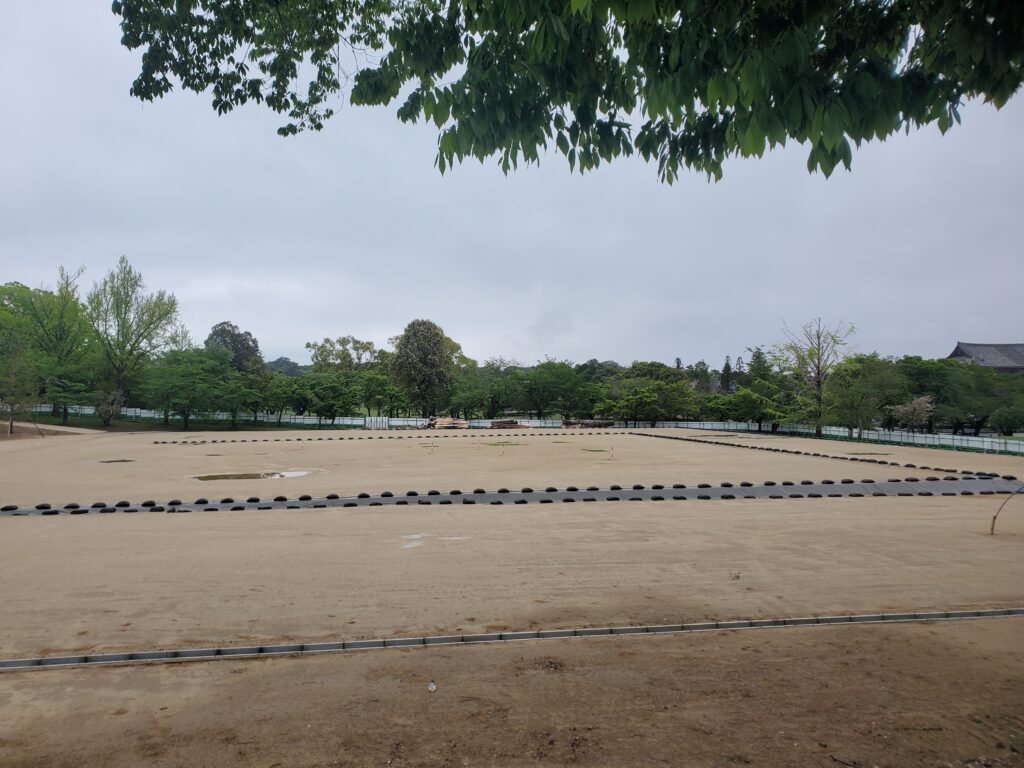
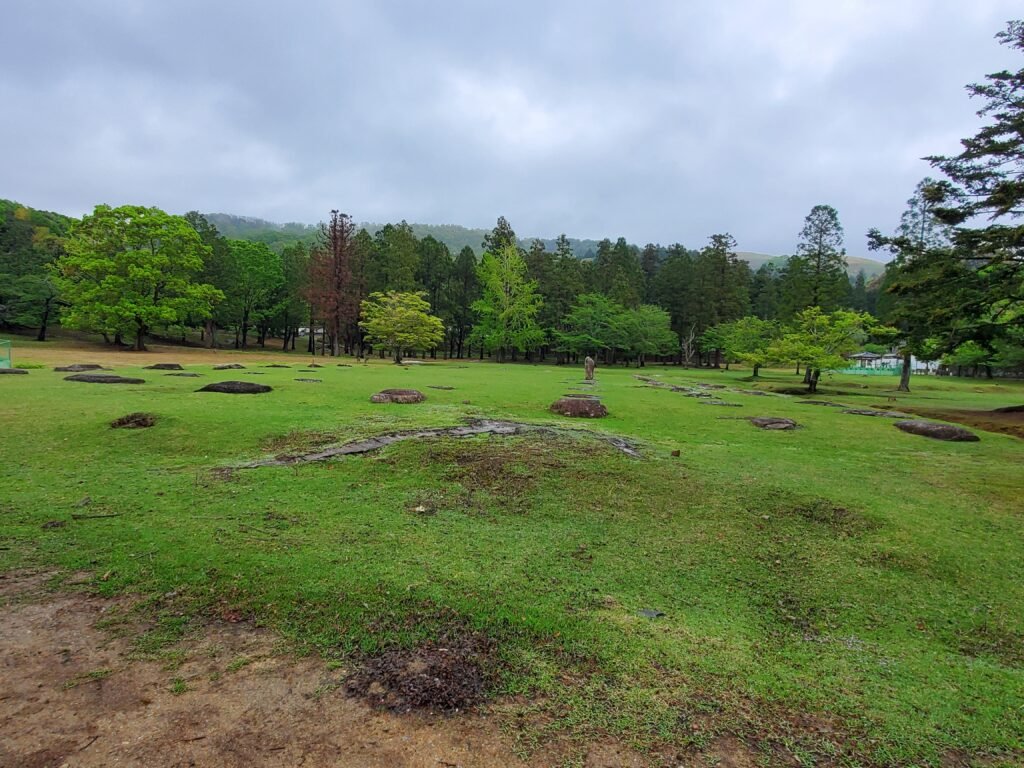
Off to one side, I glimpsed what appeared to be an archaeological dig – rows of stone foundation blocks. Turns out these are the ruins of the Todaiji East Pagoda, a site under active study. They excavated here about 10 years ago, and have actually developed plans to potentially reconstruct the lost east pagoda based on those findings.
I continued up the path, and came across Tamukeyama Hachimangū Shrine. Believe it or not, this was founded in 749 AD! It is truly crazy how old some of the shrines and temples in Japan can be, especially underrated ones like this or the one we had found in Tokyo, Ushijima Shrine. Of course, I grabbed a goshuin – right as it started to rain again.
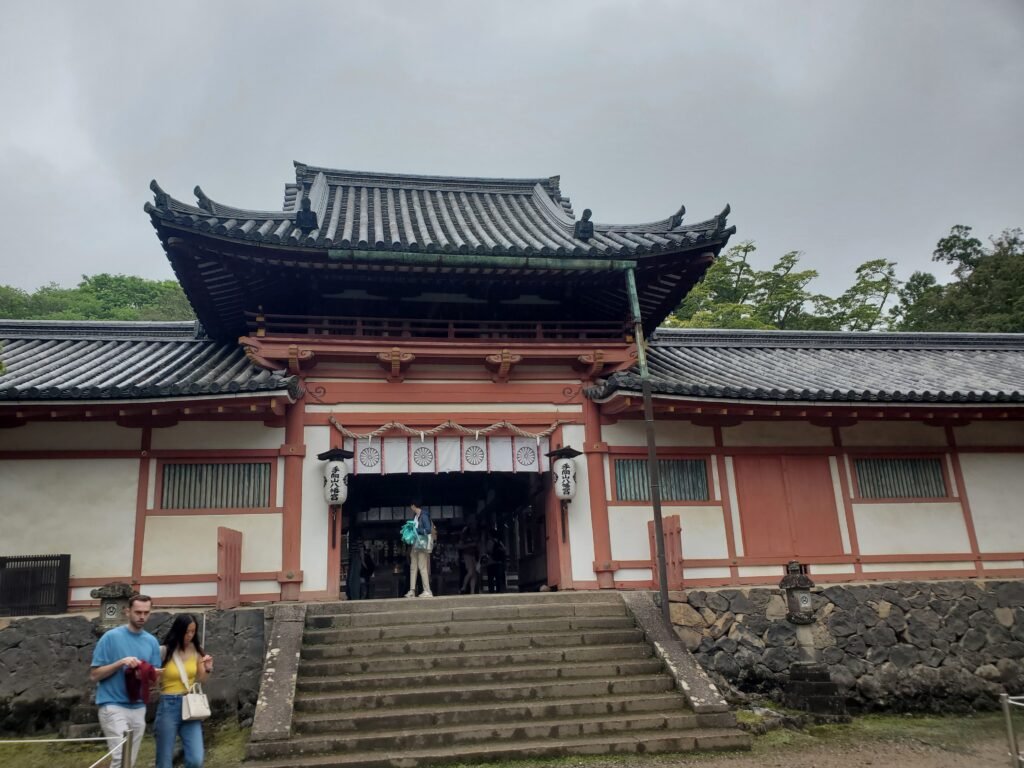
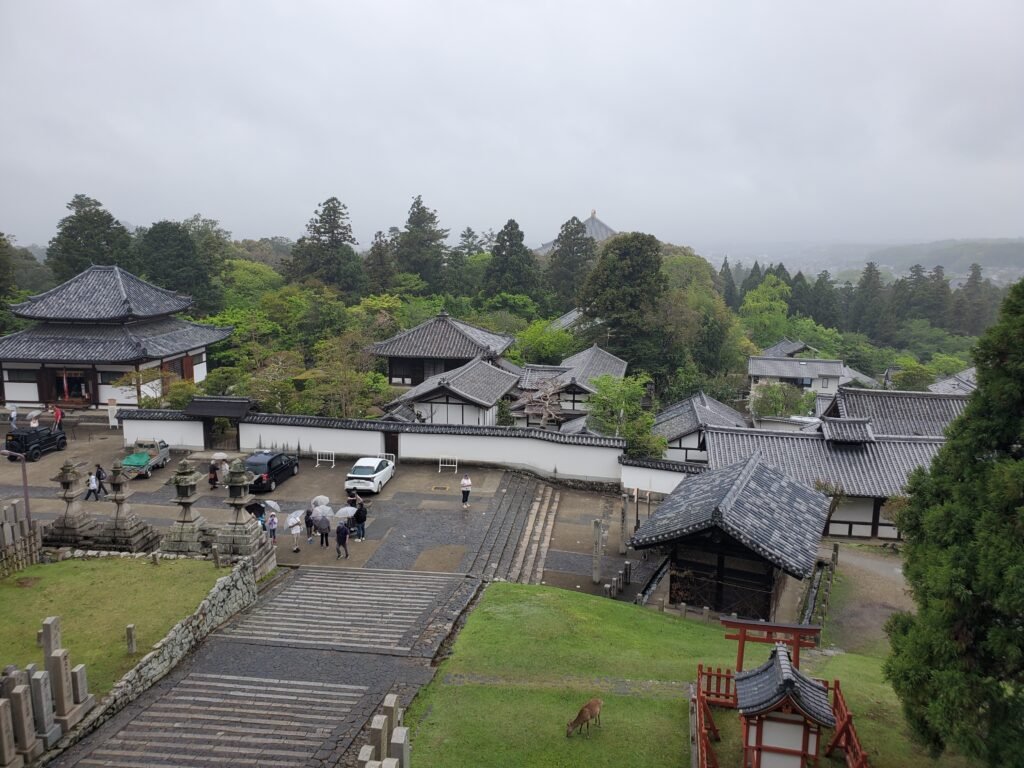
From there, I headed to another ancient building – Tōdai-ji Ni Nigatsu-dō, a stunning hall built in 752 AD on the hillside overlooking the grounds. I picked up another goshuin as the rain intensified, and it was honestly really nice to experience (especially since I was kept dry by an overhang)! As for the building itself, I really loved all the lanterns, wooden plaques with kanji, and ancient doors. There was also a platform with a beautiful view over the temple complex and the greenery of Nara, though the weather kept the distance hazy.
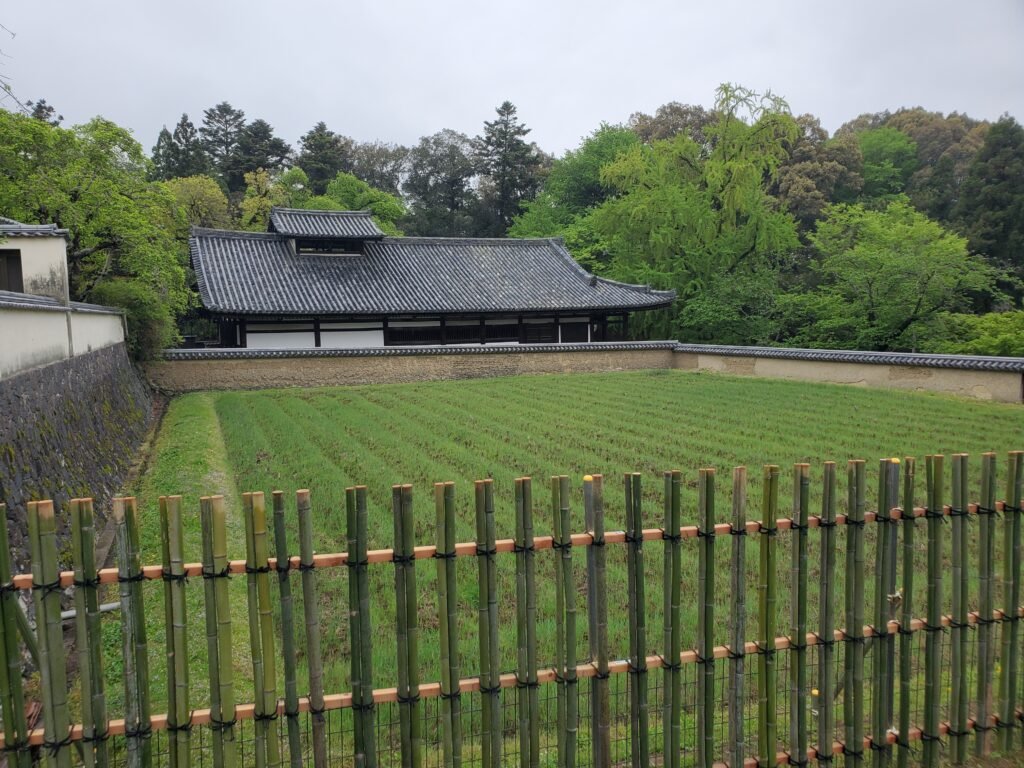
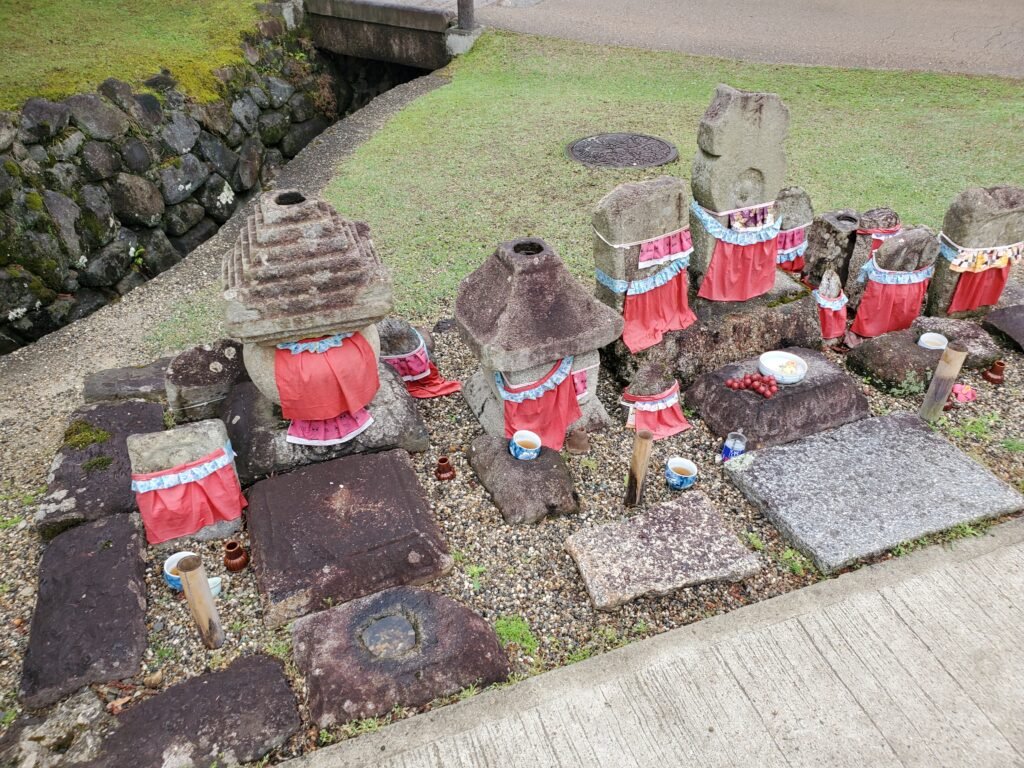
I then started down a thin, winding stone path between the buildings. I passed by a small sacred field where rice is grown for offerings, as well as a cluster of small stone statues. This was interesting, as people had left food, tea, and clothing – local offerings to a Buddhist deity named Jizō. It comes from his role as a protector of travelers and children.
Continuing into a more open area, I noticed another set of ruins. These were the remains of the lecture hall and monk’s dormitory of Tōdai-ji. Monks studied Buddhist doctrines in the former, while the latter housed those who trained at the temple. Excavations have revealed their foundations, and there are plans to partially reconstruct them in the future.
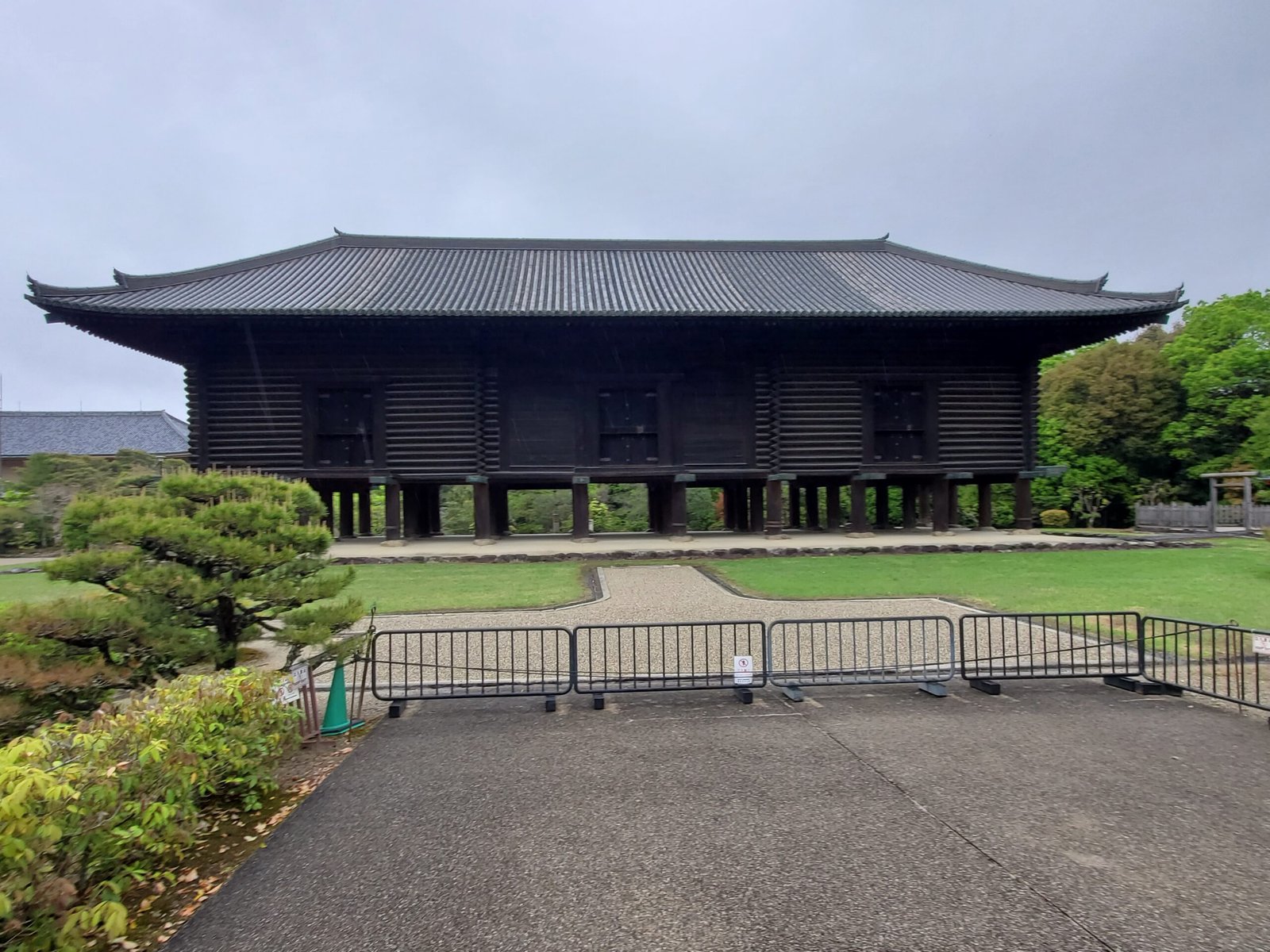
I also wanted to grab a picture of the Shōsōin Treasure House before it closed. Built in the 8th century, it originally safeguarded precious items such as preserved textiles, documents, and artifacts. The older attendant was already preparing to close the gate, but I asked politely in Japanese if I could quickly take a photo, and he let me through. Another small language victory! I hurried along the gravel path, snapped a couple pictures, and left right away, thanking him again on the way out.
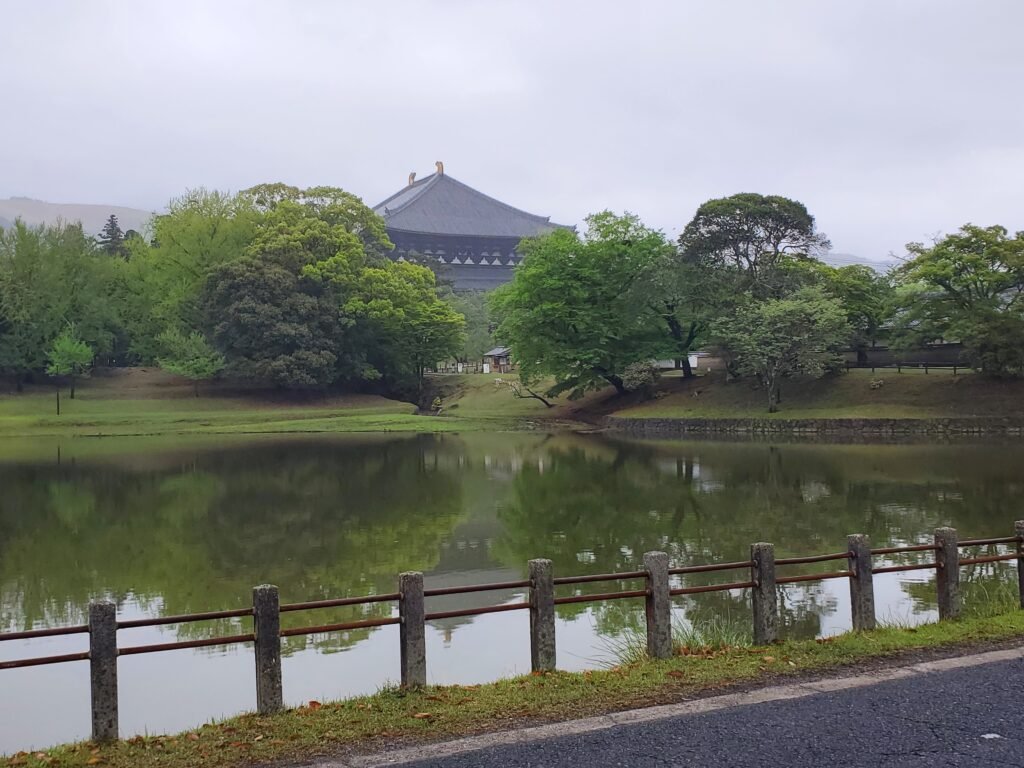
From there I walked past a pond, which offered a wonderful reflection of Tōdai-ji and the surrounding trees on the water’s surface – even with the light rain.
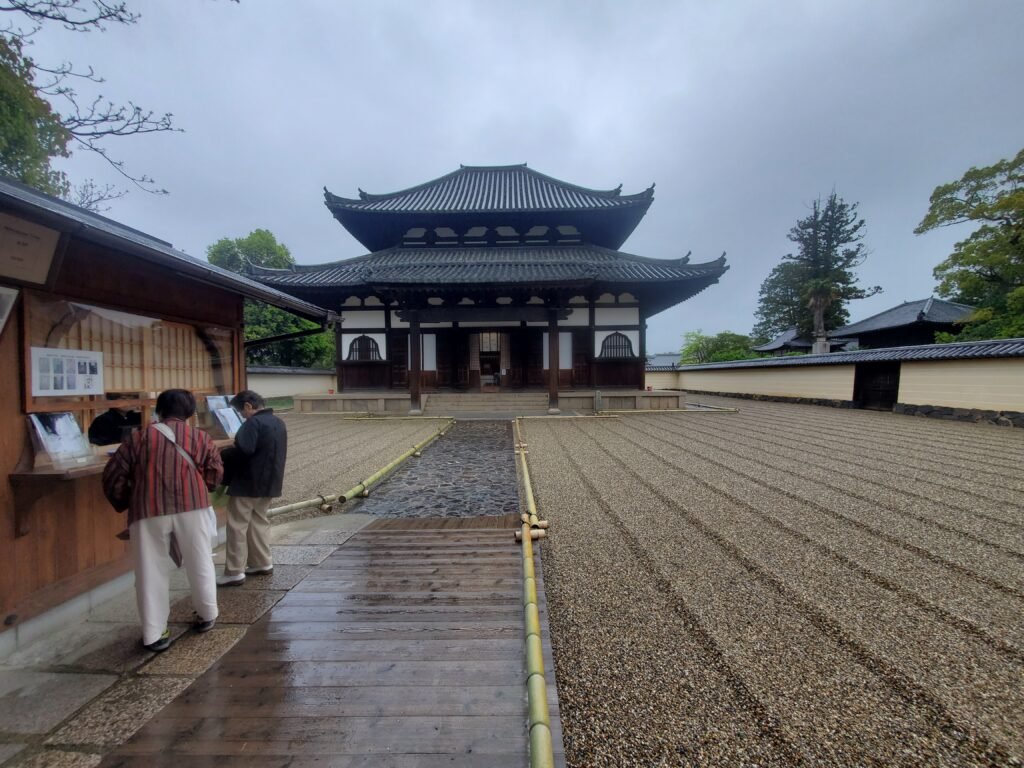
I continued on for about five minutes through small backstreets and up some stairs, heading for Tōdai-ji Kaidan-in (Kaidan Hall). This hall, also founded in the mid-8th century, was where monks officially received their ordination as priests in the Buddhist precepts.
The grounds were beautifully kept, with raked gravel giving it a very calm atmosphere, and there were almost no tourists – just a Japanese couple ahead of me at the goshuin counter. I got my stamp here as well, glad to be adding another to the collection while sheltering from the rain.
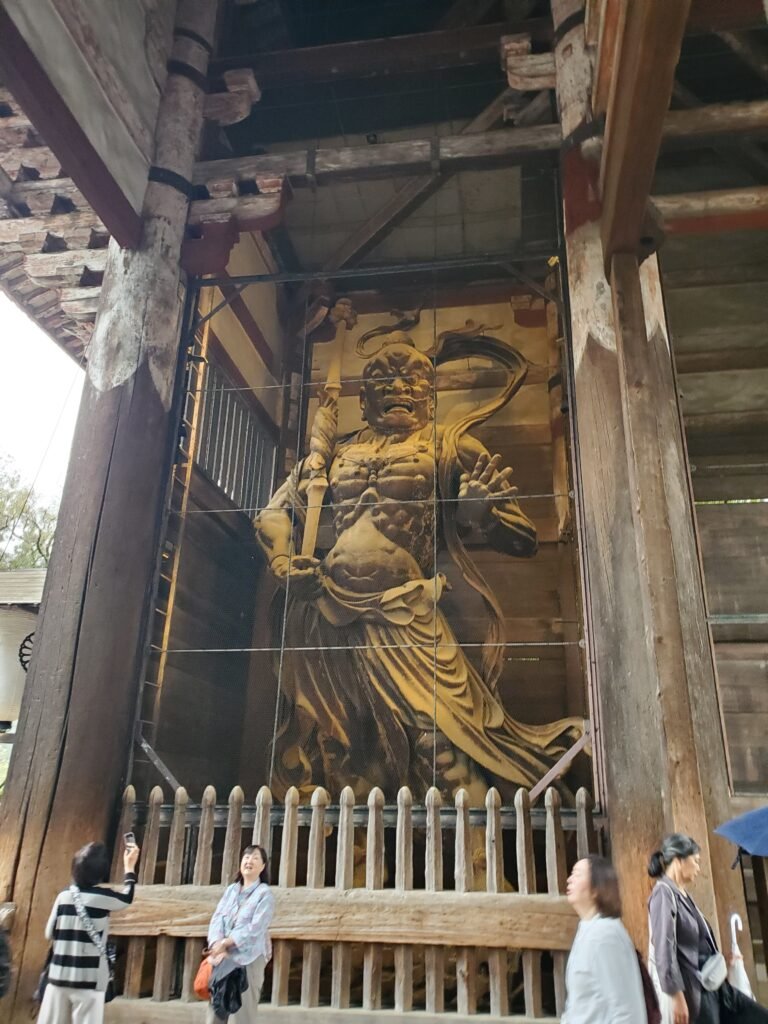
After that I started making my way back, passing once again by the South Gate, where I paused to admire the massive wooden guardian statues. I didn’t go inside Tōdai-ji itself – it was crowded with tourists, and the entry fee seemed a bit steep – but I still felt like I had gotten a rich sense of the temple complex. Meanwhile, Carlos joyfully told the tale of a man who had lit a cigarette right underneath the no smoking sign!
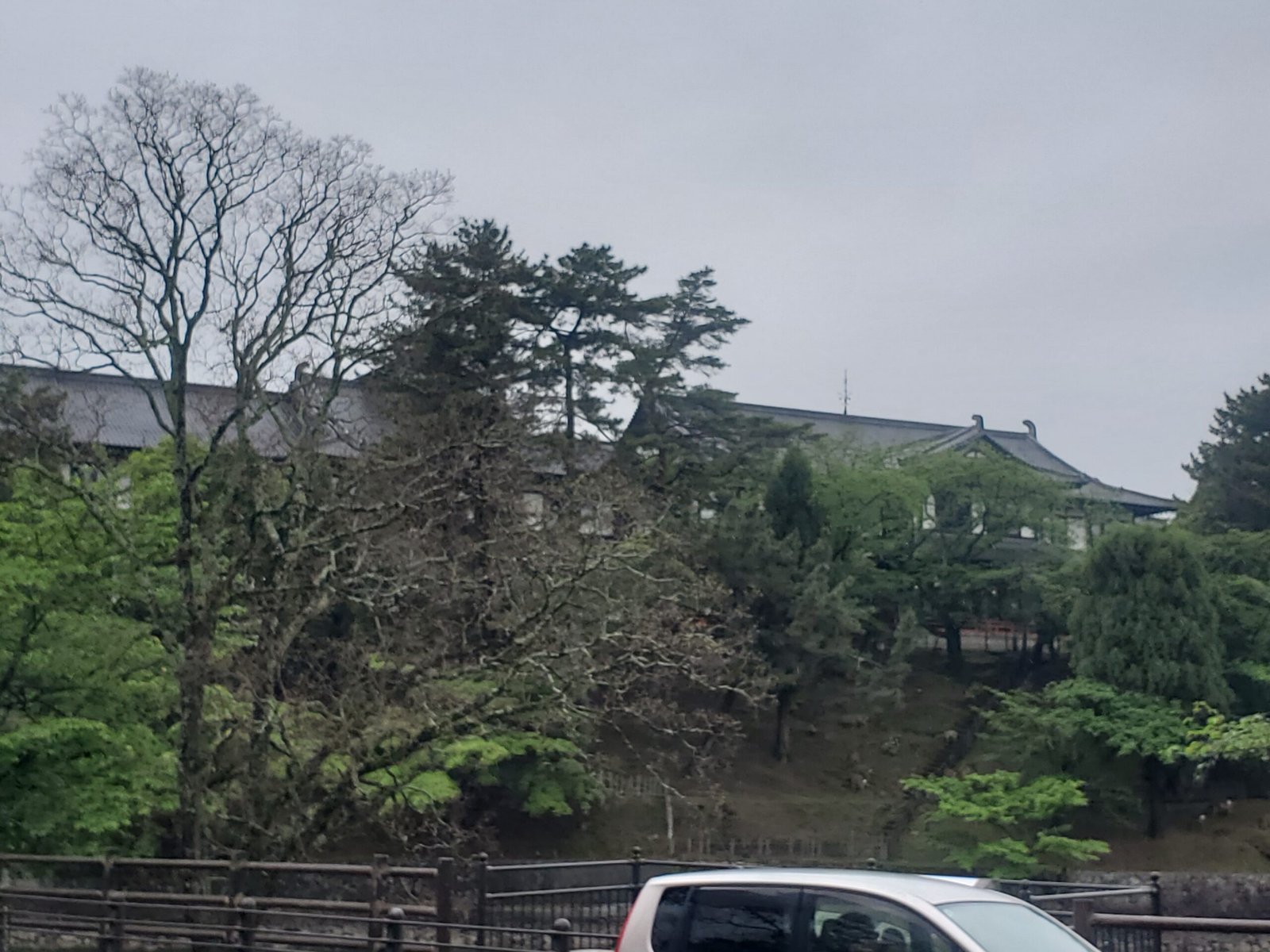
From there, we set off on a relaxed 20-minute walk. This took us past the scenic Ara Pond, where the reflections of trees rippled across the surface. There, we caught sight of the elegant Nara Hotel perched on a hill – a historic property dating back to 1909, once host to royals and dignitaries.
Our goal was the Harushika Sake Brewery, one of Nara’s most famous breweries. The brewery itself has been producing sake since 1884!
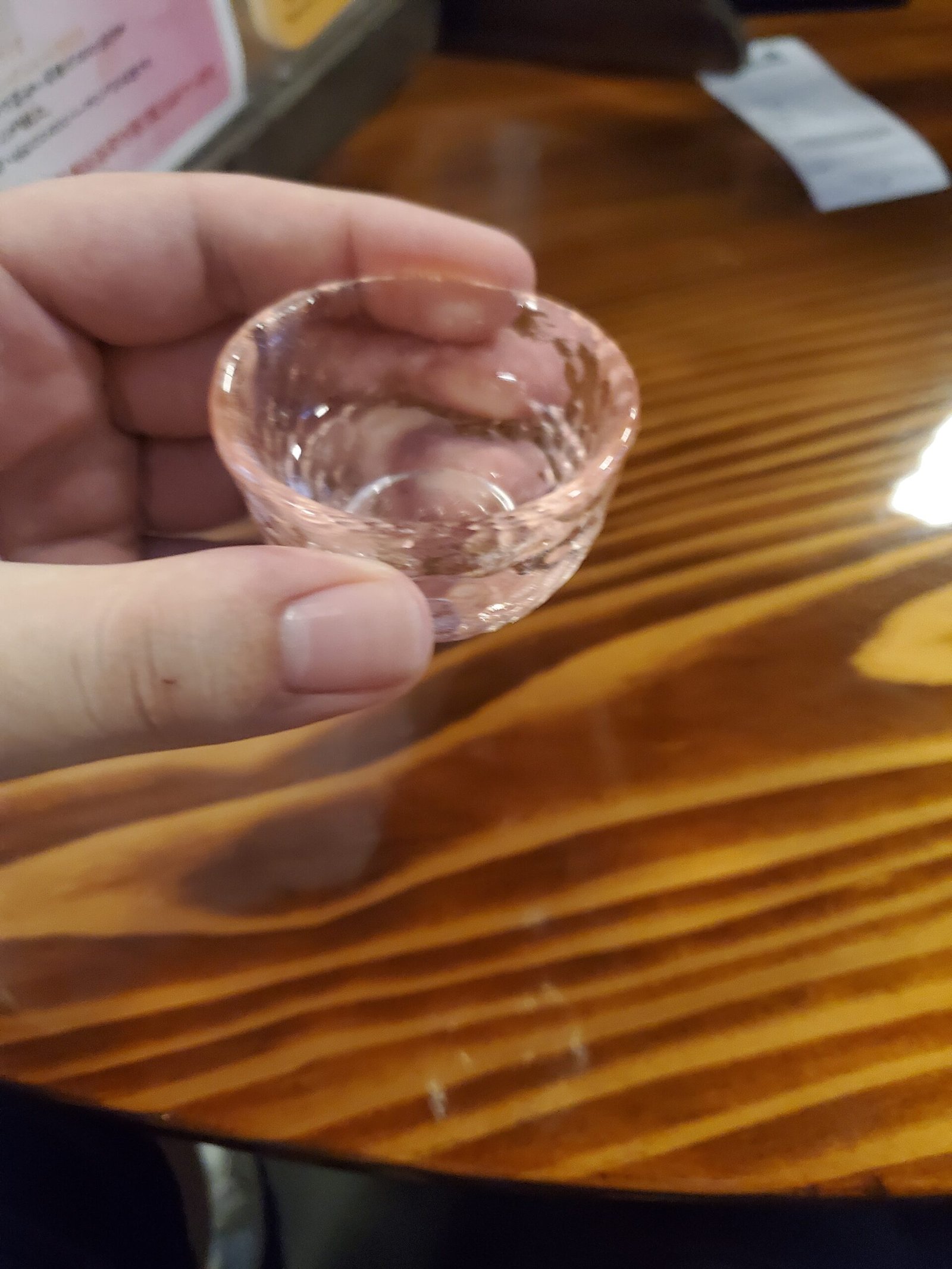
I wasn’t sure I’d enjoy sake. I’m not a big fan of wine, so I figured it might be similar – but when in Nara, we felt like we had to give it a try. For only 700 yen each, we were able to taste five different kinds of sake, guided by English-speaking staff who explained each one to us. They also offered a sampling of pickles to pair with the drinks, but since neither of us are fans, we passed on that.
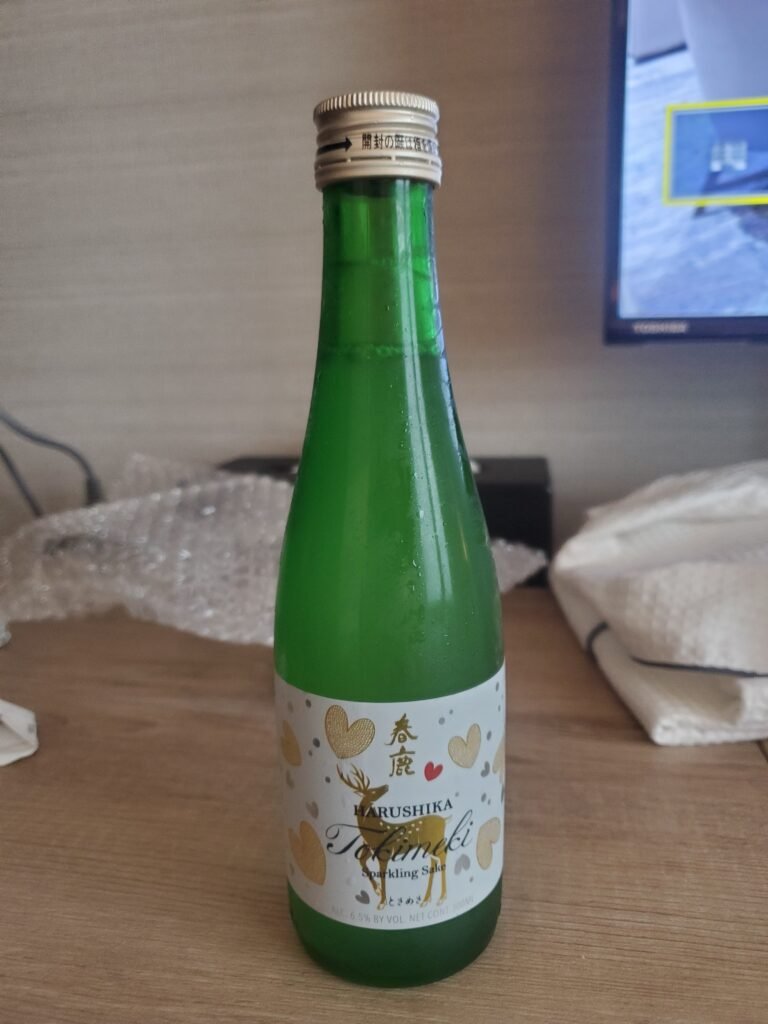
Most of the samples were a bit strong for our tastes, but the real surprise was that we each found one we genuinely liked! Carlos preferred the fourth variety, while I fell in love with the fifth: Harushika Tokimeki Sparkling Sake. I didn’t even know sparkling sake existed, but it was light, refreshing, and much lower in alcohol content than the others – just 6.5% compared to 15% or higher in the traditional ones. Carlos bought a bottle of his favorite, while I picked up two of mine.
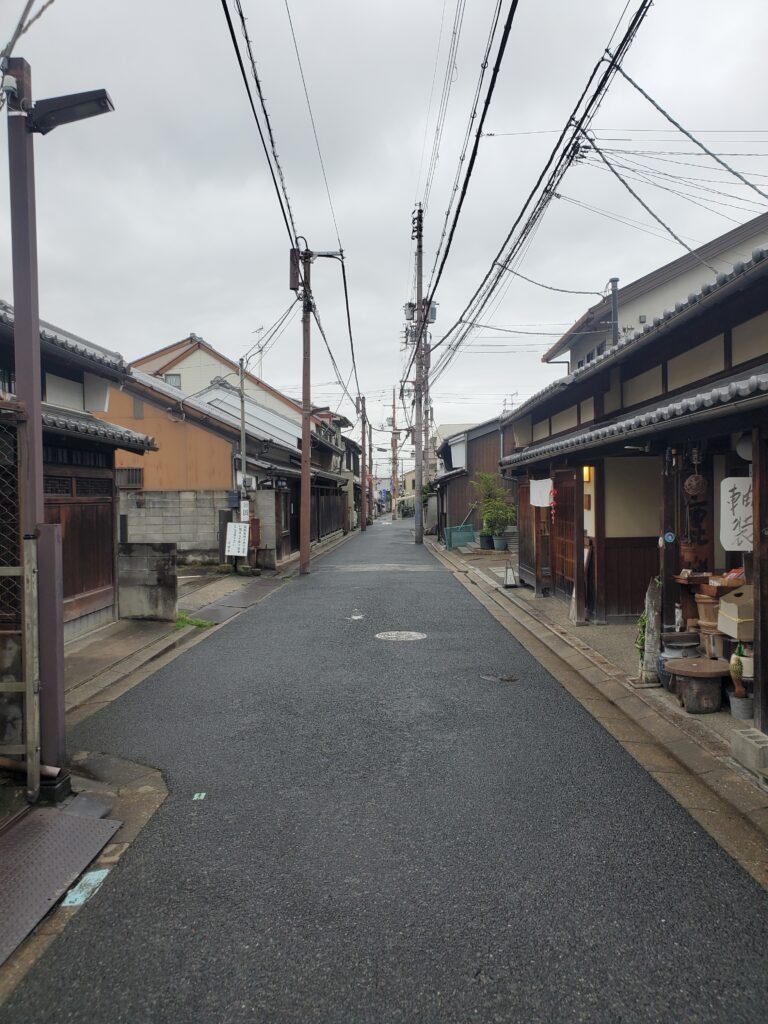
We started to head back, walking through the streets of Naramachi, a historic district in Nara filled with narrow lanes, old townhouses, small shops, and hidden shrines. It really felt like stepping back into old Japan!
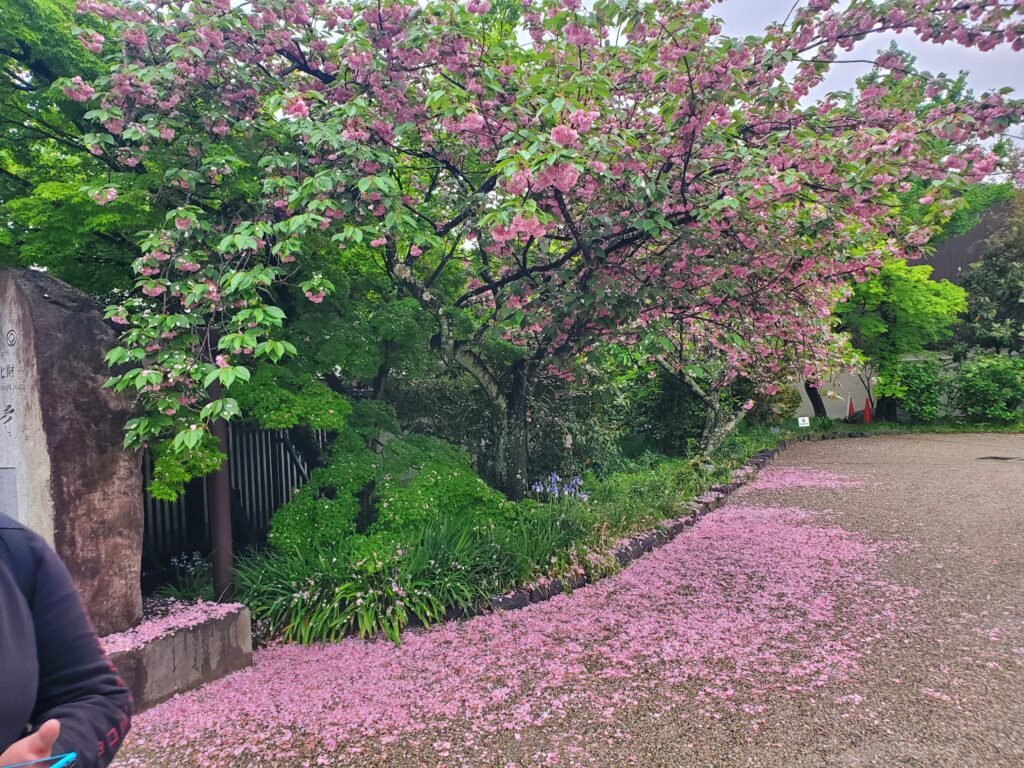
Along the way we saw one more temple and figured we might as well check it out: Gango-ji. While today only part of the complex remains, it was originally built in 718 AD! It was a gorgeous temple, with cherry blossoms that were just beginning to turn green. We added our last goshuin of the day to our book at one of the entrances, though we couldn’t go inside the temple itself. That made six goshuin in one day – the most we’d get in all of Japan!
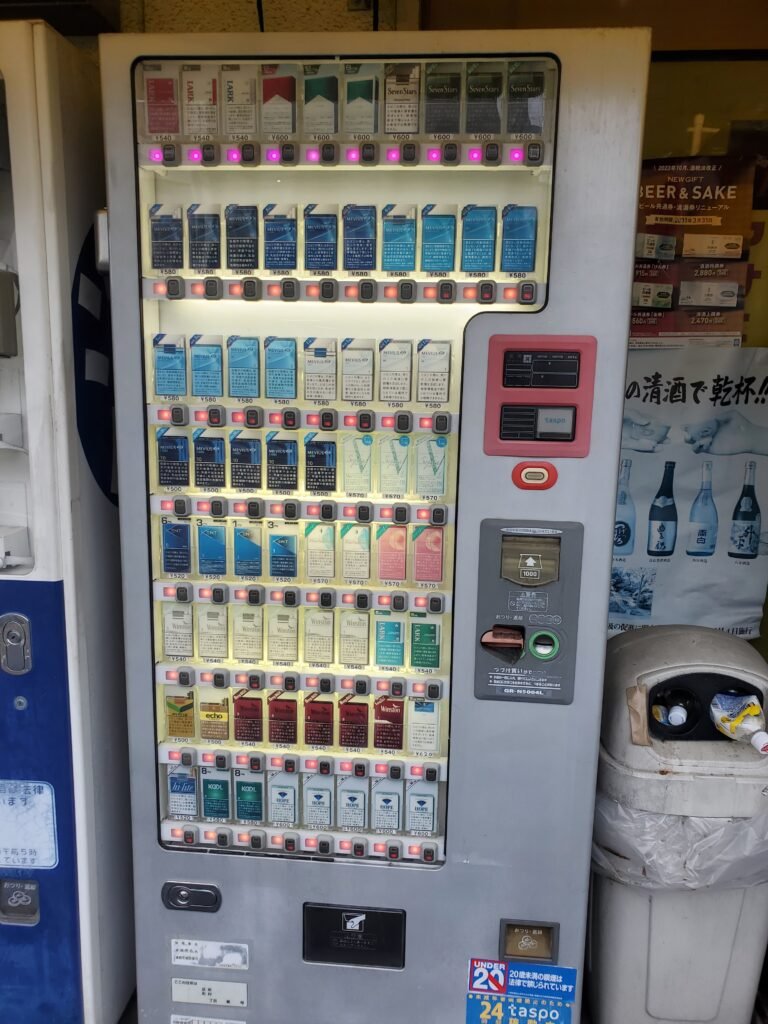
On our way back, we noticed another quirky vending machine – this one selling cigarettes! Yet another indicator of Japan’s high-trust society.
We made it back to the hotel around 4:40 and checked in. The room wasn’t bad – no crazy view, but it had two separate twin beds like Kyoto. The beds were on the hard side, which Carlos didn’t like much, but I was fine with them. Something that was interesting was that there was a slot to insert the key card in order for the room to have power – this was not the only hotel which would do so on my trip either.
For dinner, we spotted a small food stand near the hotel. It looked like it might’ve been connected to a restaurant in the back, but it had its own menu posted out front. We ordered some fried chicken and boba, though we had to wait for the lady running it to come over – she looked pretty overworked, and we felt a little bad for her. However, while the chicken was tasty, it was easily the worst-priced meal on our trip, though the boba was pretty good – both in taste and price.
To make up for it, we stopped by a nearby 7-Eleven, where we grabbed some hot food and drinks. Honestly, this was the better choice anyway – if you visit Japan never doubt the food from a convenience store!
Eventually Carlos decided to turn in early, but I still had to deal with laundry. Luckily, the hotel had combo washer-dryers on another floor, and I had planned laundry days carefully throughout the trip. The machines only took 100 yen coins, so I had to run down to the first floor to use a change machine. I left my laundry bag unattended while I did that – something I would normally never do! By the time it finished it was already pretty late, but I finally headed to bed after what was probably the longest walking day of the trip so far.
Carlos and I had seen some fun things in Nara. But the next day would be one of the most emotional of the trip – a visit to Hiroshima.
[…] Read about our day exploring Nara! […]