

Carlos and I headed out from Nara early this morning, as we had a big day ahead of us. We would be visiting the historic city of Hiroshima, somewhere I was looking forward to visiting. But first, we took the train through the hills toward Osaka, passing through lush fields, rivers, and forested areas – a gorgeous view for most of the journey.
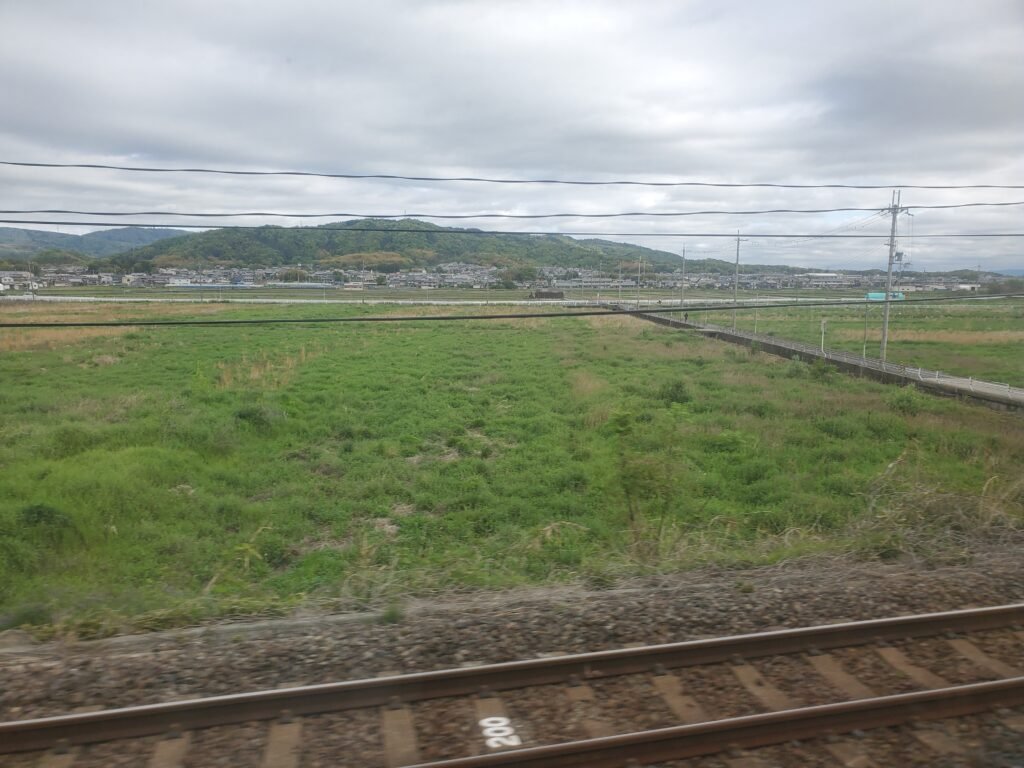
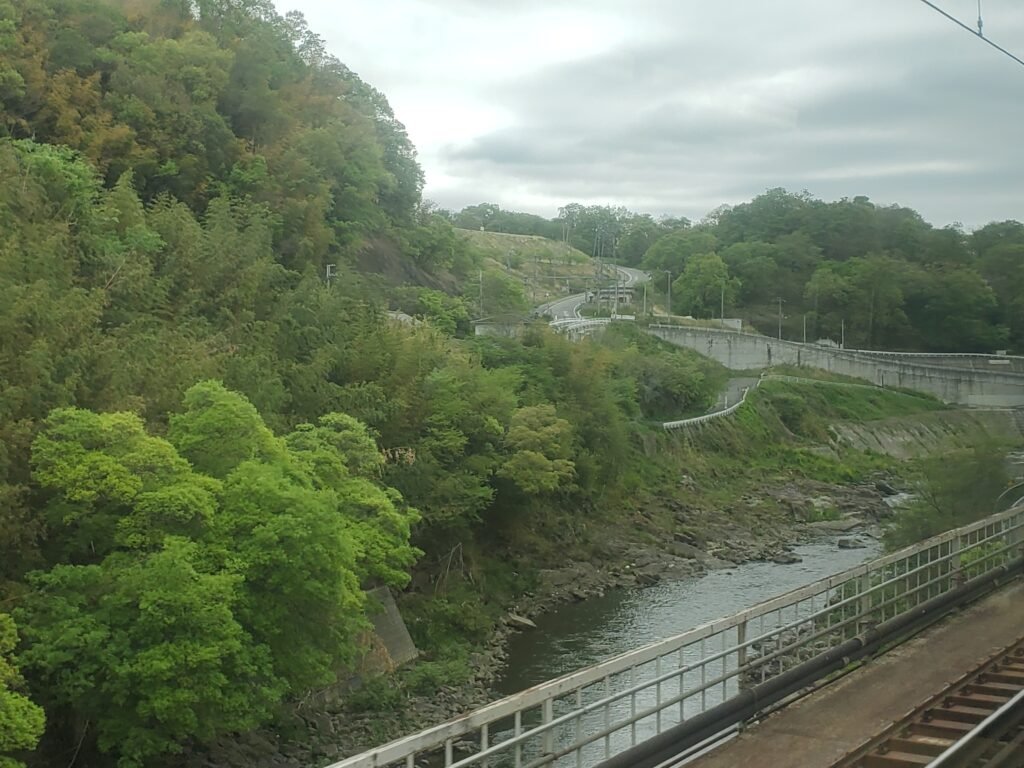
After our train arrived, we dropped off our bags at our hotel before going on a separate train to Shin-Osaka Station. There, we bought round-trip tickets for the bullet train to Hiroshima for around $150 each. The shinkansen can be a bit pricey, but I would say it’s worth doing, especially to be able to easily do a day trip to a city 200 miles away. If you want to learn more about how to take the bullet train, you can read about our first experience with it here.
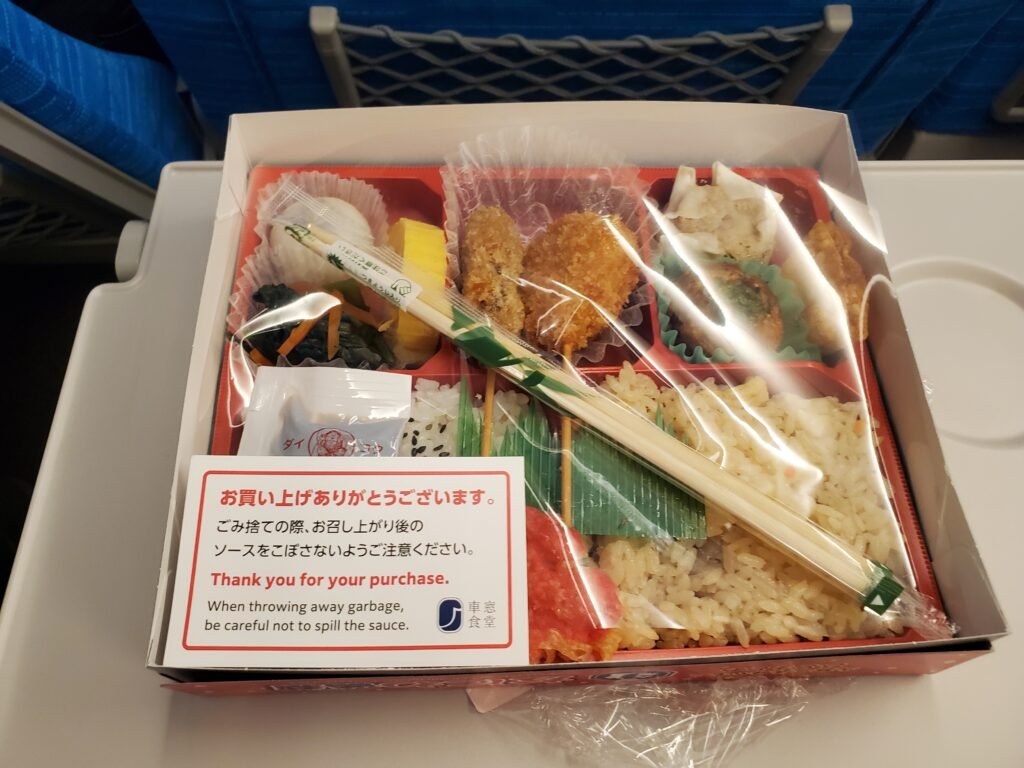
While waiting for the train, we noticed a little shop selling ekiben – bento boxes designed for train journeys. Of course, we had to try one! We both picked a box featuring an assortment of local Osaka cuisine, which includedtakoyaki (fried octopus balls), mitarashi daifuku (sweet rice cakes glazed with soy sauce syrup), shumai (steamed pork dumplings), kushikatsu (deep-fried skewers), some fresh vegetables, and a small portion of red pickled ginger and sauce alongside a good amount of rice, and for less than $10!
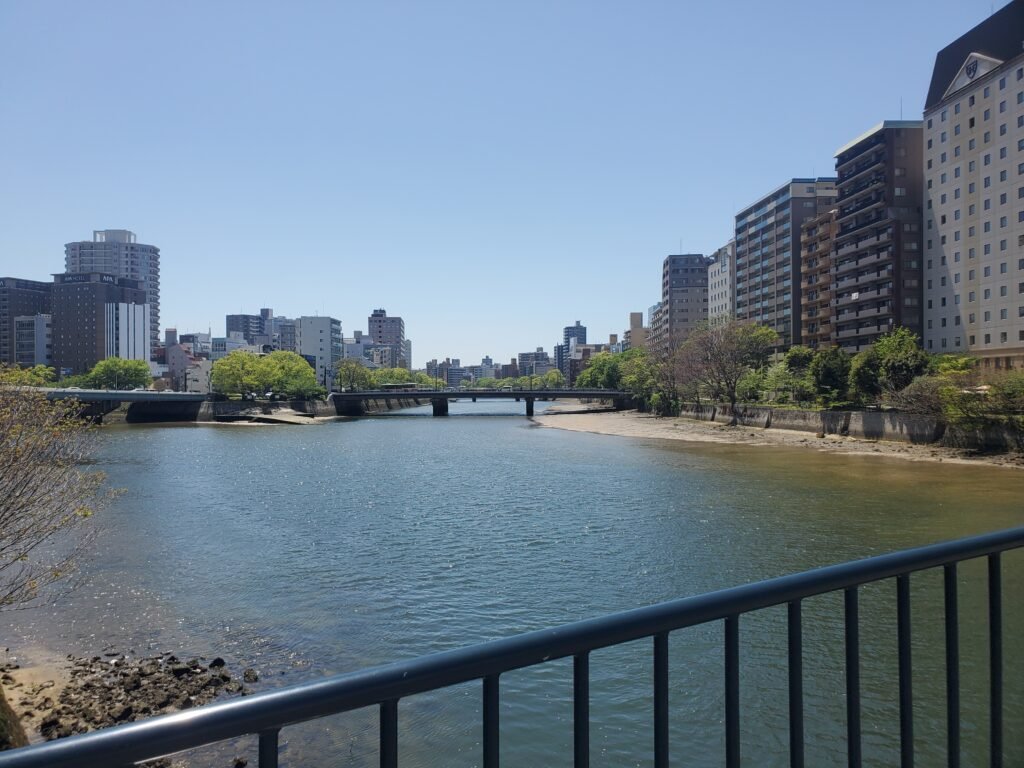
Around 10:15 we headed out for Hiroshima. I was greatly looking forward to seeing the historical sites and artifacts, though I knew it would be a heavy experience. We made it to Hiroshima Station at 11:40 before heading towards the bus station. We had originally planned to wait for the bus, but it was taking too long, so we decided to just walk to our first destination: Hiroshima Castle. We followed one of the main roads, crossed a river and passed through several streets.
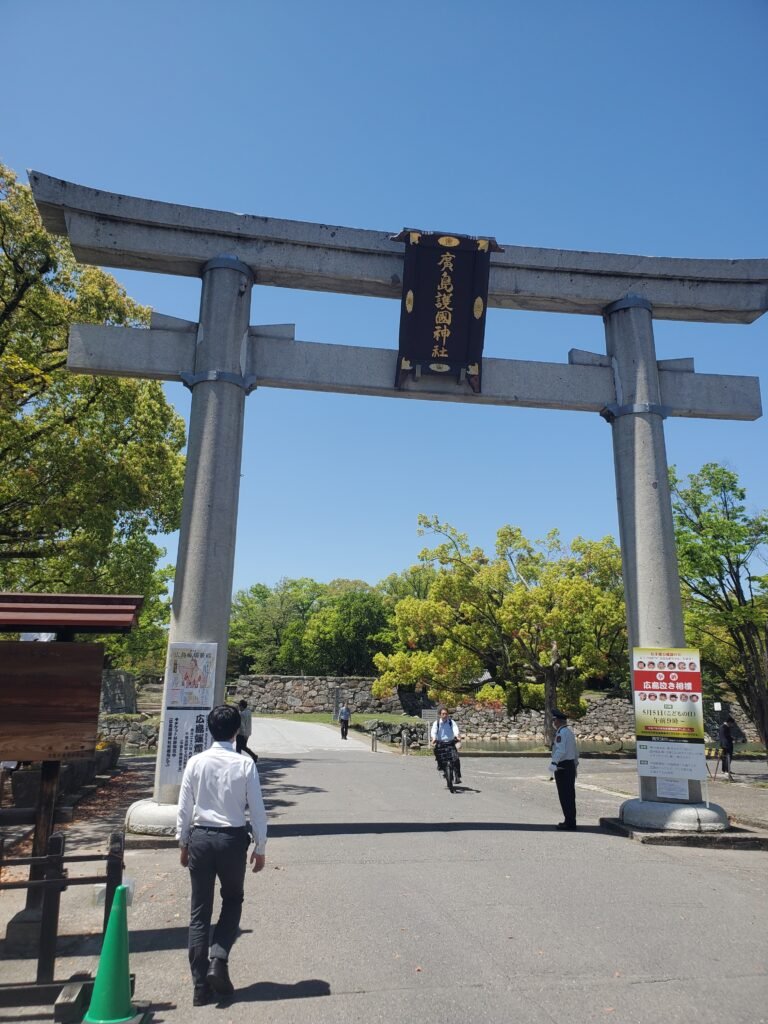
As we approached the Hiroshima Castle complex, we walked under the Great Torii of Hiroshima Gokoku Shrine, which had actually survived the atomic bomb and was moved to this location and reinforced. From there, we crossed a small walkway over a pond into the park. This was a beautiful area. The grounds had wide walking paths, benches, and carefully maintained landscaping – it was peaceful despite having a decent amount of tourists.
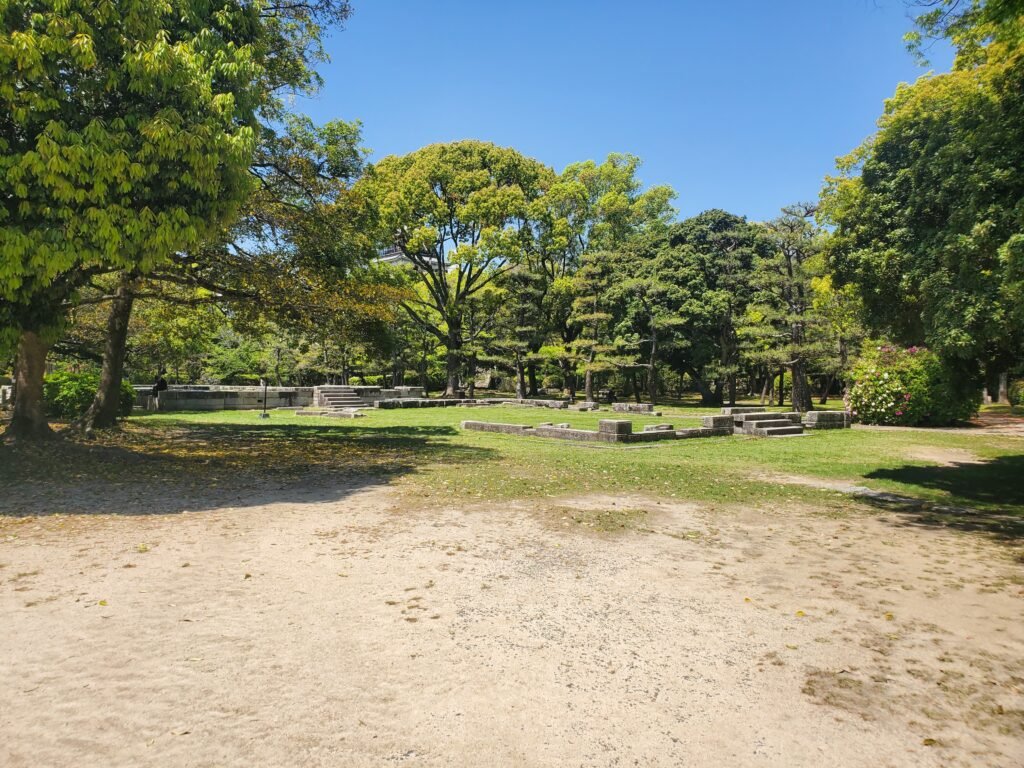
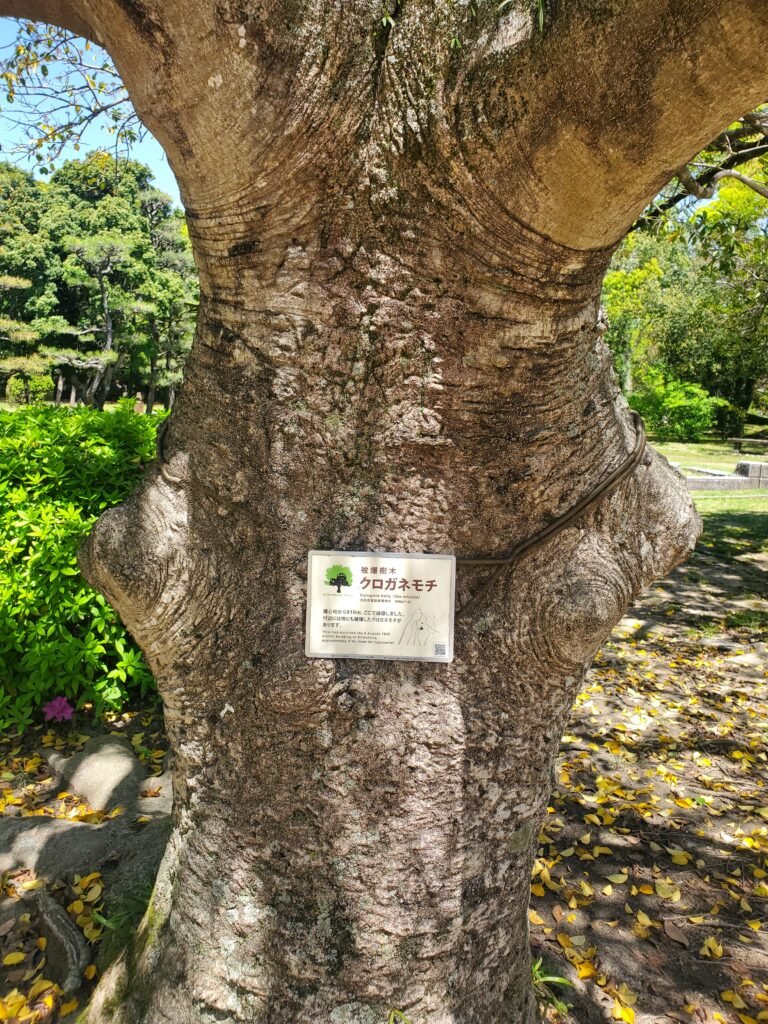
Scattered throughout the castle complex were a number of historical ruins and points of interest. The first I came across was the ruins of the Hiroshima Imperial Army Headquarters, which had been part of the original military command structures before the atomic bombing in 1945. There were plaques and markers indicating where buildings once stood, giving a sense of the scale of the former complex. Surrounding these ruins were several trees that had survived the blast from less than a kilometer away, with plaques noting their distance from the hypocenter – a reminder of the destructive power of the bomb while contrasting the resilience of nature.
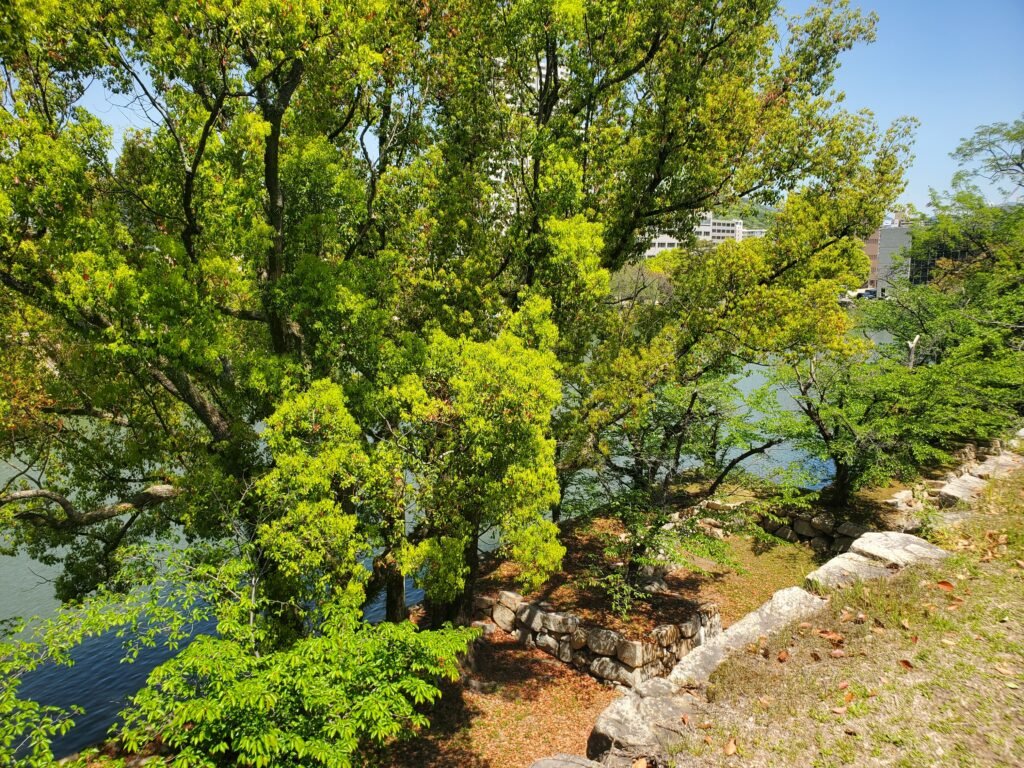
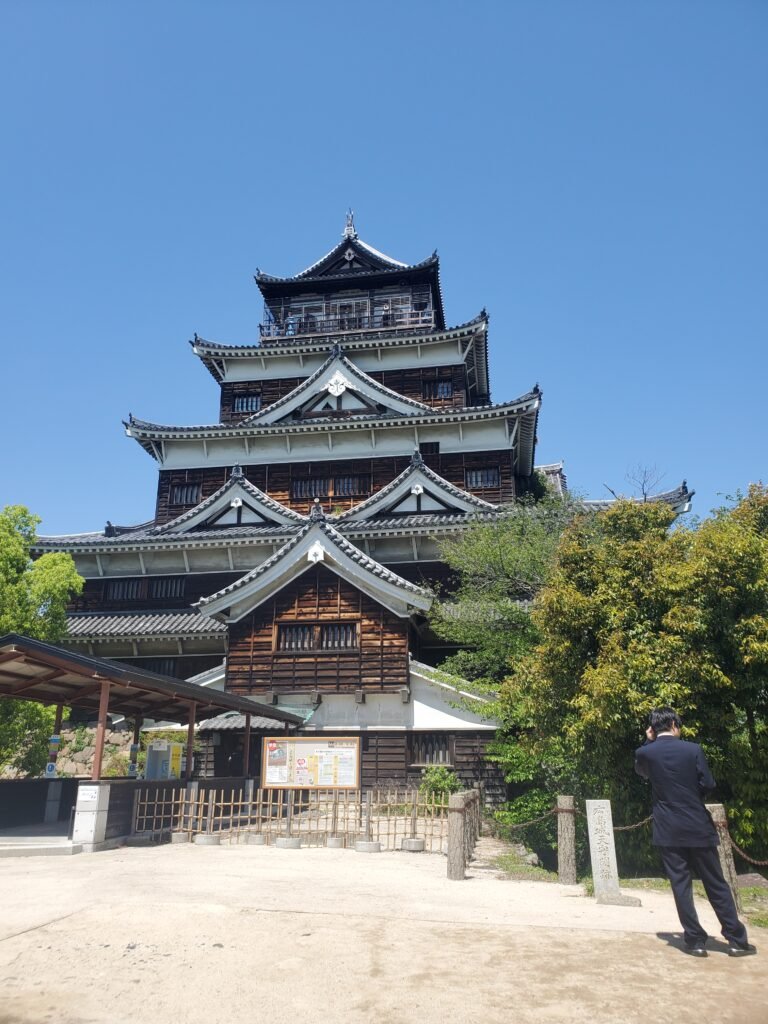
Hiroshima Castle itself is an impressive reconstruction, with the original having been destroyed during the atomic bombing. I decided to check it out, first climbing stairs to the northern wall. From there, I could see the eastern side of the castle and look out over the surrounding water through the trees. Along the sloped sides, I noticed the original foundation stones, which date back to the 1590s.
In a more open area nearby, I also saw additional stones marking the layout of the original castle keep and its defensive structures. While there were stairs leading up to the main entrance of the reconstructed building, I decided to just take photos of the exterior rather than pay the entry fee, especially since I didn’t want to keep Carlos waiting.
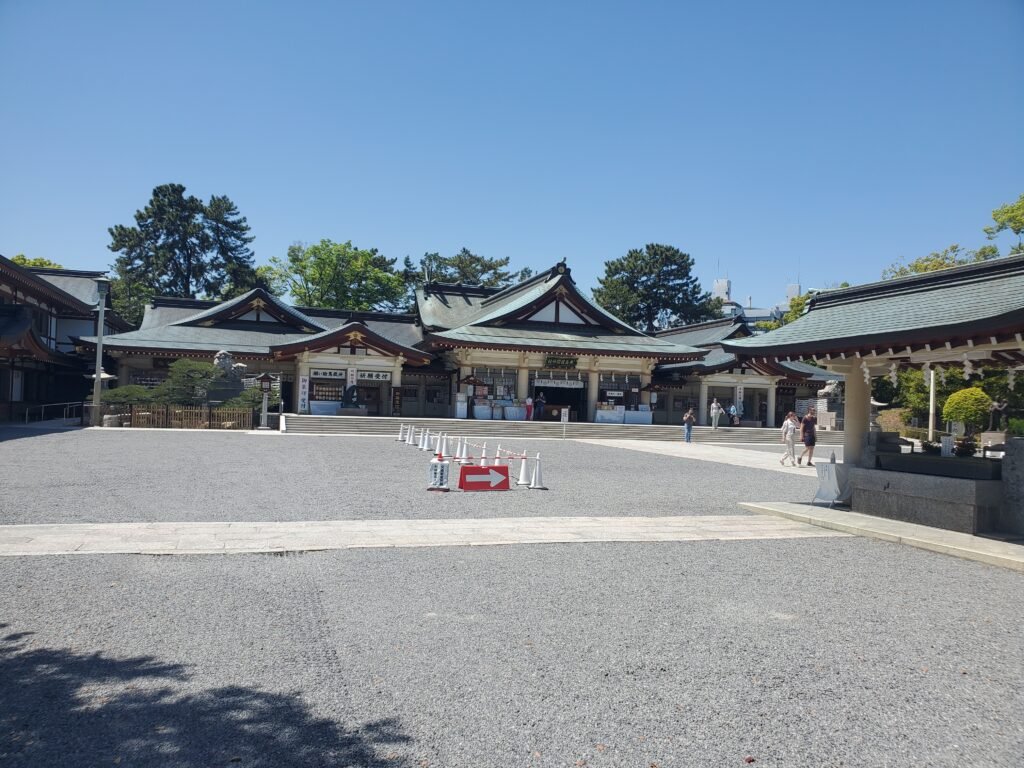
As I made my way toward the south side of the complex, we passed more ruins before heading toward Hiroshima Gokoku Shrine. Like Hiroshima Castle, it had also been rebuilt after the atomic bombing, and we were able to get a goshuin here – adding another stamp to our growing collection.
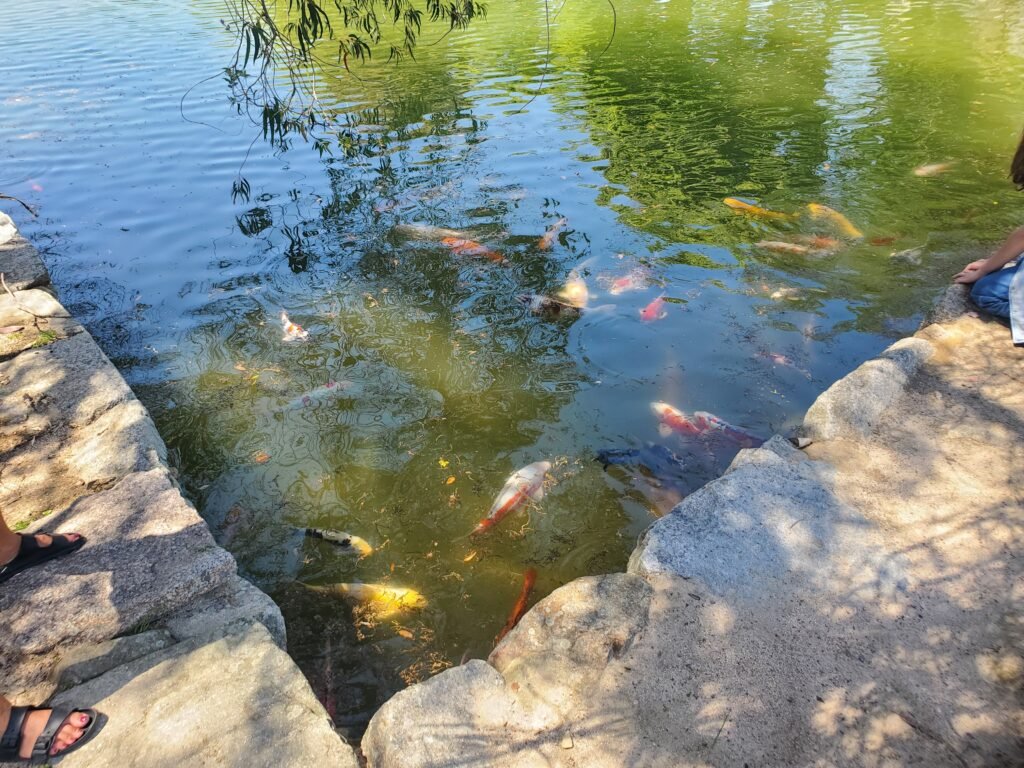
We started to head out of the castle complex, passing by the water which we realized was teeming with koi fish, which was a fun little highlight amidst all the history. As we headed towards the exit of the complex, we passed a few more historical sites and ruins, such as a massive eucalyptus tree which had survived the bombing as well as the main gate which had been reconstructed.
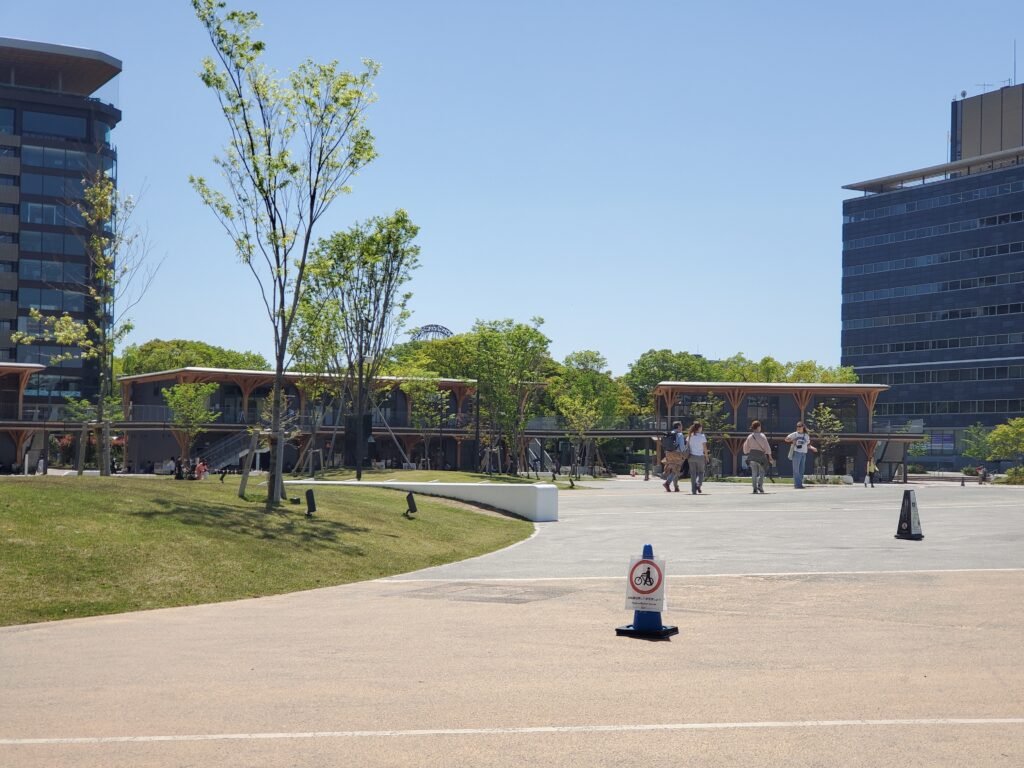
Once outside the complex, we followed the sidewalk, which eventually led into an underground walkway – a fairly unique path which we stayed on for about ten minutes before emerging in a wide plaza. We took a brief rest here, enjoying the quiet for a moment, but we could barely see the top of our next destination looming in the distance: the Atomic Bomb Dome, a stark and moving symbol of Hiroshima’s history.
We headed over after a few minutes, crossing a wide street and noticing that Hiroshima had streetcars, which reminded me of San Francisco. Hiroshima still operates streetcars, partially due to the natural delta on which it sits, but also because of their symbolic representation. Only 3 days after the atomic bombing took place, the tram lines were partially restored to service, despite having lost most of their cars and many employees.
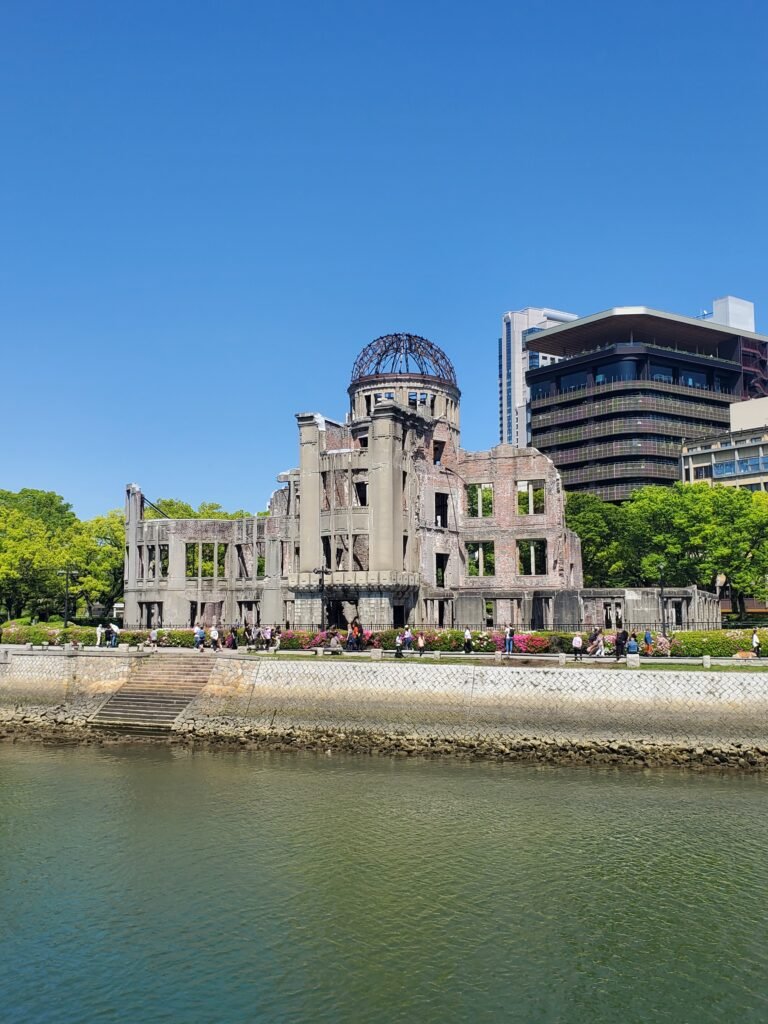
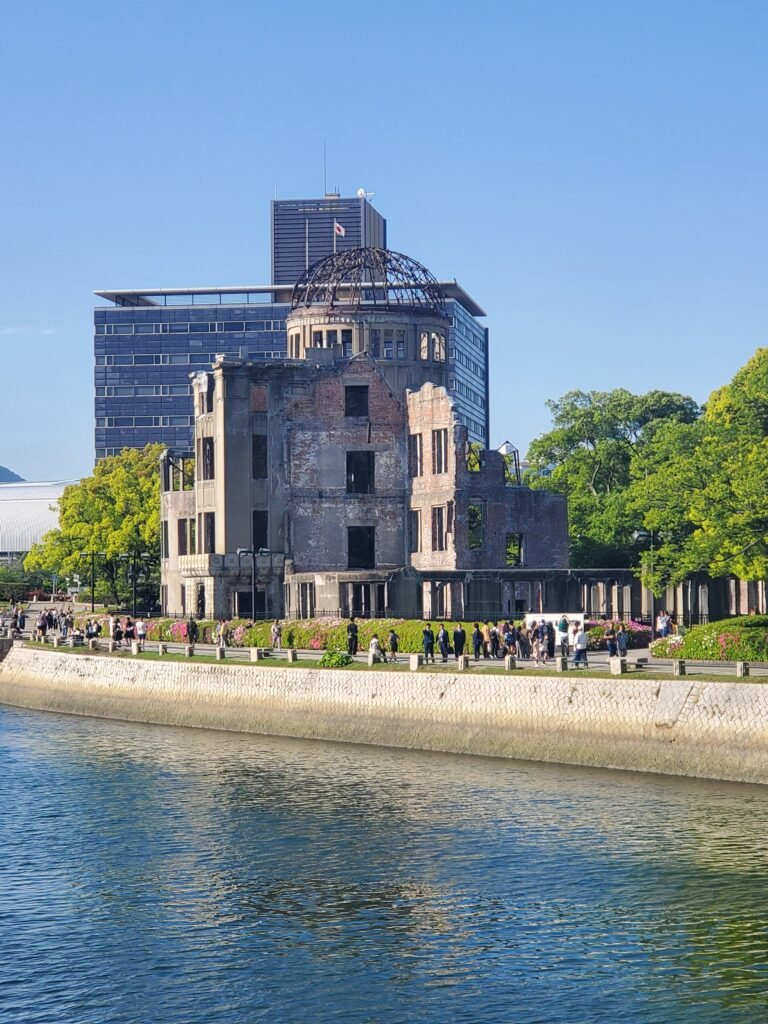
Once we reached the dome, it was surreal to finally see it in person. Once the Hiroshima Prefectural Industrial Promotion Hall, it was one of the few structures left standing near the hypocenter of the bomb, preserved in its ruined state as a UNESCO World Heritage Site and a symbol of peace. There were signs and information boards all around the site, and I took my time to read each one as I walked slowly around the site.
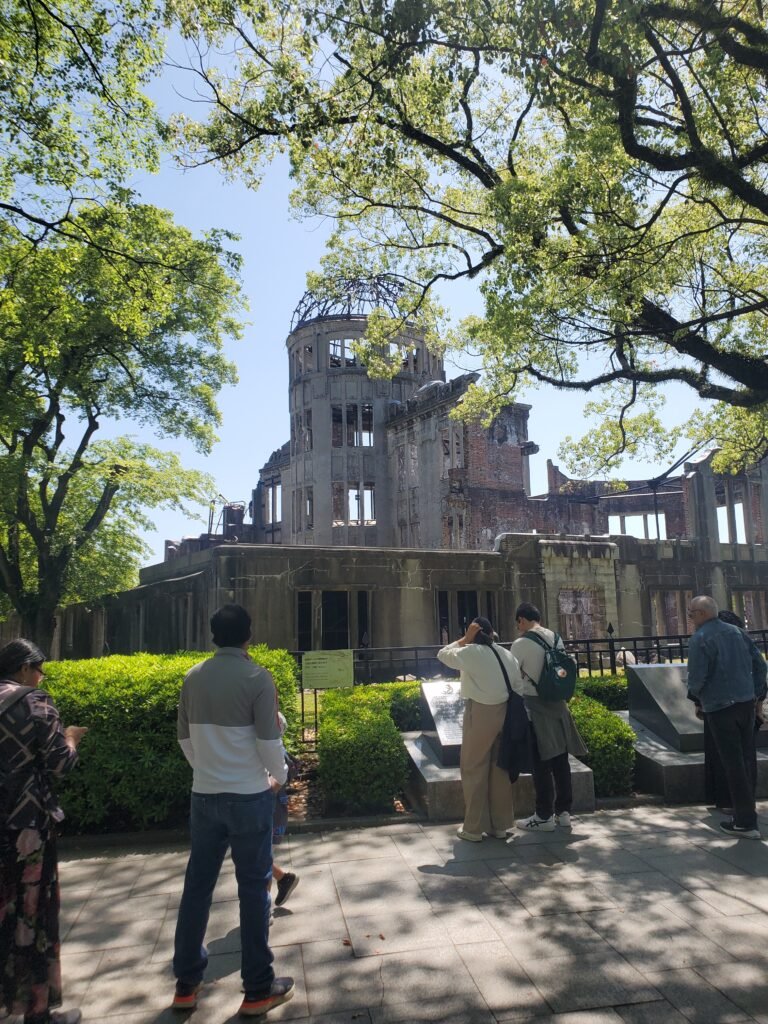
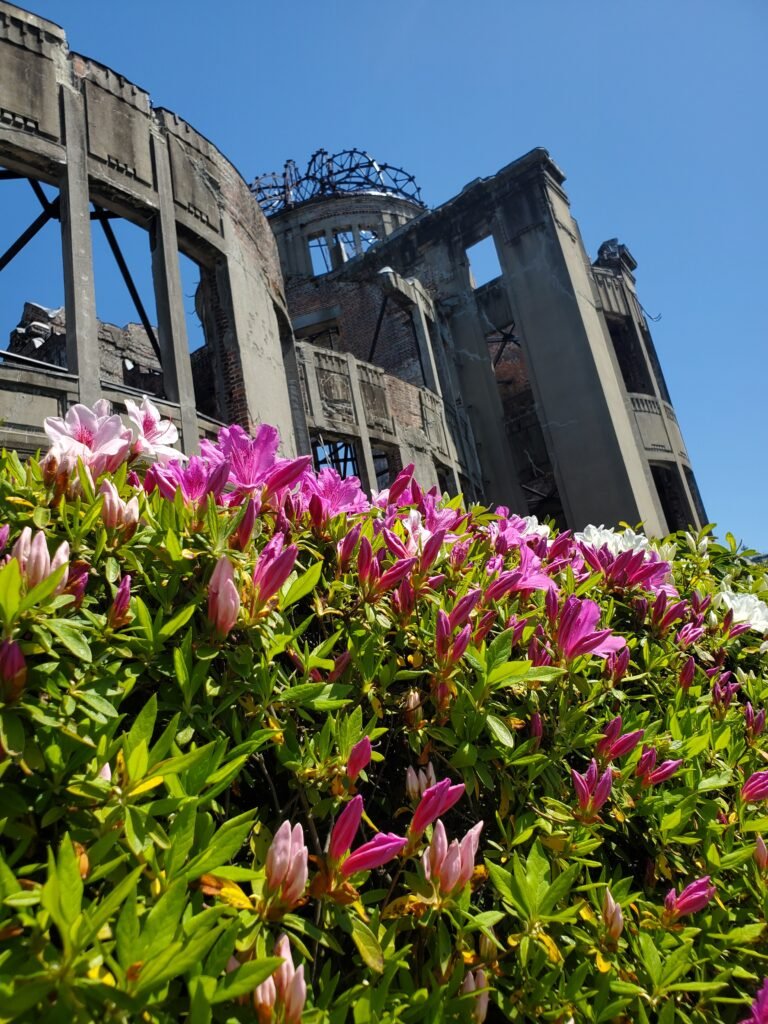
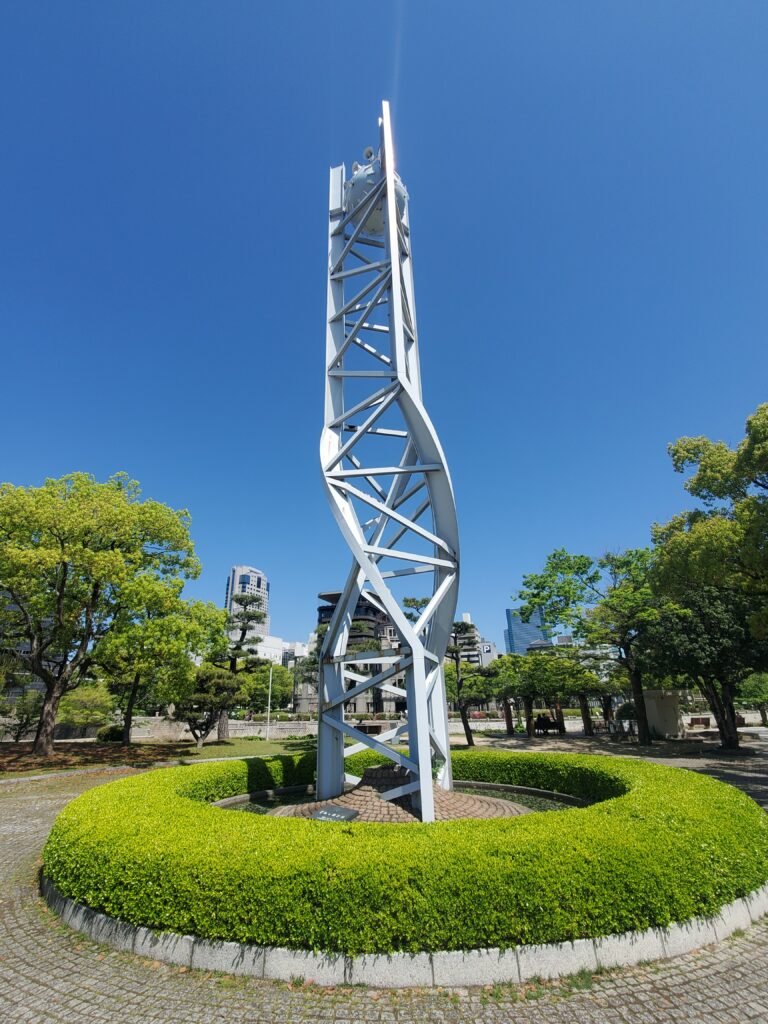
From there, Carlos and I walked towards the Aioi Bridge, crossing to head into Peace Memorial Park. There was so much to see within the park, with each monument carrying its own weight of meaning. The first landmark we came across was the Clock Tower of Peace. At exactly 8:15 every morning, the moment the bomb detonated, the clock chimes. From there, we walked to a row of benches overlooking the river, directly across from the Atomic Bomb Dome, and we sat for a little while reflecting.
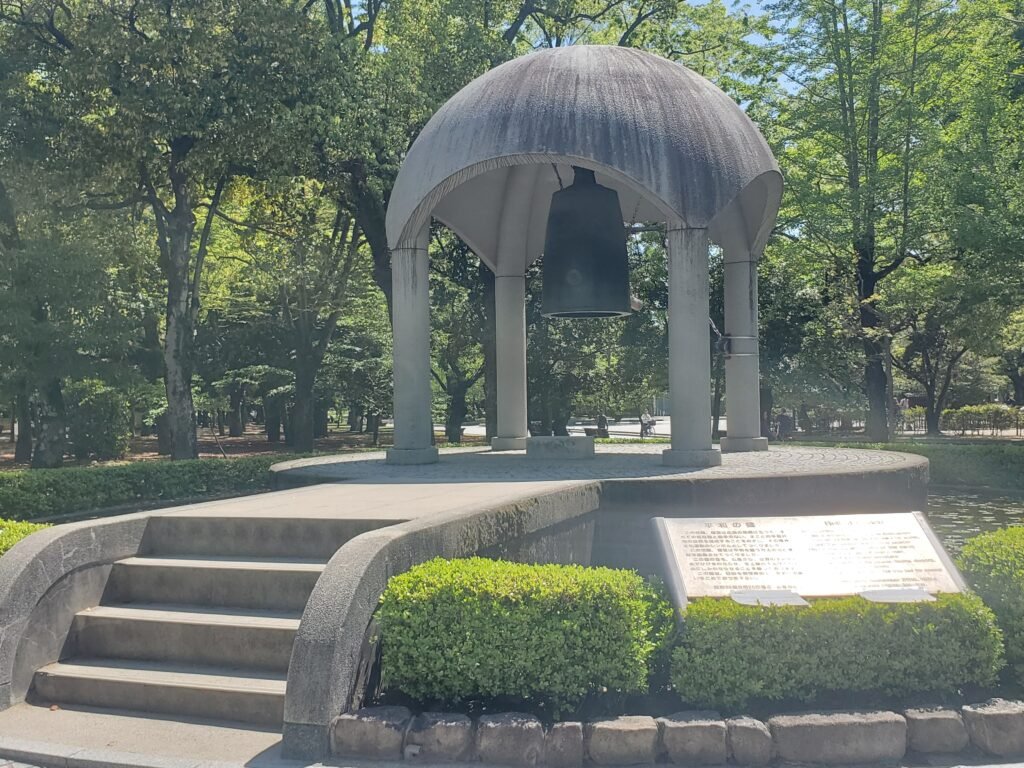
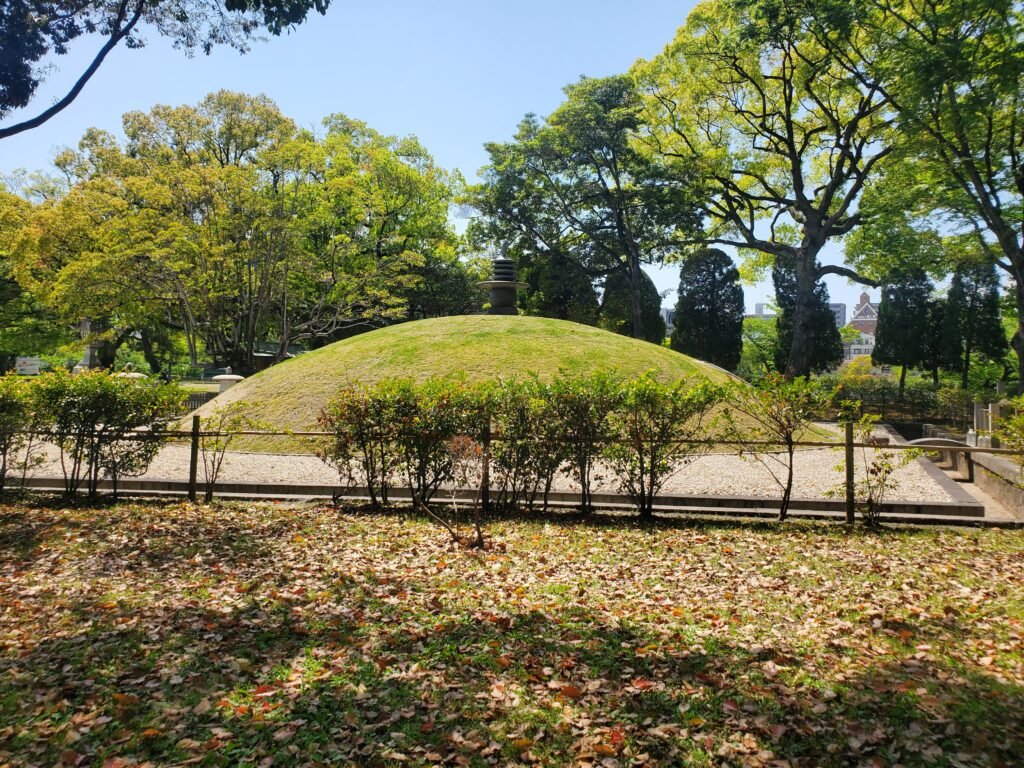
Continuing on, we reached the Bell of Peace, a large bronze bell hanging beneath a round, open-sided structure. Visitors are encouraged to strike it, and when I did so, it resulted in a deep and resonating sound which echoed across the park. A short walk away was the Atomic Bomb Memorial Burial Mound, a grassy mound beneath which rests the ashes of tens of thousands of victims who could not be identified or claimed. It was a haunting sight, a reminder of the sheer scale of lives lost.
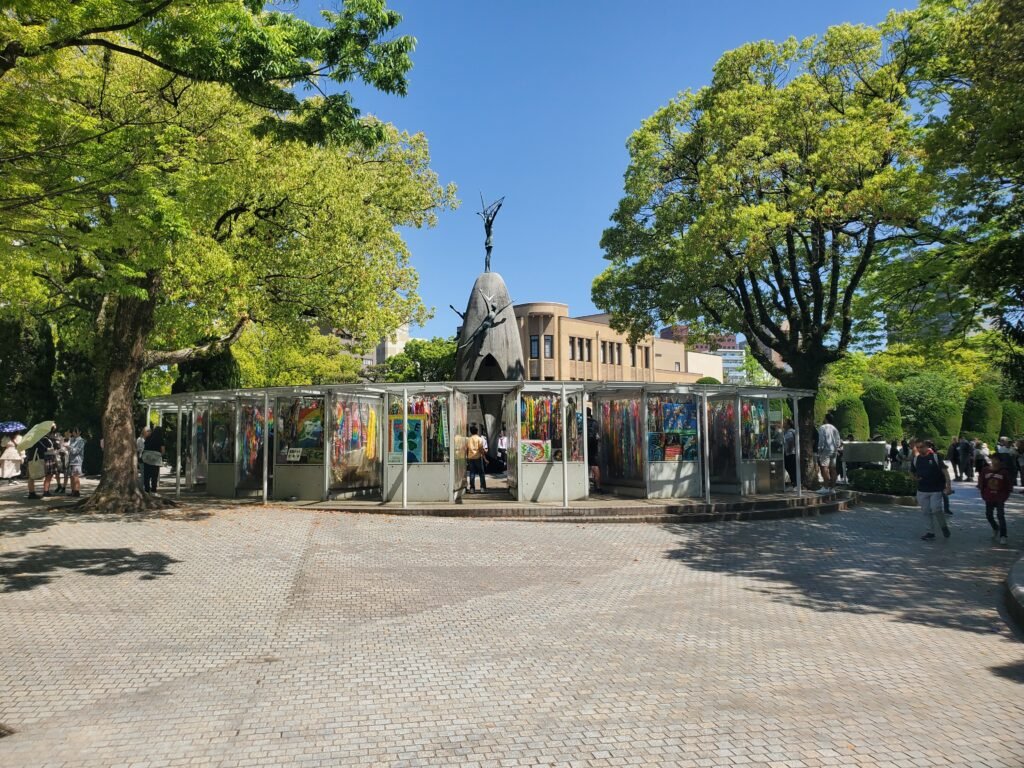
Nearby stood the Children’s Peace Monument, dedicated to the memory of all the children who died in the bombing. When we arrived, a group of Japanese students were gathered in a circle, seemingly on a school trip, perhaps taking turns speaking about what they had learned as well as singing.
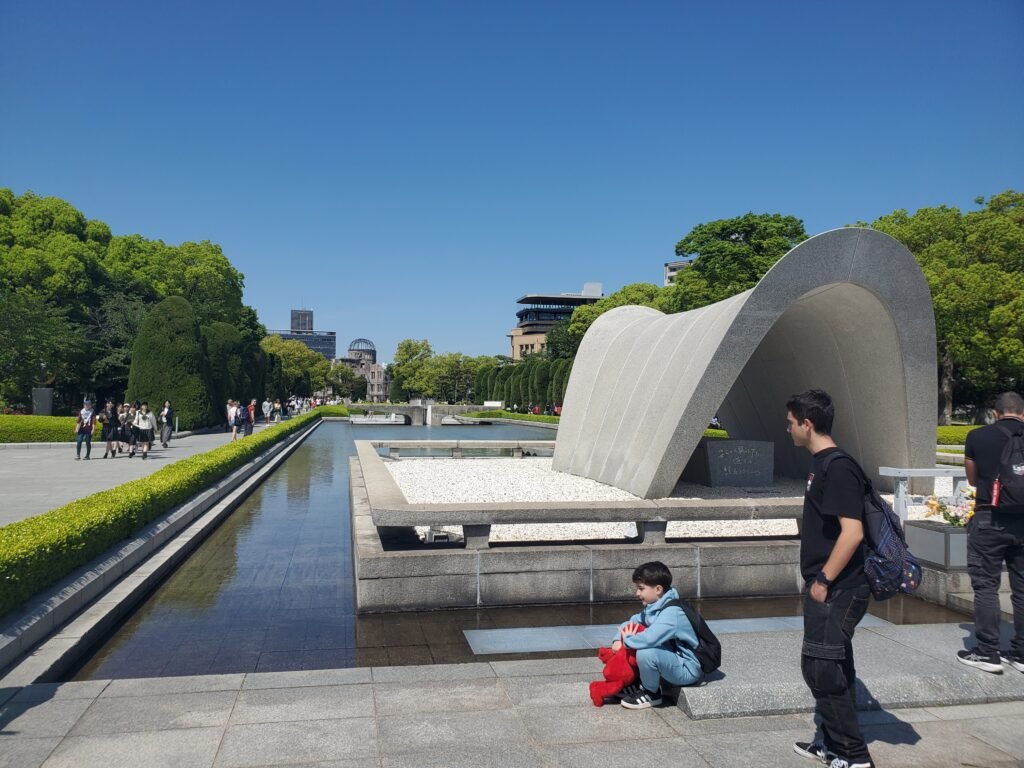
We kept walking through the park, stopping at the Flame of Peace, which has burned continuously since it was lit in 1964 and will remain lit until all nuclear weapons are abolished. Just past it was the Pond of Peace, a long reflecting pool which leads to the Hiroshima Victims Memorial Cenotaph, an arched stone monument inscribed with the words: “Let all the souls here rest in peace, for we shall not repeat the evil.” Beneath it lies a stone chest containing the registry of names of all known victims of the bombing.
By now Carlos was ready for a break, so he sat down on a nearby bench to enjoy the outdoors while I went ahead to the Hiroshima Peace Memorial Museum. I told him I might be there for a while, and he was completely fine with waiting. There was a lot to see here, and thankfully there wasn’t much of a line, so I got in quickly for a reasonable price.
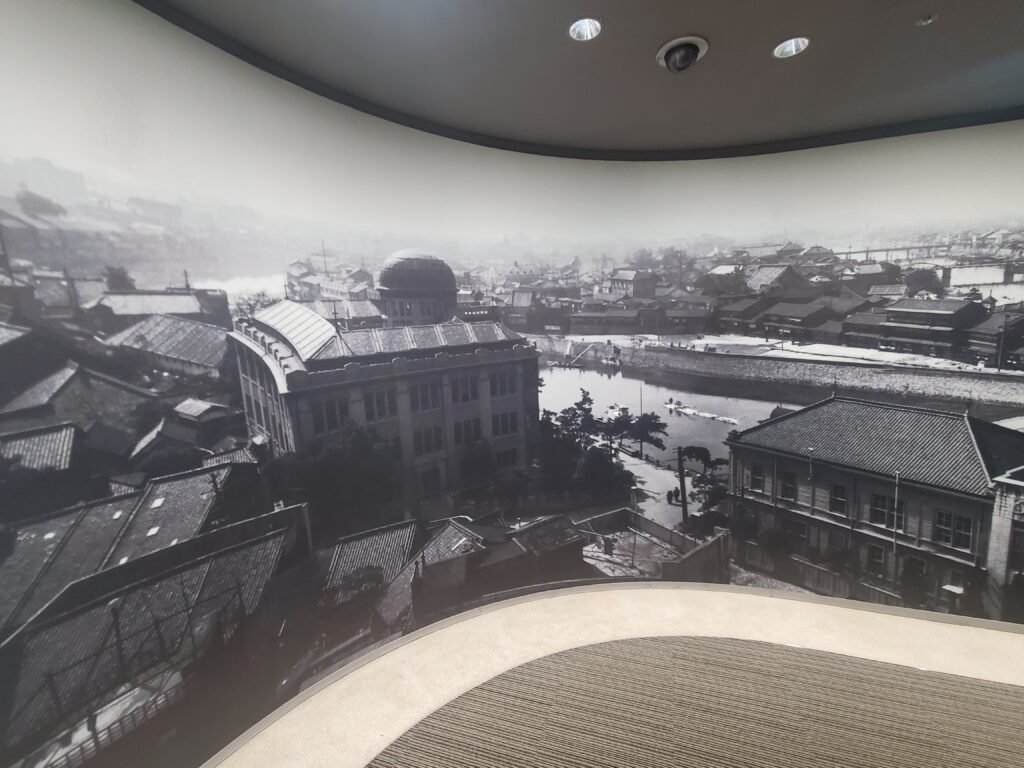
Immediately I found myself in a room showing a panorama of what Hiroshima looked like in the 1930s, with the Industrial Promotion Hall – now known as the Atomic Bomb Dome – standing prominently at the center. It was crazy to see how much different the skyline had been.
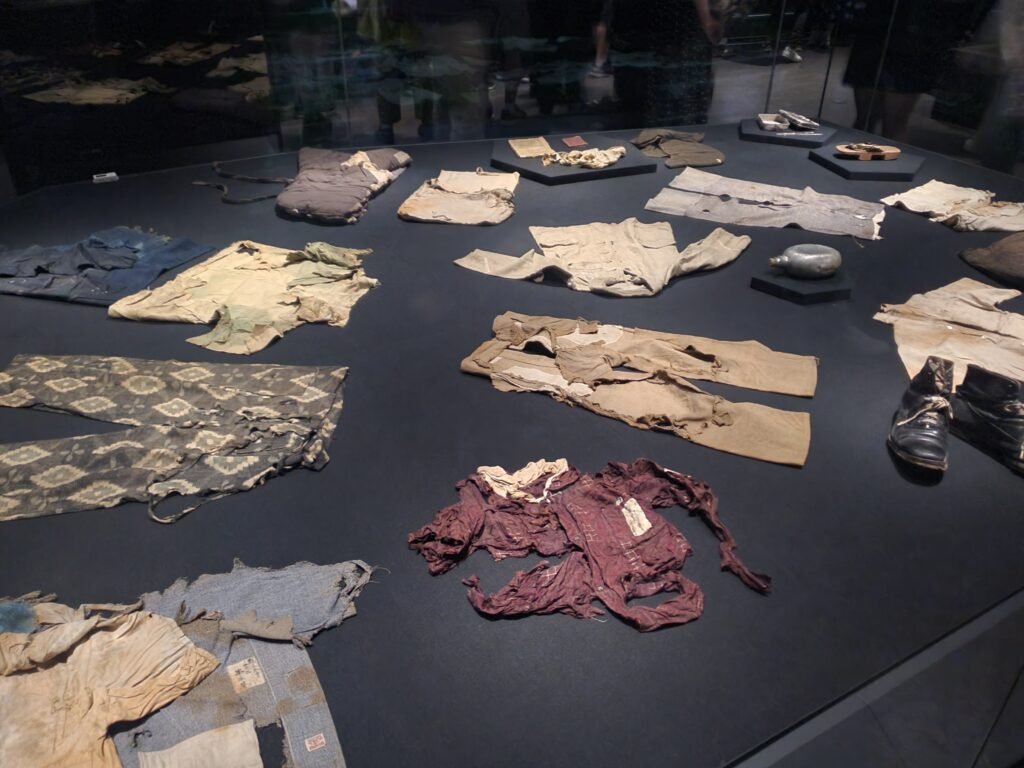
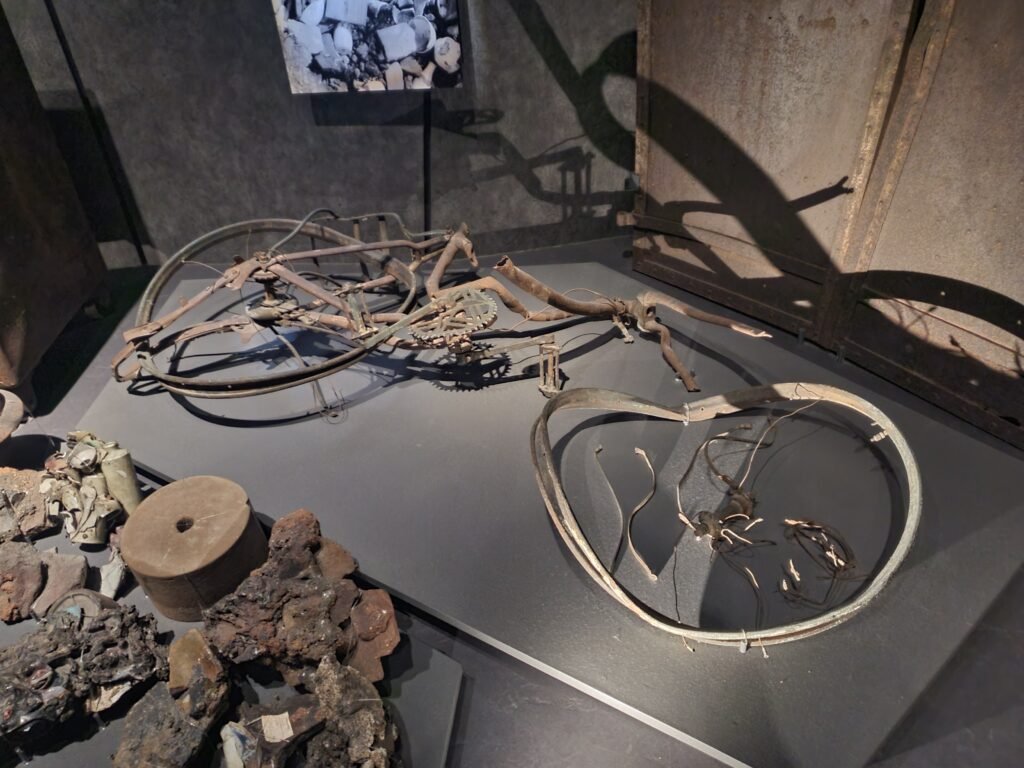
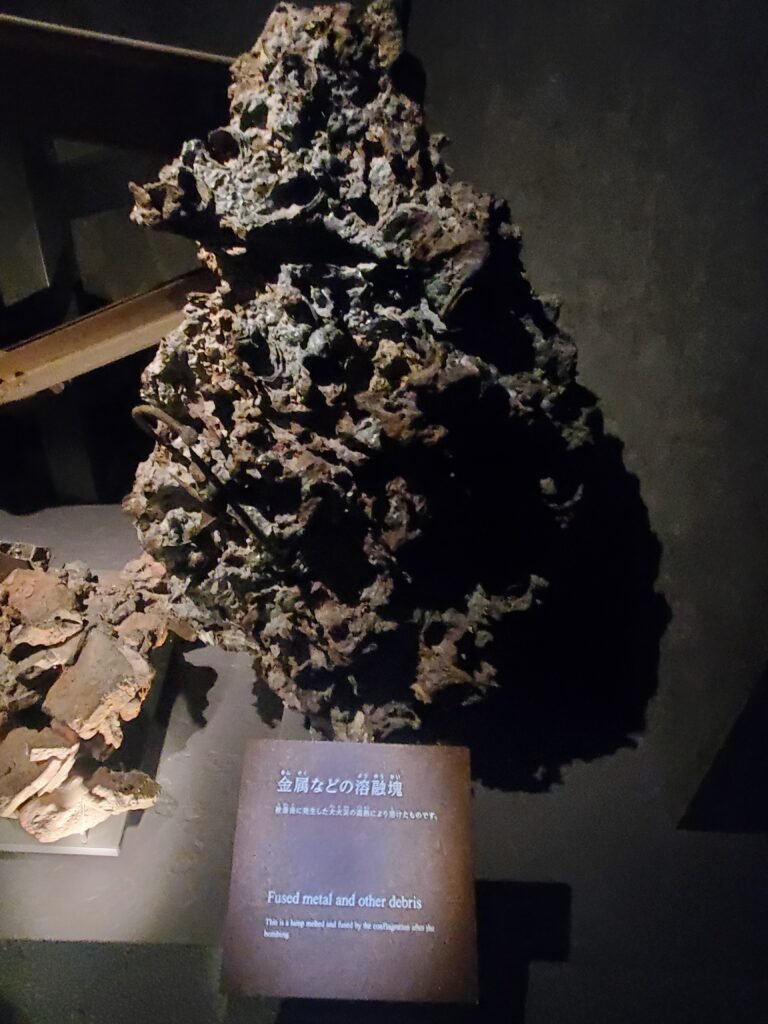
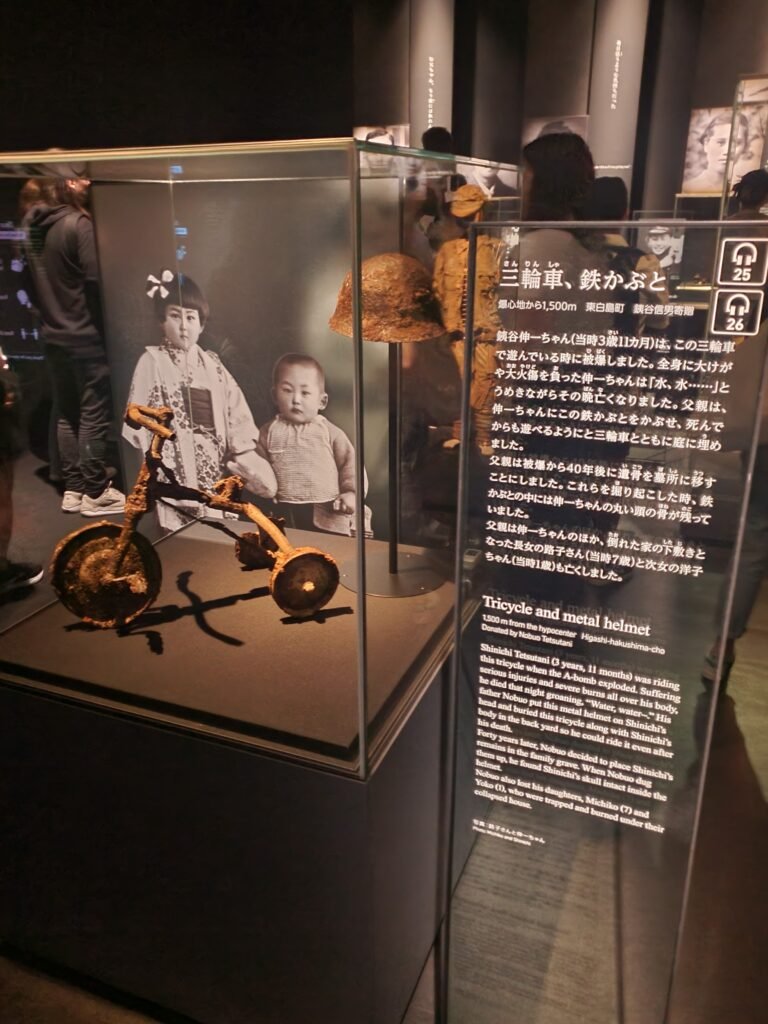
In the middle of the room, a map projected an animated sequence showing the bomb’s detonation and the radius of its destruction. From here, the exhibits shifted into artifacts and personal items from the bombing. Twisted pieces of metal and fused debris showed how intense the heat had been. There were items of clothing, temple relics scorched beyond recognition, a child’s bicycle, and even a wall riddled with small shards of glass that had been hurled into it with such force they became embedded.
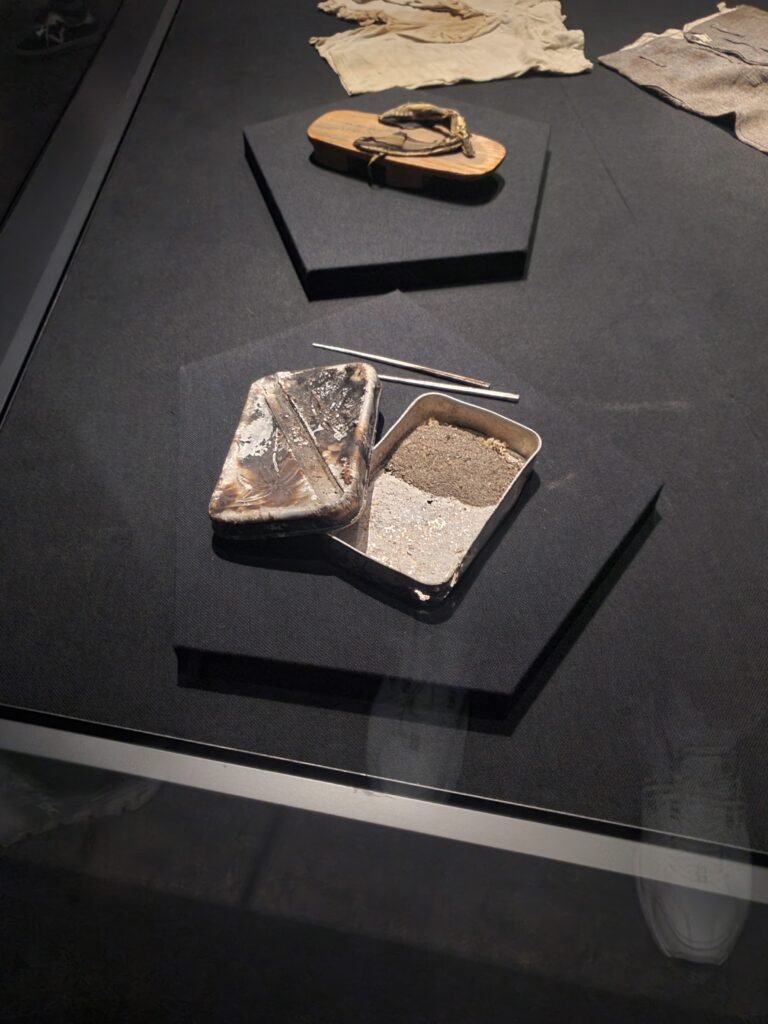
One case displayed a bento box with chopsticks laid next to it, filled not with food but with ashes – the remains of what had been someone’s lunch. On the walls, drawings and paintings by survivors depicted what they had seen: chilling images of burned bodies, desperate escapes, and scenes filled with suffering.
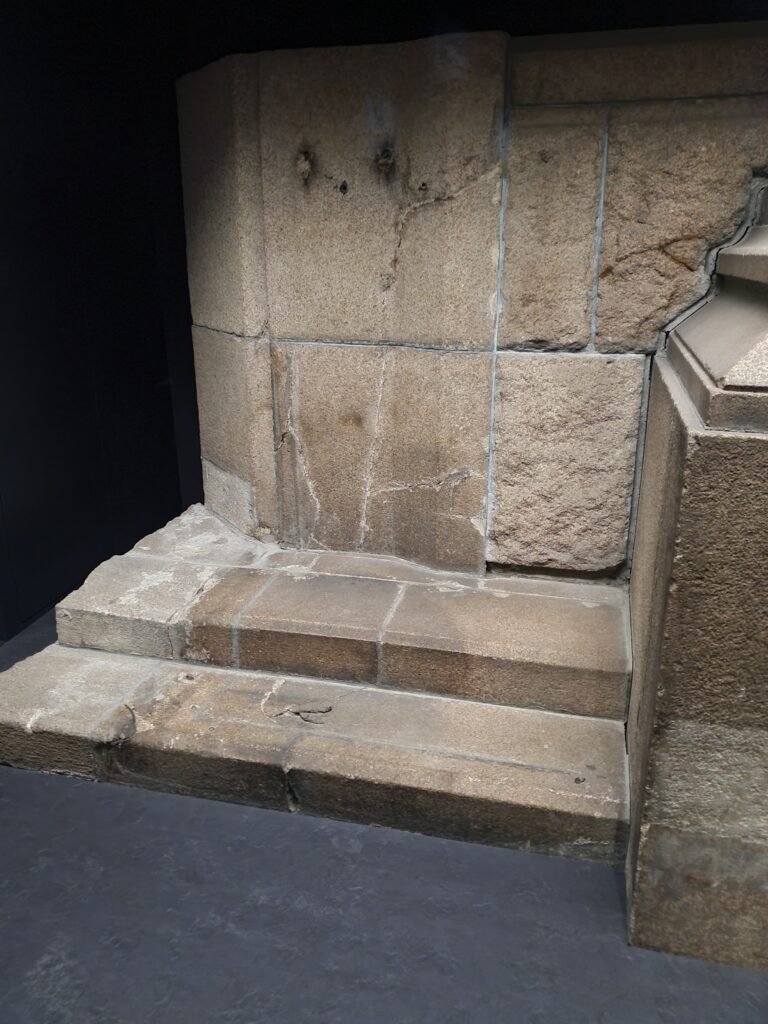
One of the most chilling exhibits was something I had heard of before but still wasn’t prepared for: the Human Shadow Etched in Stone. When the bomb detonated, its thermal rays were so intense that they literally bleached surfaces. In one case, a person sitting on the steps outside a building was vaporized instantly, and the outline of their body remained as a dark shadow against the lighter stone around it.
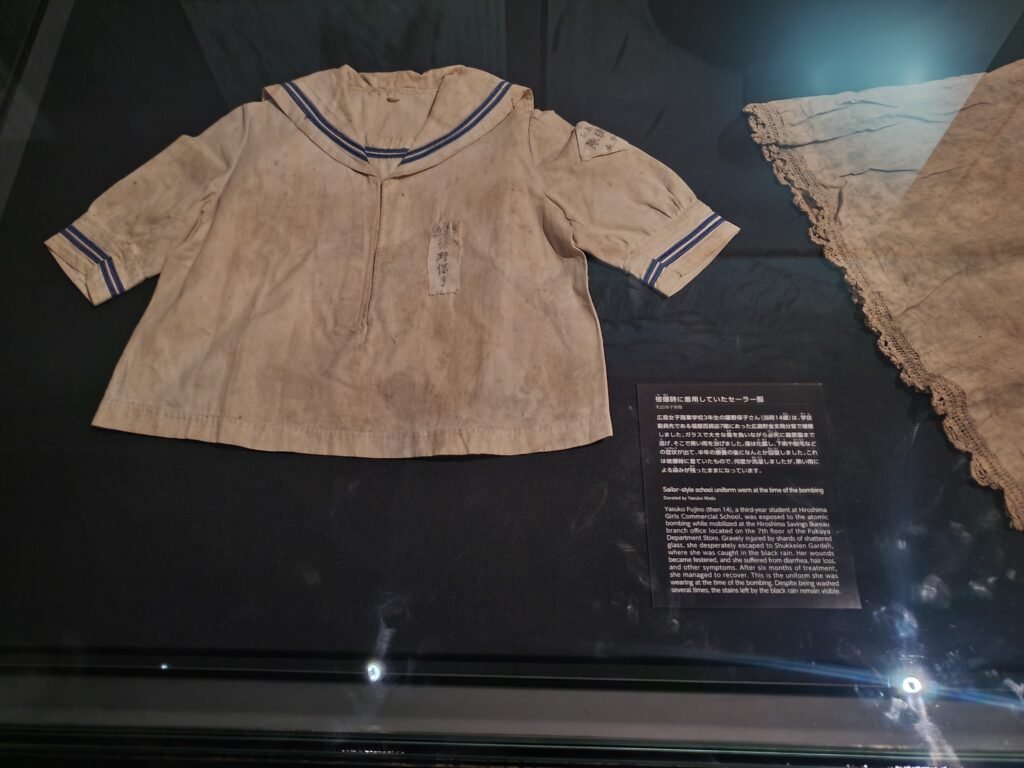
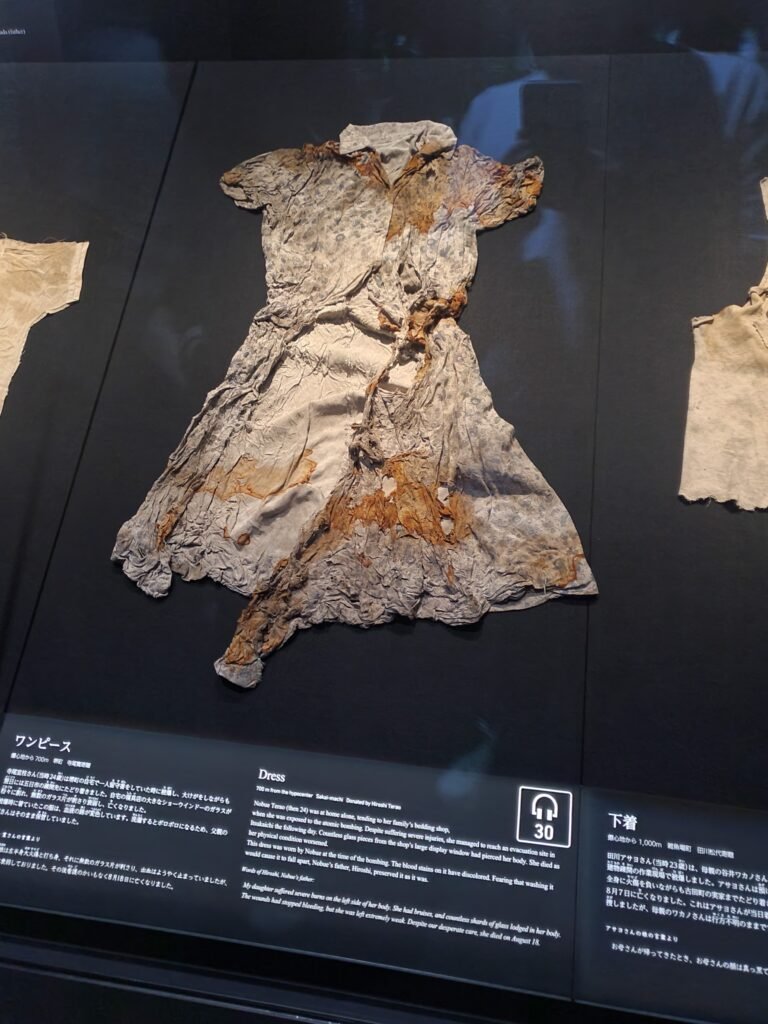
Another section focused on the black rain, the radioactive rainfall that descended on Hiroshima shortly after the explosion. Formed from soot, ash, and radioactive material that mixed with the atmosphere, it contaminated the environment and poisoned many survivors. Clothing on display still bore the stains of this rain.
Despite how many people were there, the museum was silent. It reminded me of when I visited the 9/11 Museum – this was one of those places in which it would feel disrespectful to have any casual conversations – somewhere with a deep sense of solemnity.
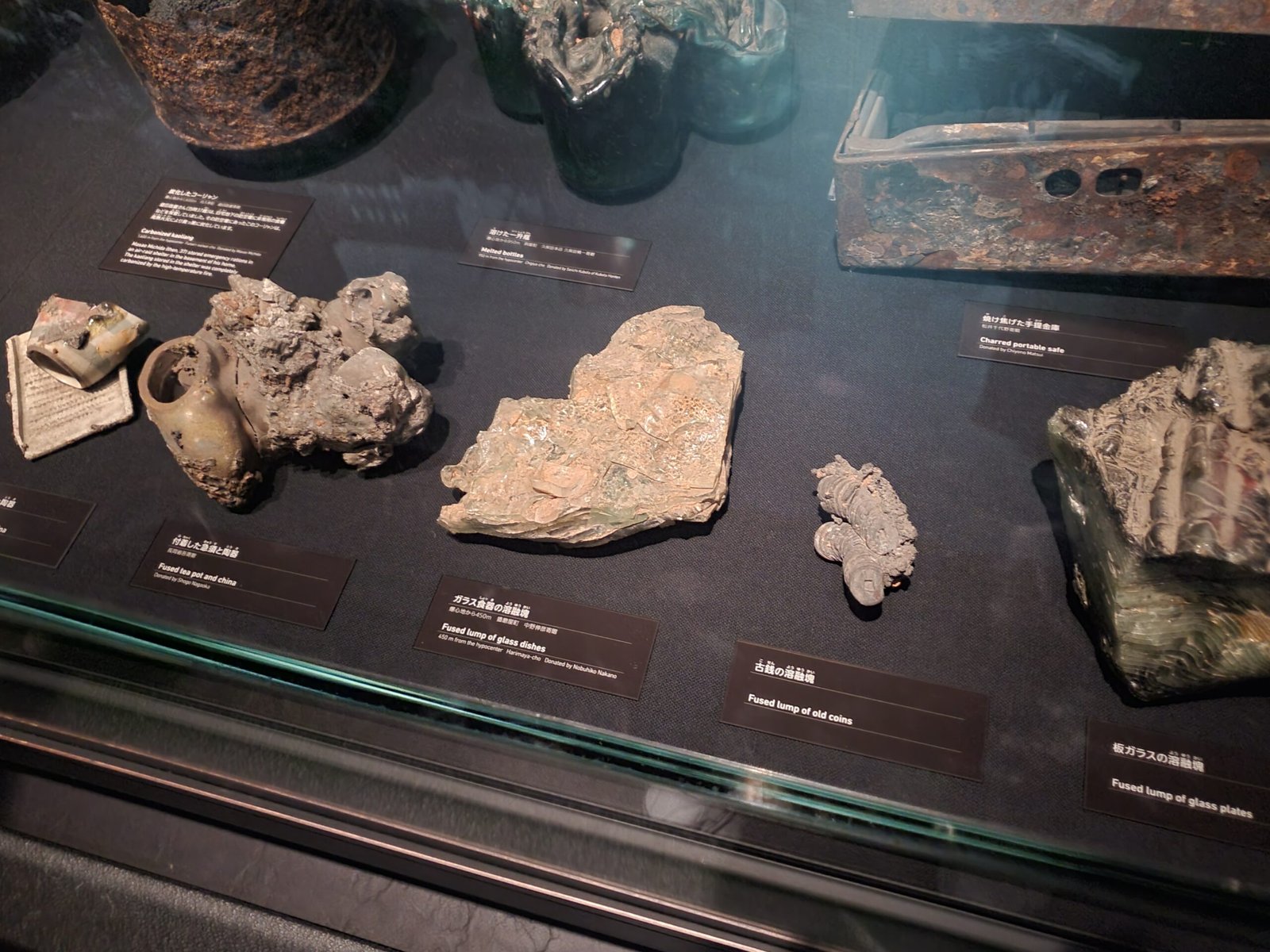
As I moved my way through the museum, more artifacts filled the cases: fused lumps of coins melted together, warped bottles and glass plates, and deeply personal items like pocket watches, belt buckles, and school uniforms, with some of the more durable items being the last remnants of some people who were otherwise incinerated.
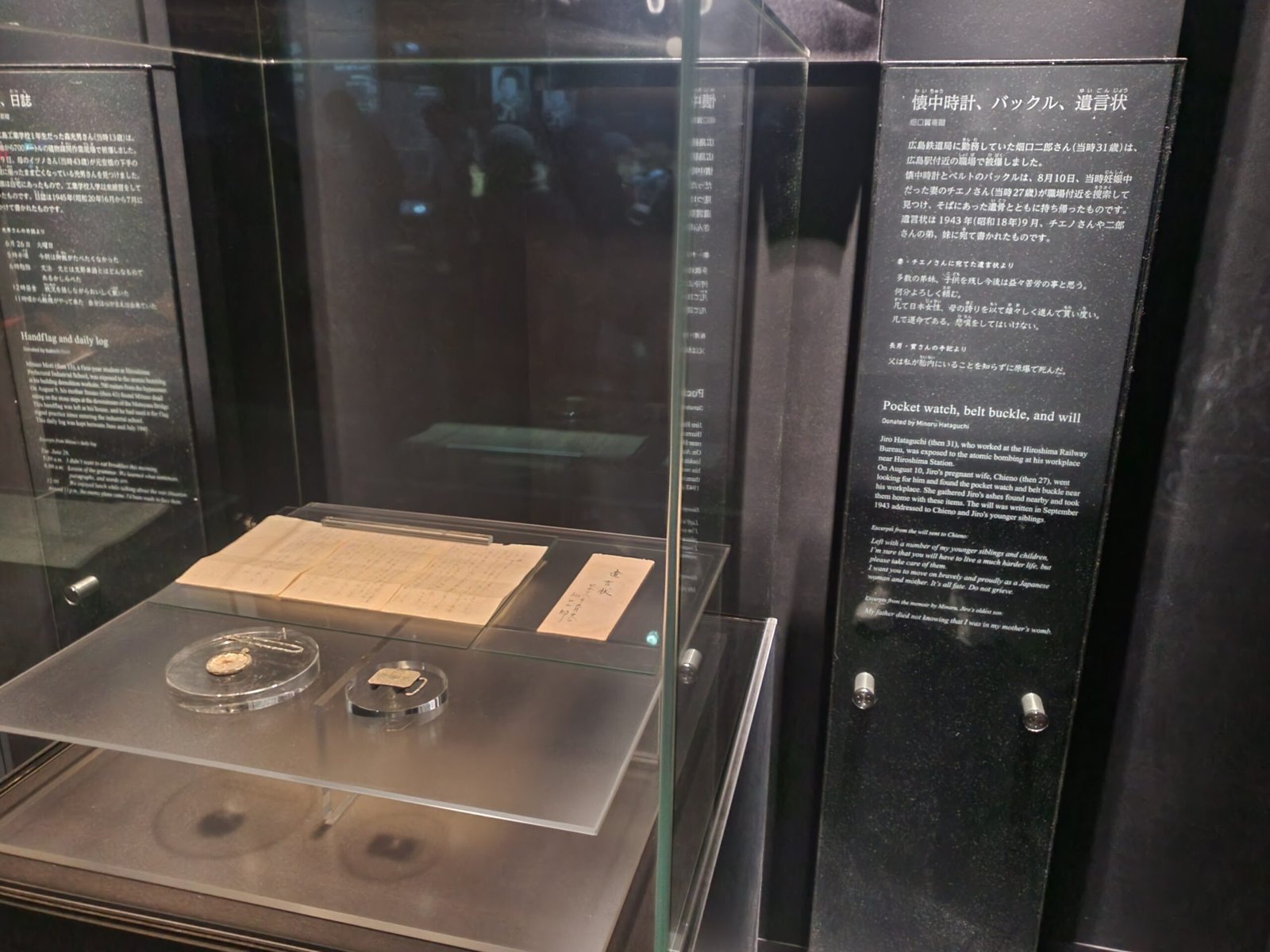
The children’s artifacts were especially gut-wrenching – including items like blood-stained uniforms, and in one case, a small tricycle and helmet belonging to a three-year-old boy who had perished in the blast. It was honestly difficult to see, and it really stuck with me.
After finishing the main exhibit hall, I paused in a room playing video testimonies from survivors who recounted their experiences of that day and its aftermath. Sitting on the bench, I just let myself absorb it all, feeling the intensity of the stories weigh heavily.
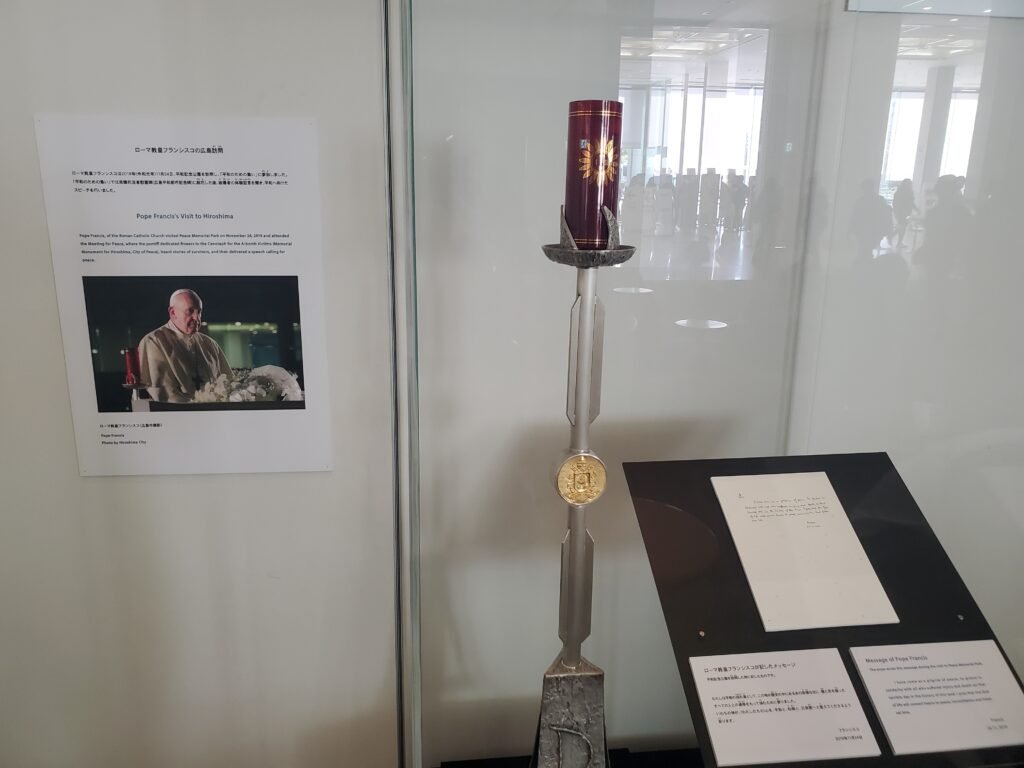
When I eventually moved on, I found another exhibit showcasing rare photographs of the bombing’s immediate aftermath from different angles, many of which I had never seen before. Before leaving, I noticed a small yet poignant display: a candle gifted by Pope Francis during his 2019 visit to Hiroshima, along with a message he had delivered calling for peace and nuclear disarmament. It struck me especially deeply at the time, as he had only passed away three days earlier.
Altogether, I spent about two hours in the museum before stepping back outside, where I rejoined Carlos on a bench. We sat quietly together for a little while, both of us simply taking in the weight of where we were. Around 4:15 we decided it was time to start heading back to Osaka, as we didn’t want to get back too late.
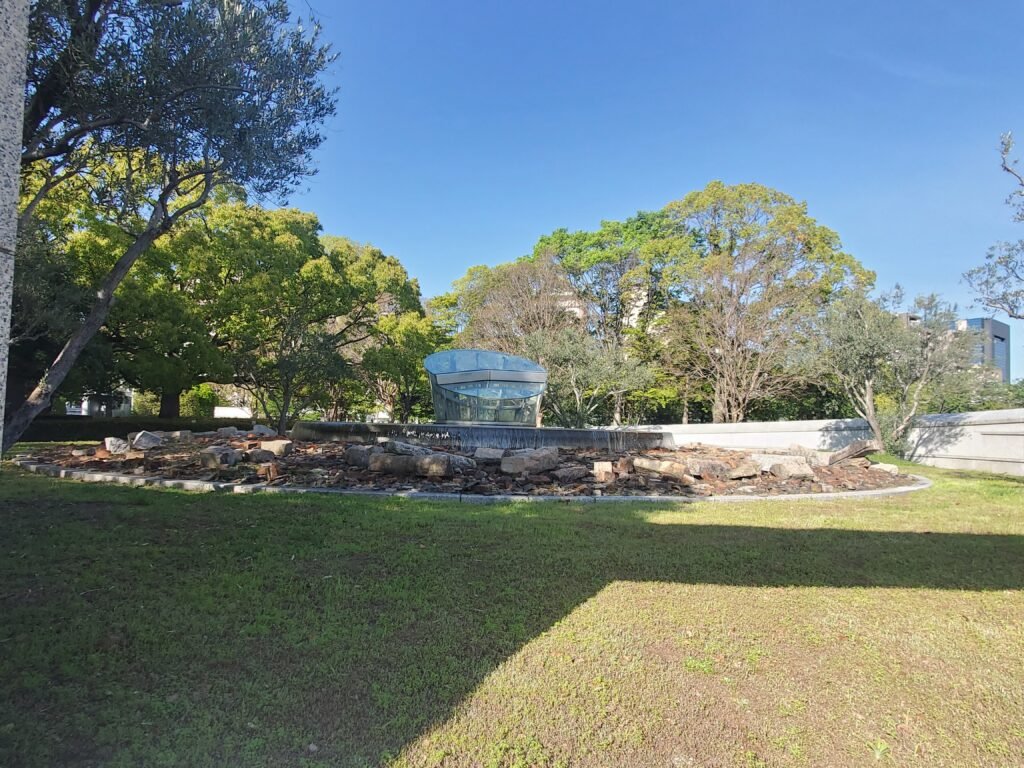
But as we walked back, we passed by the Hiroshima National Peace Memorial Hall for the Atomic Bomb Victims. Built underground beneath the Peace Park, it’s a solemn space dedicated to the memory of every known victim, with a circular Hall of Remembrance and a database where visitors can search for names and photographs of those lost. We did not have time to go inside, but we did admire the fountain which sat above the hall.
We took a few more pictures of the Atomic Bomb Dome before crossing back over the river. On the way, we stopped at a 7-Eleven to grab some food, and while eating outside ended up chatting with a Canadian guy who was staying in Hiroshima. He was very talkative and even offered to get dinner with us, clearly just wanting some company, but we unfortunately had to decline since we planned to leave by around 5.
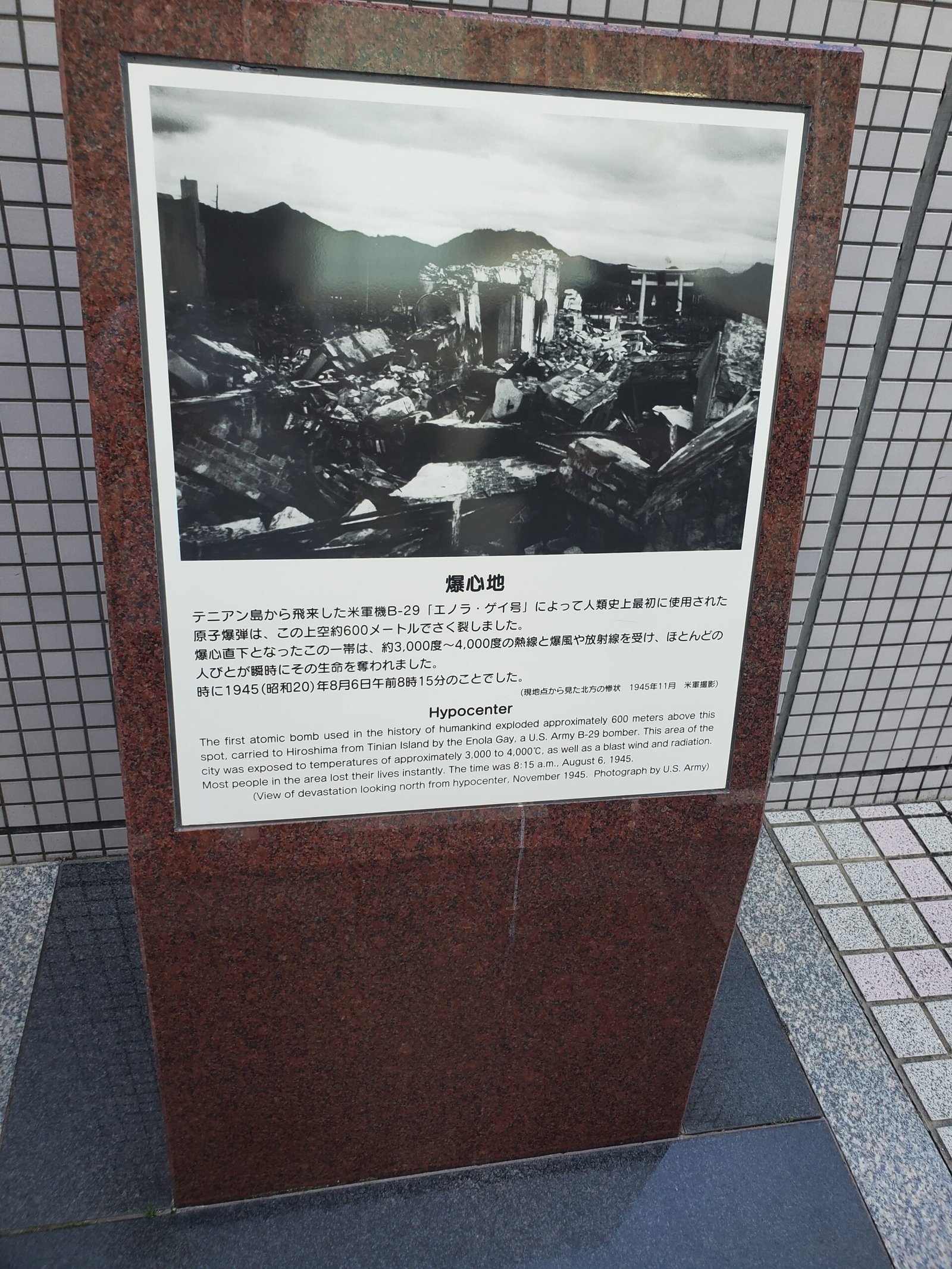
Before heading to the station, we also visited the Atomic Bomb Hypocenter Monument. It’s a small stone memorial tucked into a quiet side street, marking the exact spot over which the bomb detonated. The small stone slab bears an inscription, with a plaque nearby. It was kind of crazy to imagine that this was the spot where so much destruction had happened, because the city has been rebuilt around it.
We walked east along a shopping street while trying to figure out the best route back. We were thinking of taking one of the streetcars, and a kind woman helped us and confirmed that that was indeed the best option. The ride took less than 15 minutes, and although we had to stand, it made sense given all the tourists using the same route. At Hiroshima Station, they rolled out electronic scanners for us to pay with our Suica cards, and then we got our bullet train tickets and began our journey back.
The ride was really pleasant, especially as the sun began to set, giving us some beautiful views out the window on our way toward Osaka. Back at the hotel around 7:30, we checked in and got into our room at Hotel Chuo Oasis Osaka. We’d been a little worried it might be a smoking room since some people were smoking outside, but the hotel had very clear signs prohibiting smoking inside, so we were relieved. The beds were comfortable, Carlos had a small desk where he could set up his laptop, and there was also a little table we could both sit at, which ended up being useful on some of the other nights.
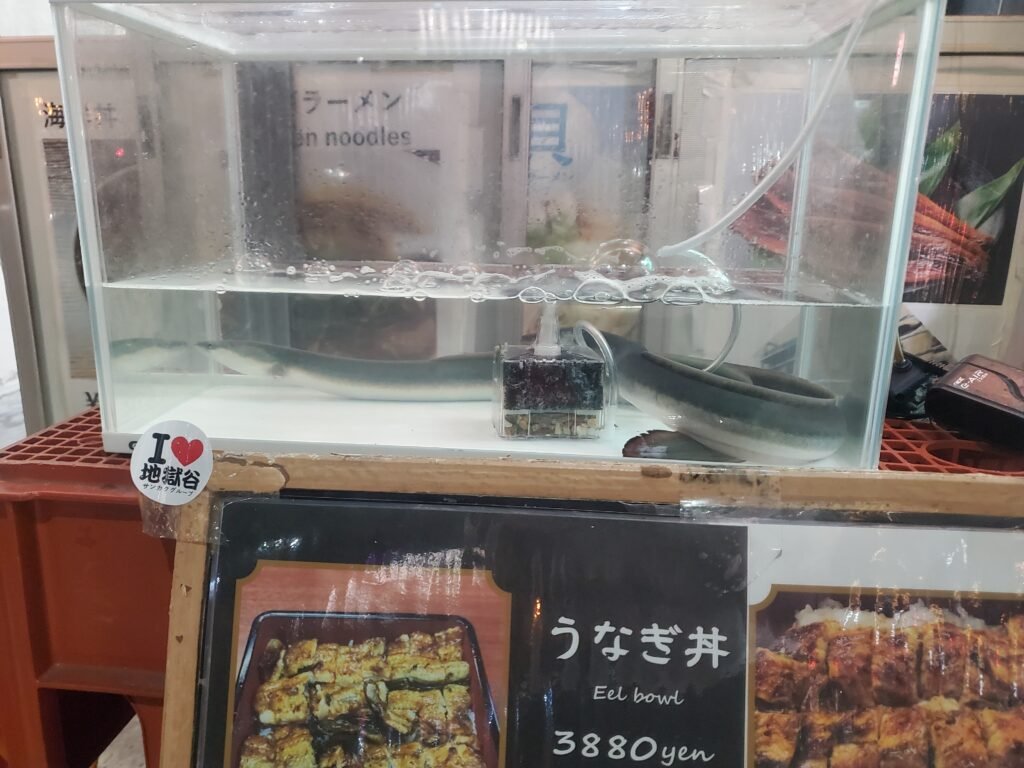
After relaxing in the room for an hour or so, I decided I wanted a proper dinner. Carlos was too tired to leave, so he asked me to bring him something back from a nearby FamilyMart. I found one just down the street, picked up his dinner, and delivered it to him before heading back out for myself. I looked up a couple of places online and walked around scoping out some storefronts. At one spot, I noticed live eels swimming in a fish tank, destined to become unagi, which was fascinating to see up close. We had actually already tried eel in Tokyo – would definitely recommend!
I was tempted to try a yakisoba place, but I didn’t quite muster the courage to step inside and order. Instead, I followed my curiosity and ended up at a place called Traveler’s Bar Osaka Tacos. The idea of Mexican food in Japan was too intriguing to pass up. The place turned out to be really nice. The bar had a cool display of currency from all over the world, and the bartender spoke excellent English, which made it easy to relax. I ended up chatting a little with a German guy and a couple visiting from the Bay Area, which was a pleasant surprise as that is fairly close to my hometown.
For drinks, I only ordered one – a Midori sour, which was light, refreshing, and reasonably priced. For food, I went with a quesadilla, and it was actually delicious. It came with a house-made salsa on the side, and I found myself cutting pieces of tortilla and dipping them into the sauce before eating. It wasn’t spicy at all, and definitely not authentic, but it was packed with flavor and really satisfying.
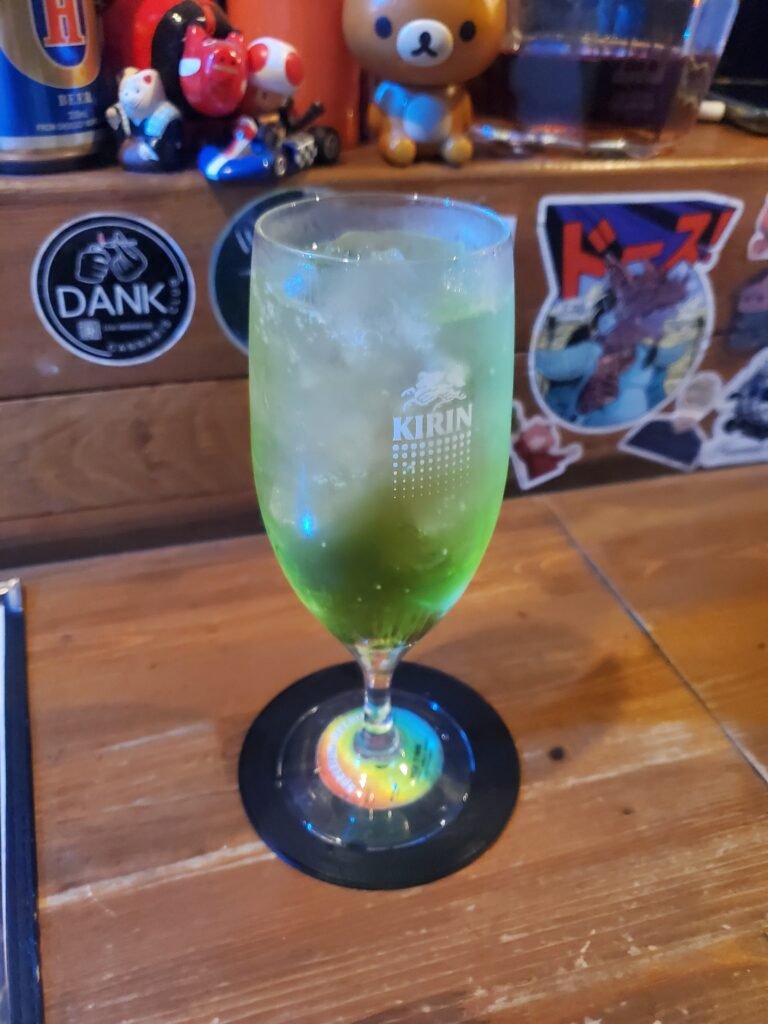
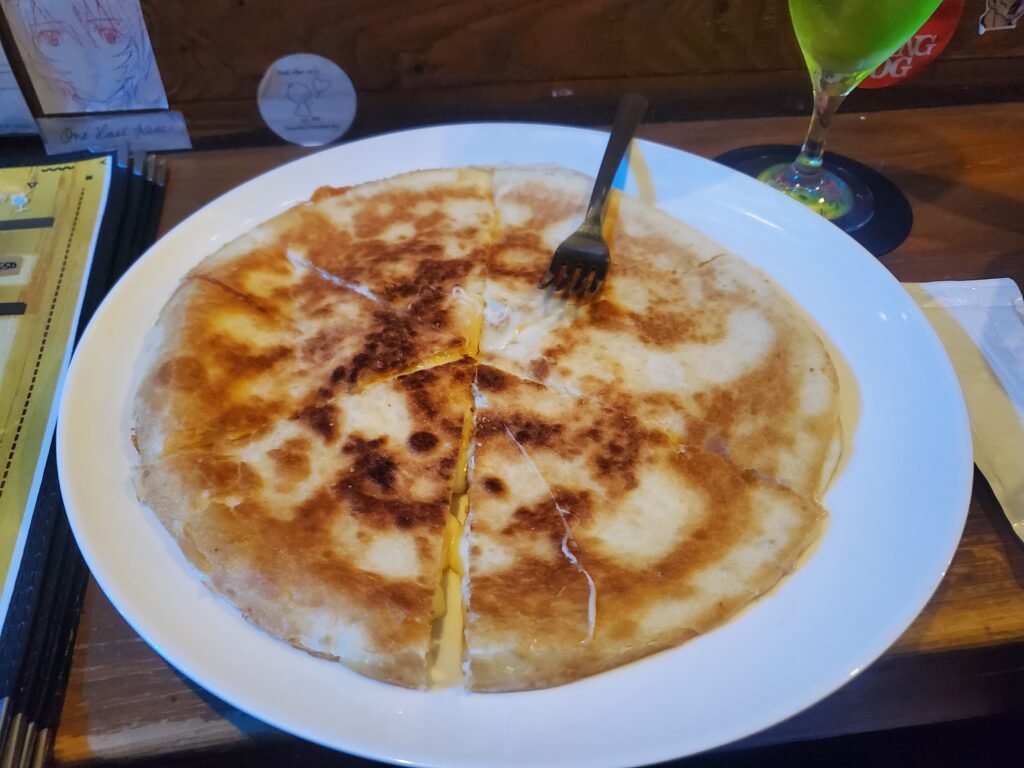
There was also an area towards the back to play some video games, and I saw a couple people try it out! I did feel a little bad only ordering one drink, but I didn’t want to spend too much money or linger too long. All in all, I was probably there for about 45 minutes.
Back at the hotel, I headed straight to bed. It had been quite an emotional day after everything I had seen in Hiroshima, not to mention all the travel Carlos and I had done – but I ended my night with my stomach full and my heart content. On the next day, we would have the unique chance to visit the World Expo in Osaka.
[…] Read about our day trip to Hiroshima! […]
Hi, I’m so excited about your diamond-travels adventures very exciting. Your writing is remarkable and the information is so interesting. If we can’t go ourselves, you definitely take us on a tour of abundance.
Thank you! I have a fun time writing these!
[…] in Nara, 7-Eleven was there to save the day with hot fried chicken and steamed buns. And on our day trip to Hiroshima, we hit a 7-Eleven for a late lunch before taking the bullet train – only to get some […]