

April 25, 2025
Carlos and I did not have many plans for our first full day in Osaka, but we were excited for what was in store. We would be heading to the World Expo, a massive international exhibition hosted every five years by a different major city. It brings together countries from around the world to showcase their culture, new inventions, and visions for the future. It’s a mixture of cultural exchange, world’s fair, crazy architecture, and tech showcases.
The last one had been in Dubai in 2020, with the next being in Riyadh, Saudi Arabia in 2030 (which I’m hoping to visit!). We were lucky enough that this year’s edition was right here in Osaka! As someone who loves traveling and learning about different countries, it felt like the perfect place to spend a day.
We left the hotel around 9 a.m., stopping at a FamilyMart near the hotel to grab some food for breakfast. These are always great spots to grab some hot food and snacks – you can read more about Japanese convenience stores here.
We had bought tickets to the East Gate well in advance for a 10:00 entry time. This was the gate accessible by train, as our stop would be Yumeshima Station, a brand-new station on a fully artificial island by the same name. This was originally reclaimed from Osaka Bay in the late 20th century, but has since been developed specifically with the Expo in mind.
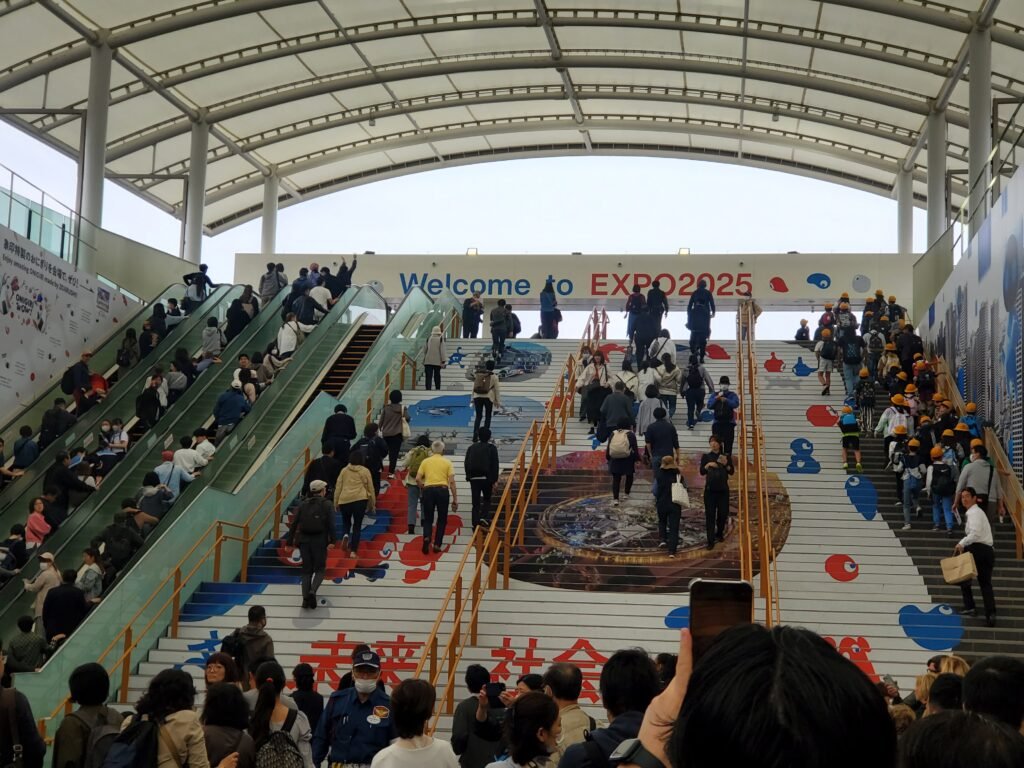
As soon as we arrived, we were surprised by the sheer number of people. But it made sense – the Expo had only opened a week and a half earlier, so the excitement was still fresh. Upon climbing the stairs, we began to notice all the fun Expo-themed designs and characters. The Expo’s mascot, MYAKU-MYAKU, was everywhere – a curious creature made of “cells” (in red) and “pure water” (in blue), symbolizing life, flow, and transformation.
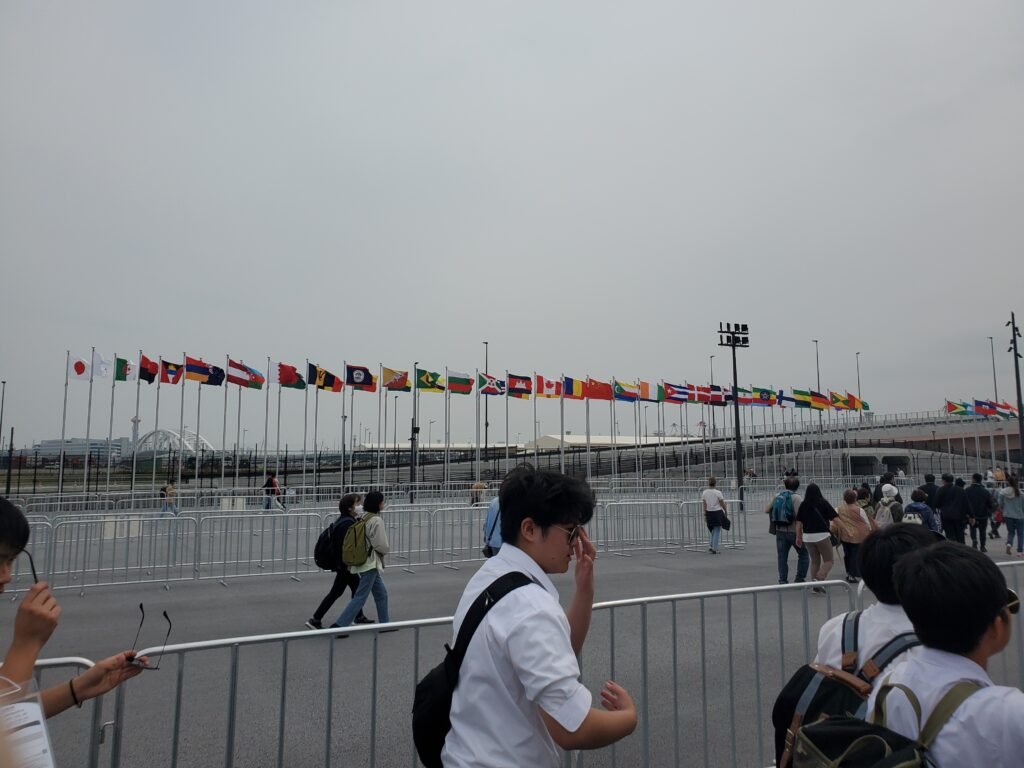
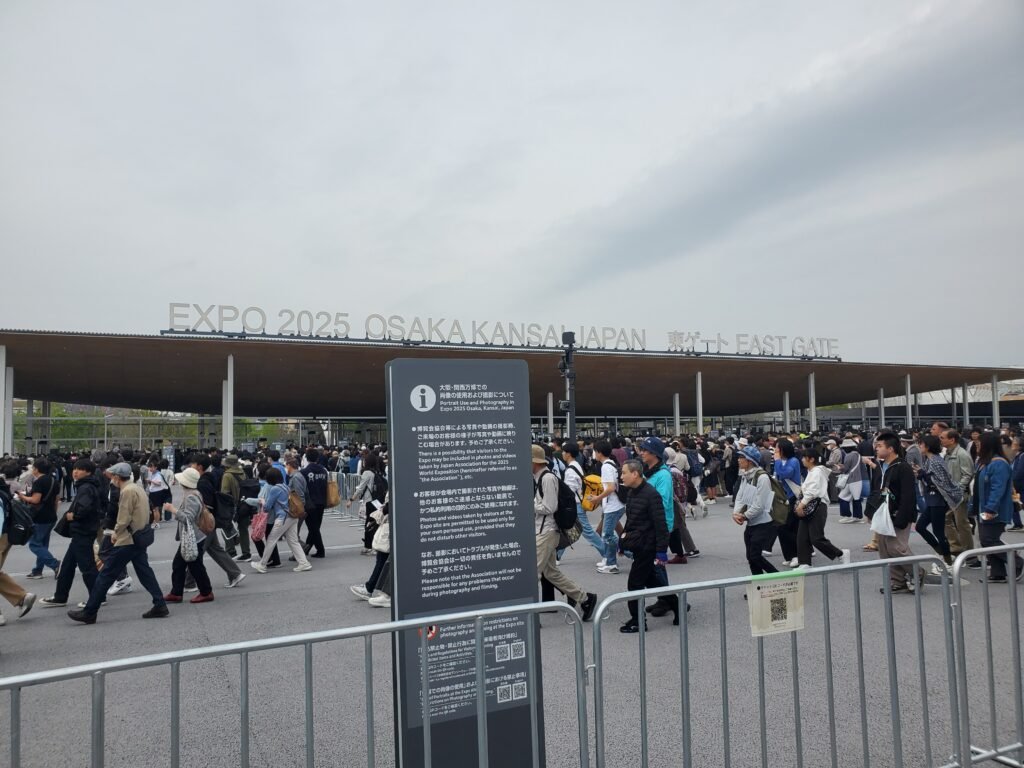
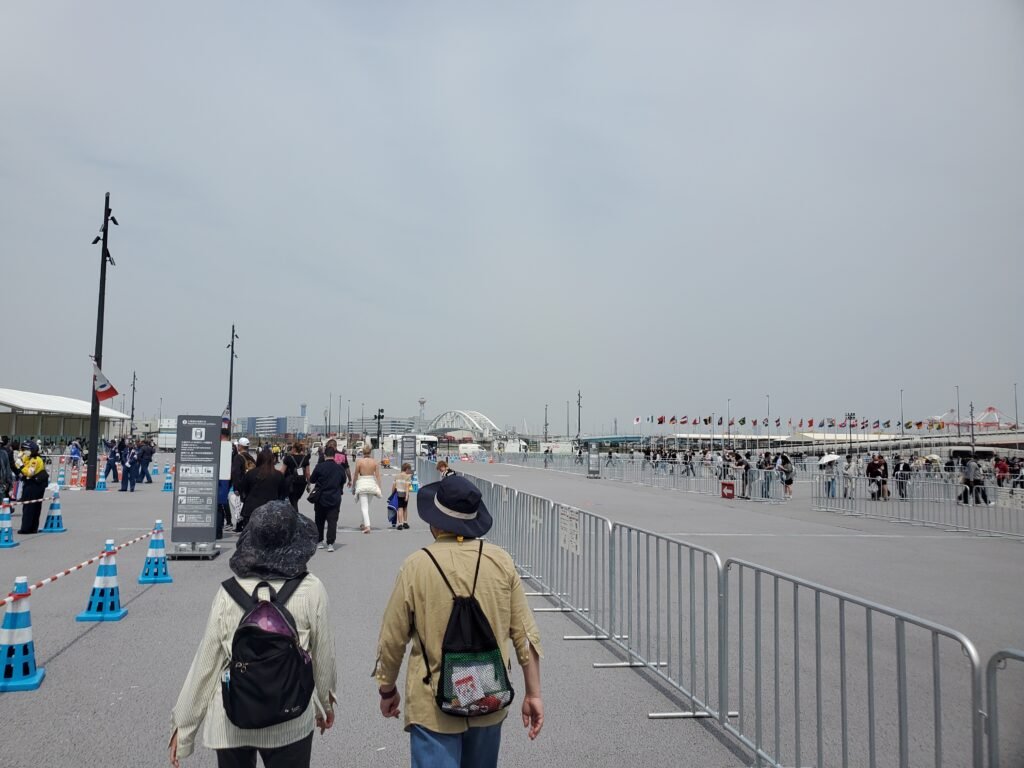
Flags from over 150 countries all around the world waved off to the side as we approached the long queues at the East Gate. Since it was already a bit past 10, our wait wasn’t as bad as those queued for the 11 a.m. slot. We entered through security and ticket scanning – the lines were decently long here and our QR codes gave us a little trouble, but we got through after about 25 minutes.
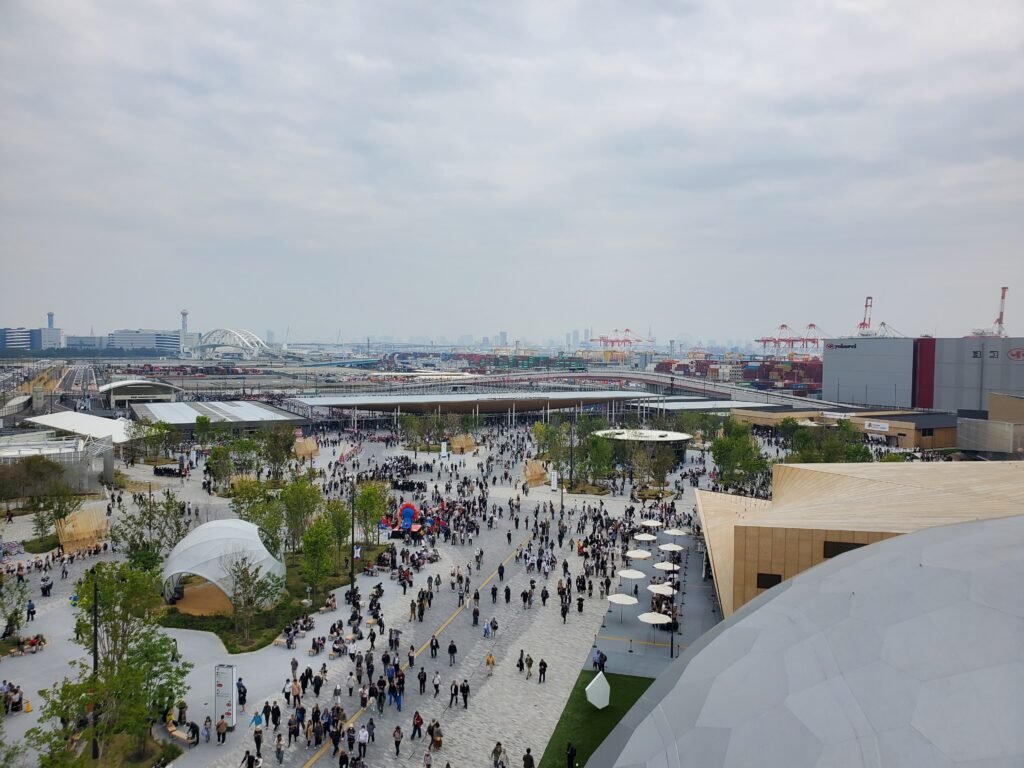
Once through, we arrived at the East Gate Plaza, greeted by interesting architecture all over. We checked out a map to get an idea of where to go, but started off by going to a bench made with a bamboo design that felt like a small art piece in itself. Many of the pavilions required separate tickets to enter their exhibits, but rather than spending hours waiting for a handful of exhibits, we decided to explore the grounds, architecture, and international pavilions instead. It turned out to be a great decision.
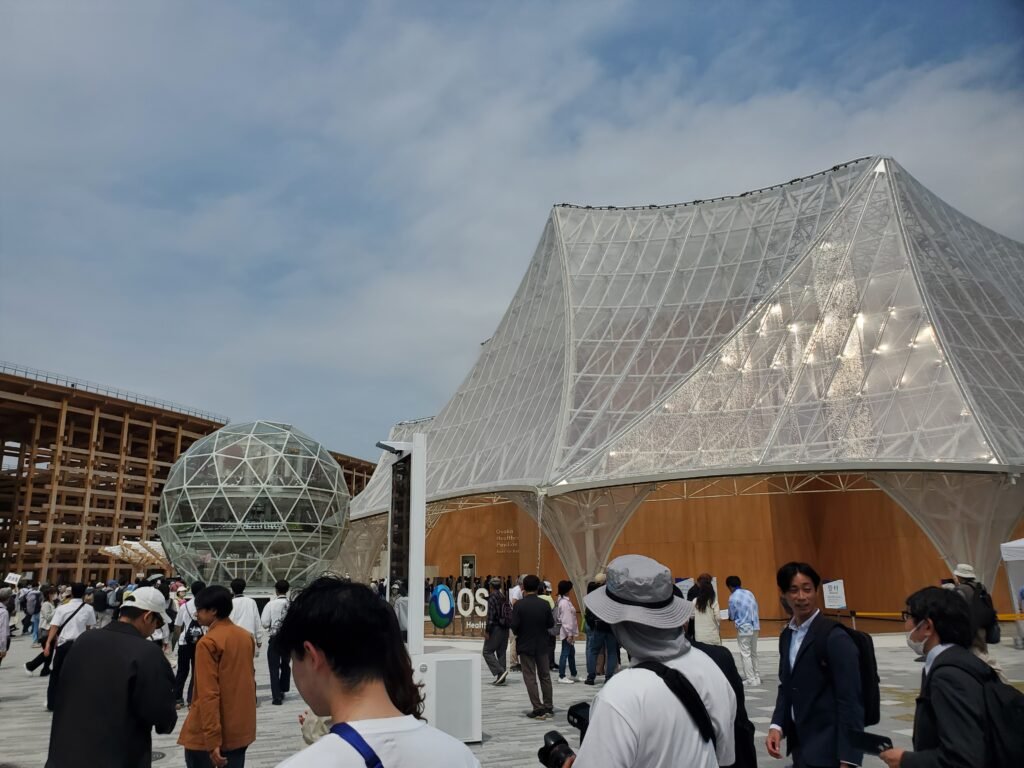
Our first stop was the Osaka Healthcare Pavilion, focused on future medical and wellness technologies. There was also an interesting spherical aquarium, which seemed to be some sort of thought experiment with recyclable resources – there were different sections for saltwater and freshwater fish as well as plants, allowing for a cyclical system – I don’t remember too much more about it but it was very interesting nonetheless.
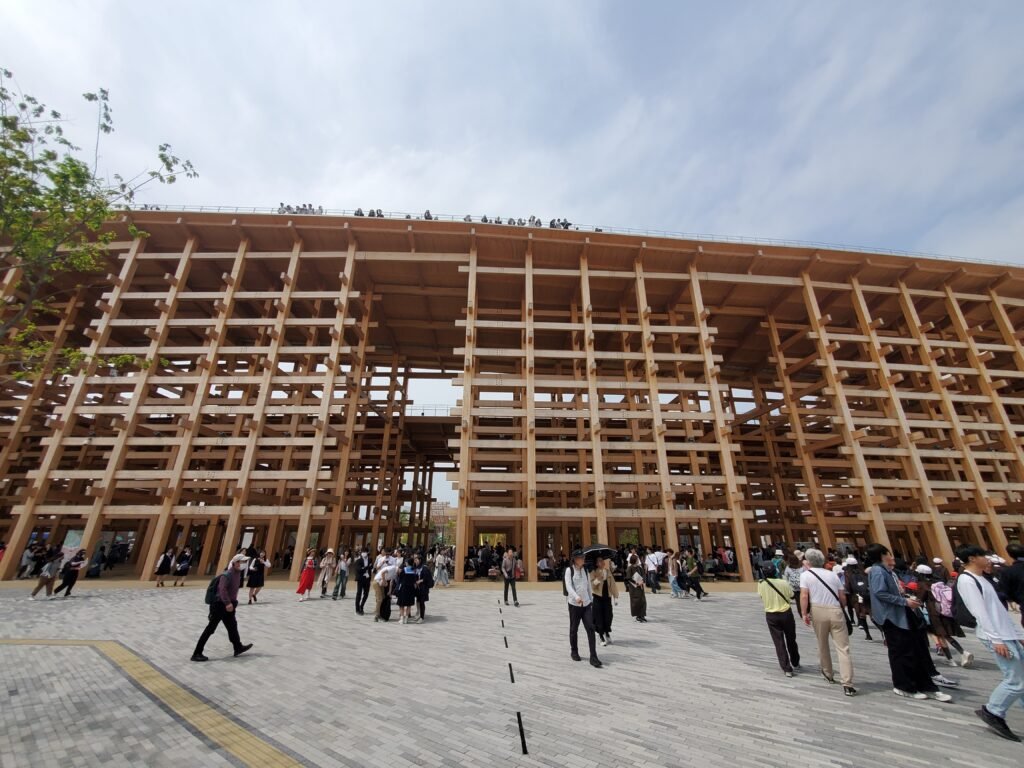
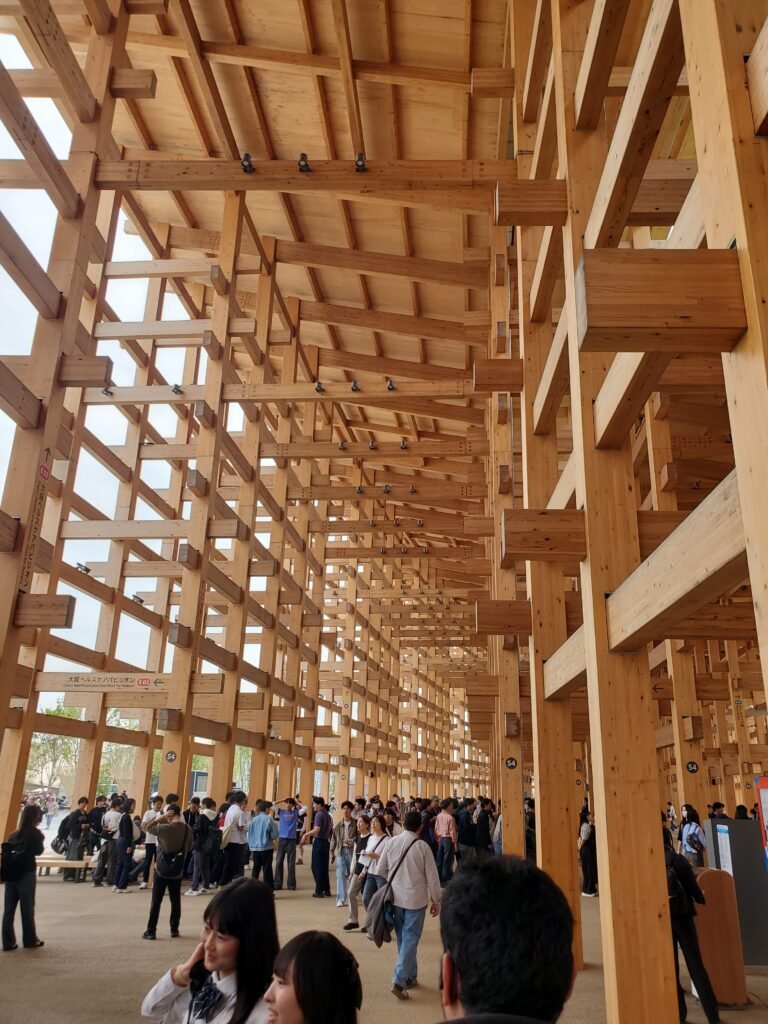
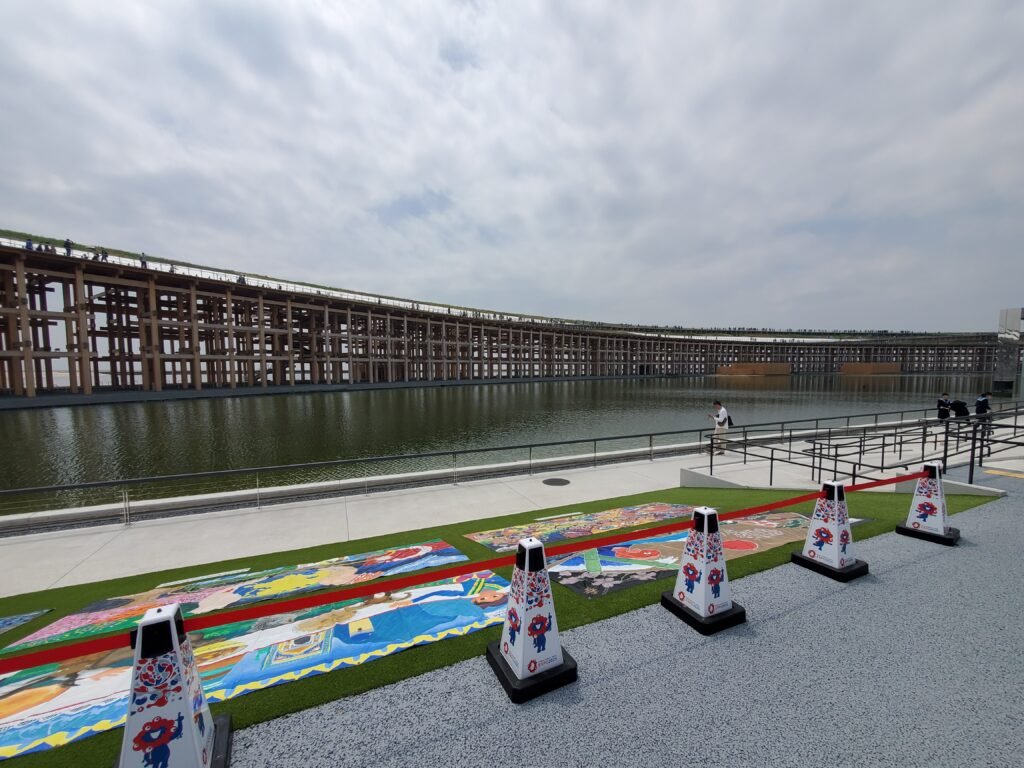
We then wandered under the massive Grand Ring, a sweeping wooden construction encircling much of the Expo. It was built with traditional joinery and spans over 61,000 m², making it the largest wooden architectural structure in the world. Unfortunately, most will be dismantled and destroyed, but there have been proposals to preserve parts of it. I had seen pictures of it online, but I didn’t expect it to be so massive in person!
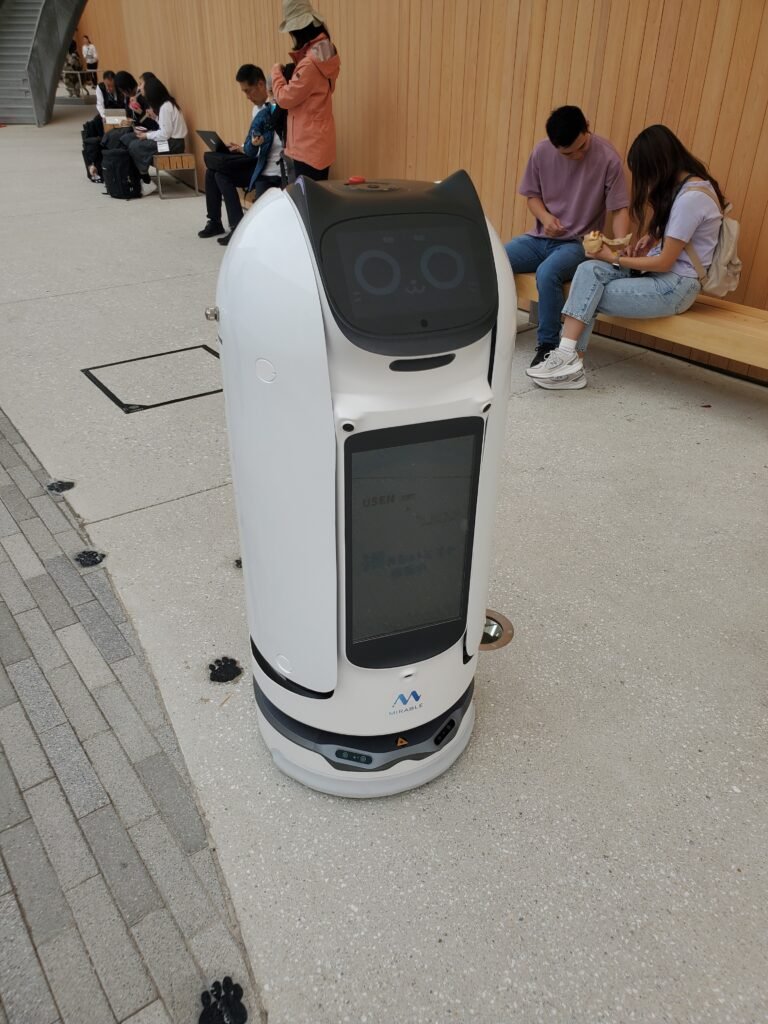
After that, we turned back and made our way to the Kansai Pavilion, located right next to the Healthcare Pavilion and focused specifically on the region’s culture, innovations, and goals for the future – sort of like a spotlight on local strengths within the global Expo framework. While exploring, we spotted a little robot rolling around, with a digital cat face on its screen that was both futuristic and adorable. We noticed some food stalls and dining areas, but we weren’t hungry yet and figured meals here would be on the expensive side.
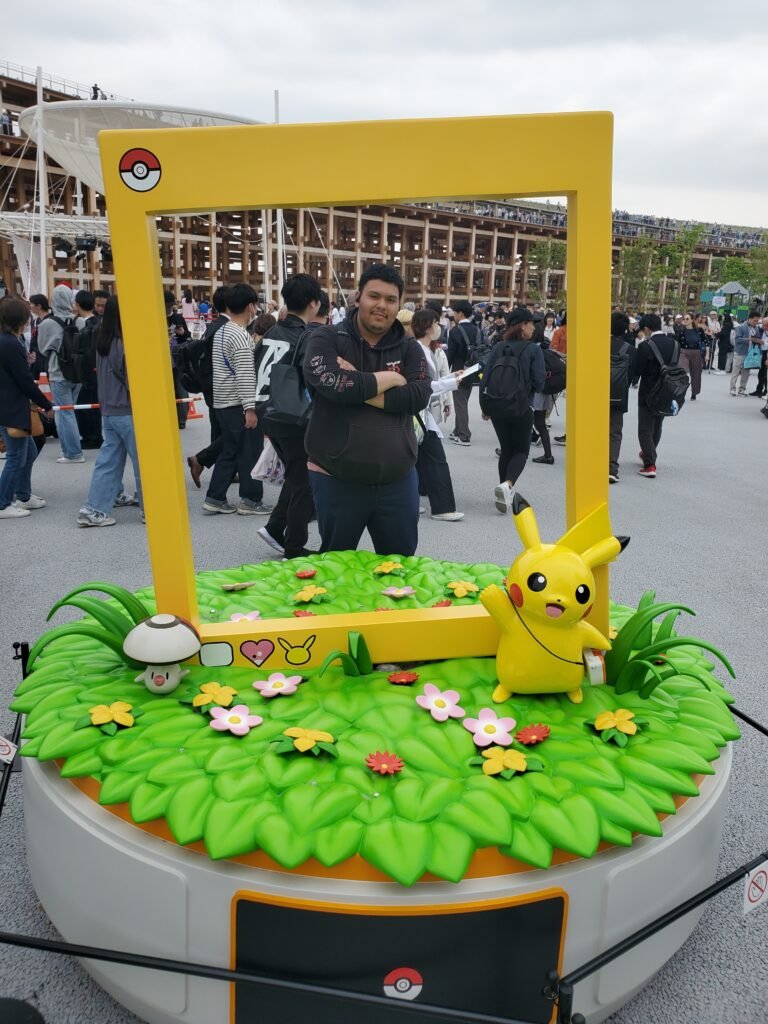
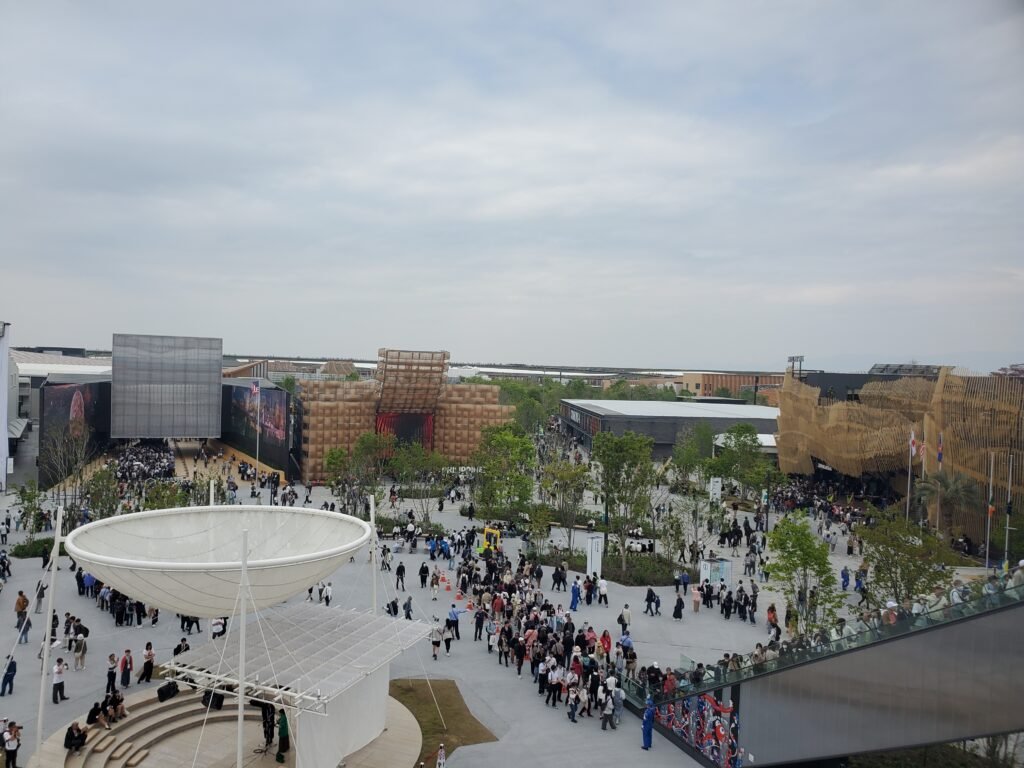
Instead, we walked back under the Grand Ring into the Light Plaza, one of the Expo’s six major themed plazas. It also doubled as an event space – there was a stage here, though nothing was happening when we passed through. From here, we admired more of the striking pavilion architecture, including those for France, the USA, the Philippines, and Malaysia.
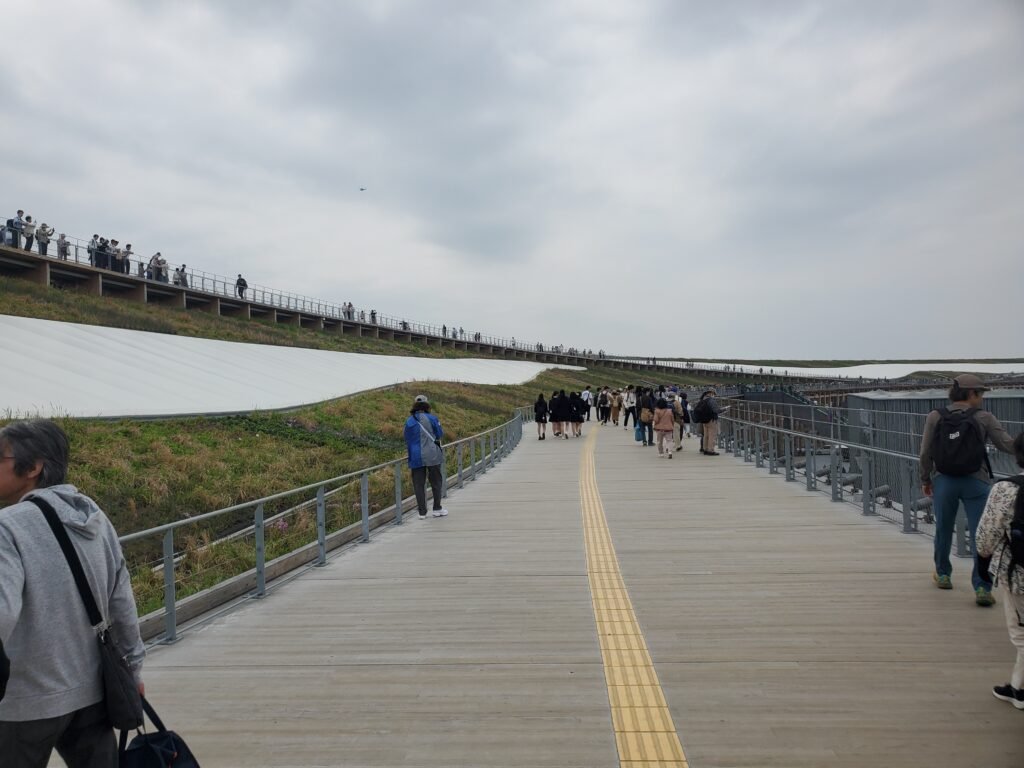
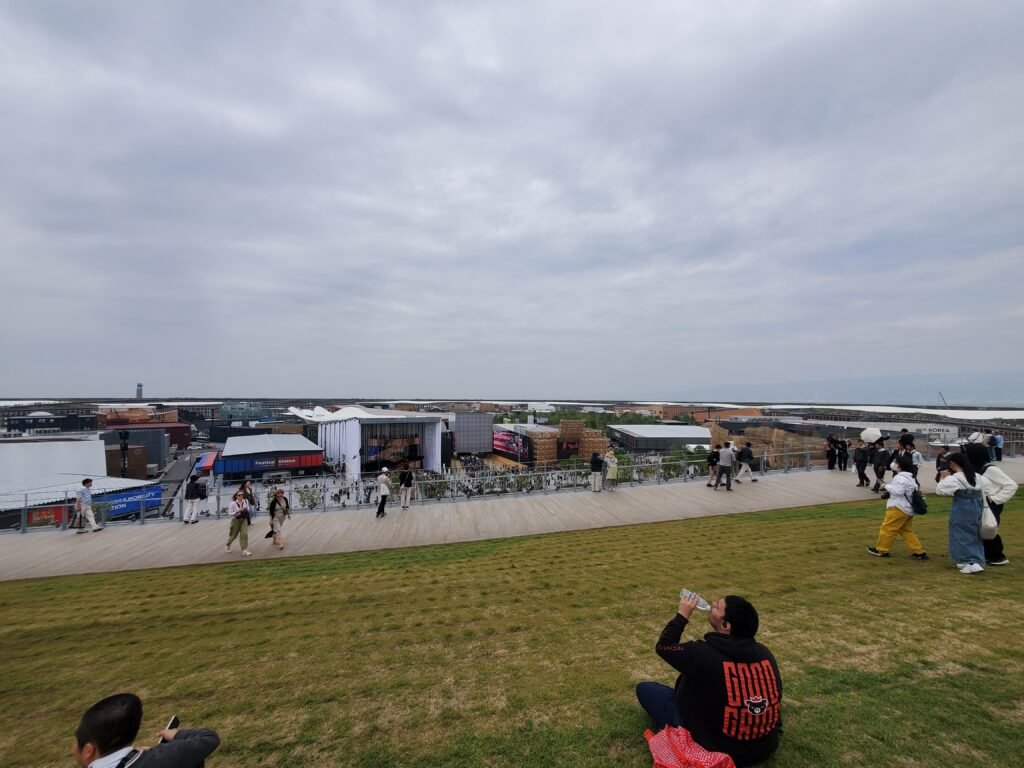
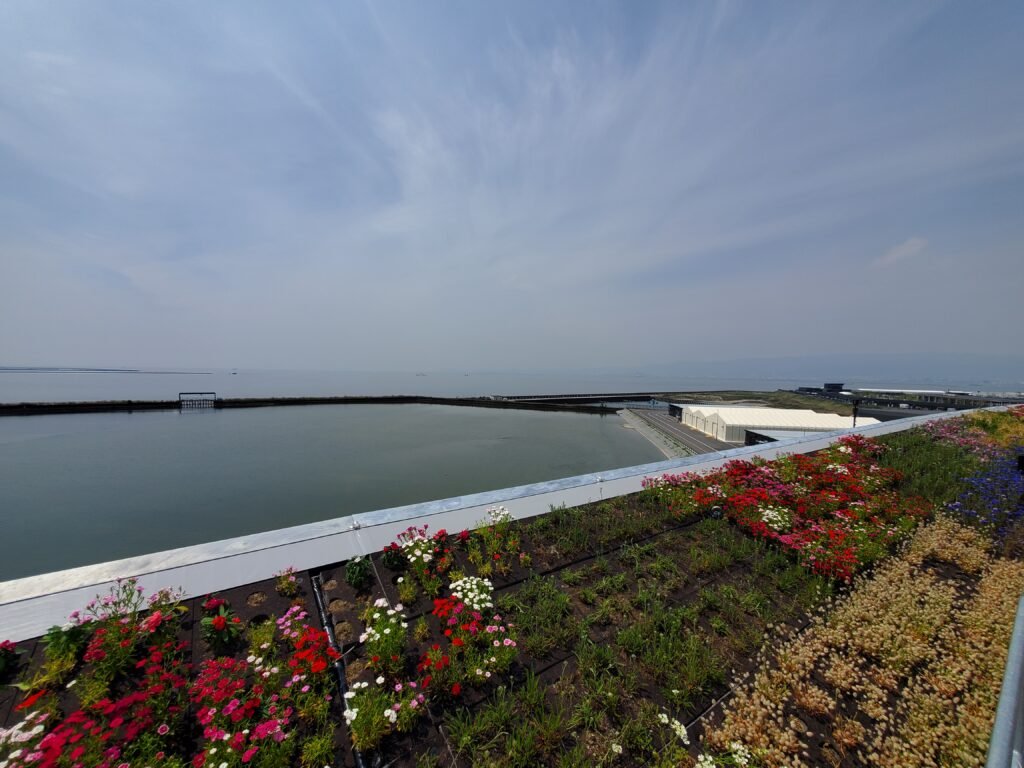
Next, we noticed escalators leading up to the Grand Ring itself, so up we went. The structure had two levels of walkways: a flat circular path around the whole Expo, and sloped paths that led up to higher vantage points. Much of the Ring was designed as a kind of “living roof” -covered with greenery, vegetable patches, and experimental farming plots to showcase sustainable urban agriculture. We ended up sitting for a while on a grassy section, soaking in the view.
From up there, we could look out over the many national pavilions and theme plazas inside and outside the Grand Ring, while Osaka’s skyline shimmered faintly in the distance. Something we noticed along the way was the sheer number of school kids visiting. Each group wore different colored hats, which made it easier for teachers to keep track of everyone.
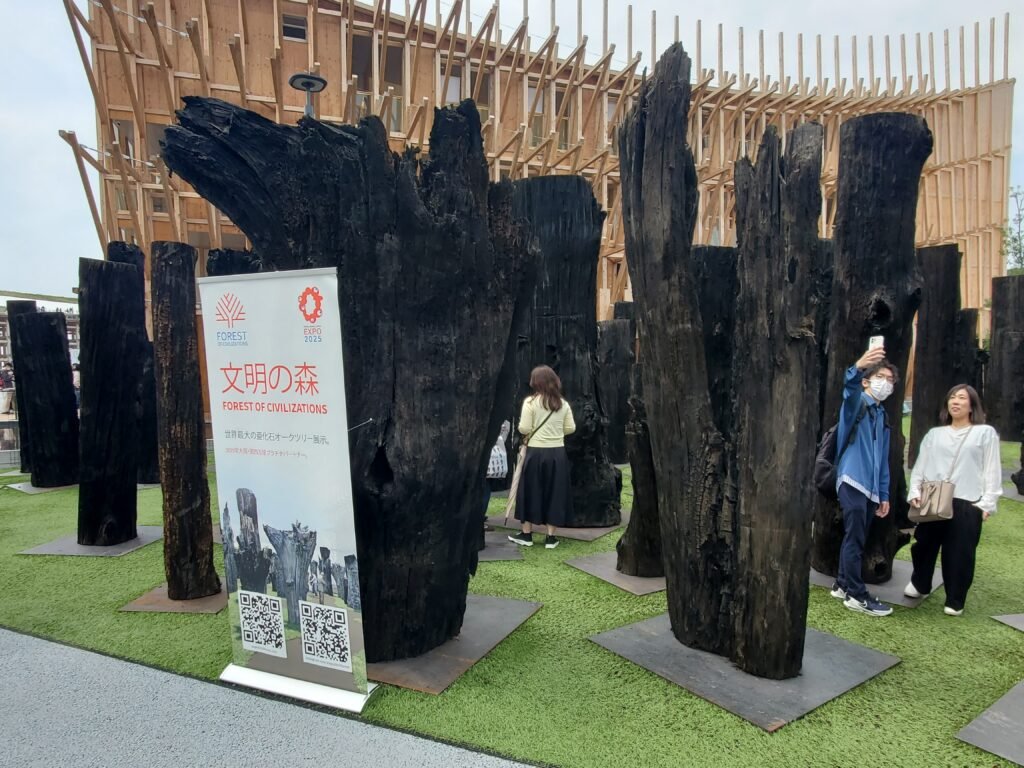
Eventually we took a different escalator back down into Harmony Plaza, an area focused on the relationship between people and nature. Nearby we explored the Forest of Civilizations, where enormous displays of 6,500-year-old subfossil oak from the Czech Republic showcased one of the Expo’s more unusual exhibits.
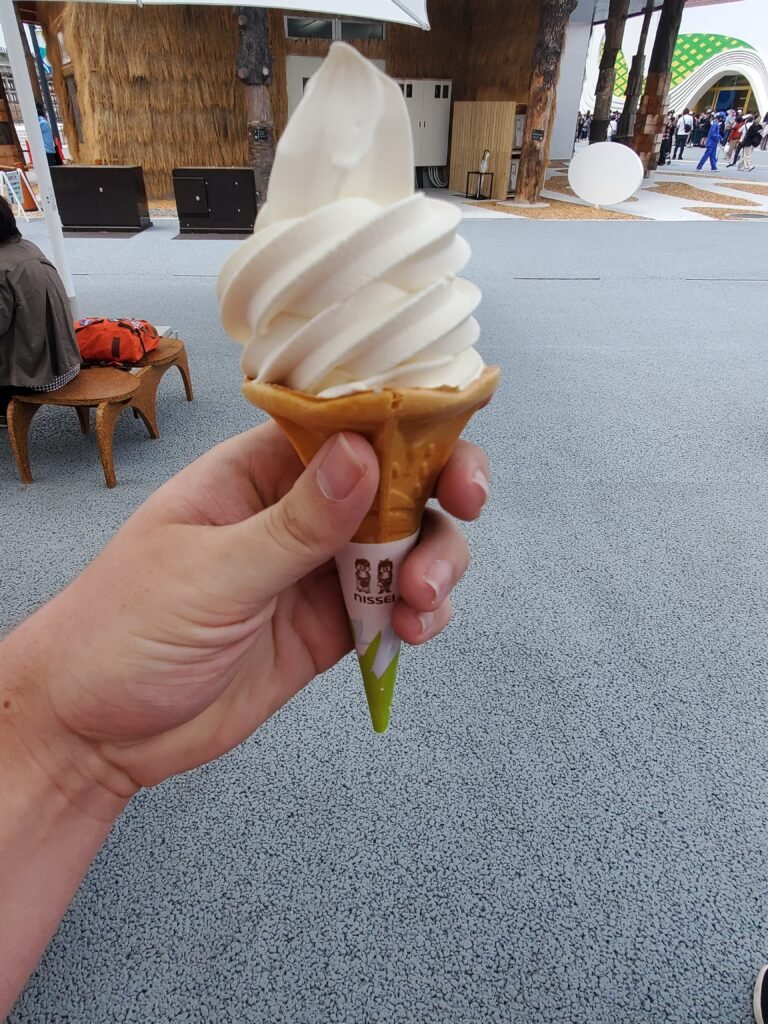
By this point we wanted to have a snack, so we walked to the nearby Water Plaza East Marketplace. We got some delicious ice cream cones here. It wasn’t the famous Hokkaido milk ice cream, an especially rich and creamy type, but we thought it was at the time! I ended up later having some in Singapore and realized the difference, but it was still some of the best ice cream I’ve ever had.
While enjoying our soft serves, we headed toward the Water Plaza, a large artificial lagoon on the southern side within the Grand Ring. It served as both a cooling zone and an event space, designed to symbolize Osaka’s connection to water. As we got closer, a fountain show started! There was music playing, broadcast from speakers positioned in the water, and a series of fountains that reacted in sync with the rhythm – jets of water rising and falling dramatically in time with the music. It was super cool to watch, and we sat here on some concrete stair-style benches for a few minutes enjoying the show.
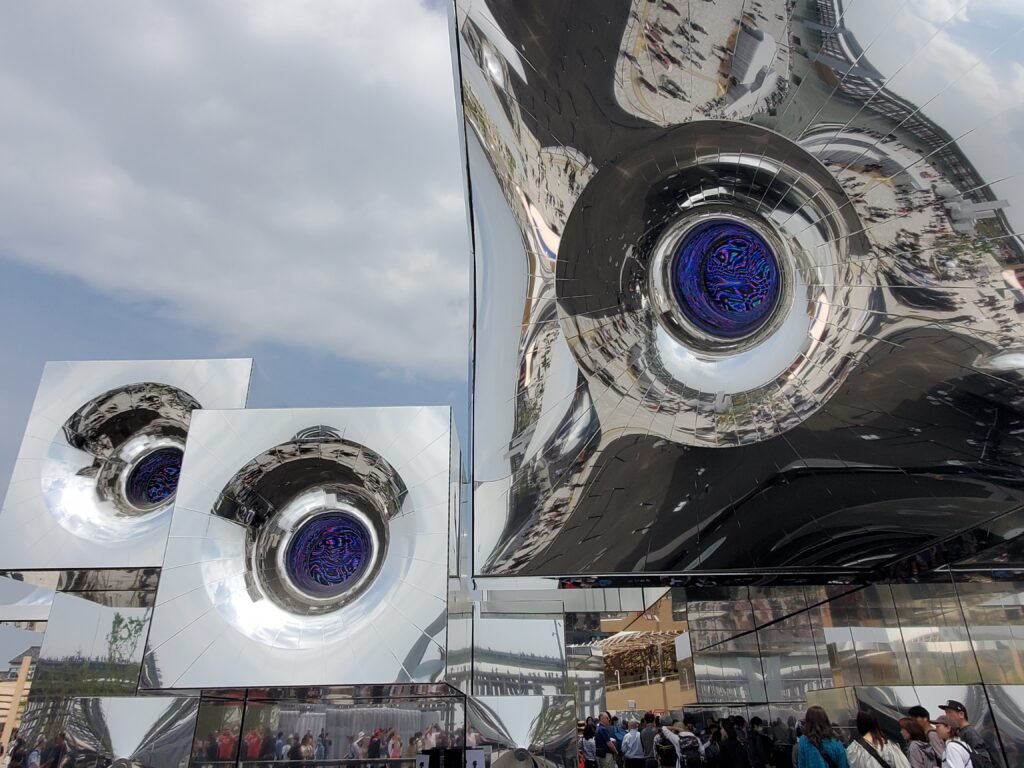
From here we kept walking, seeing more country pavilions like Czechia, Romania, and Poland, and a trippy digital art installation called null² that was full of odd shapes, colors, and reflections. We also saw the Commons-D Pavilion, which I wanted to check out since it seemed to be home to several smaller countries.
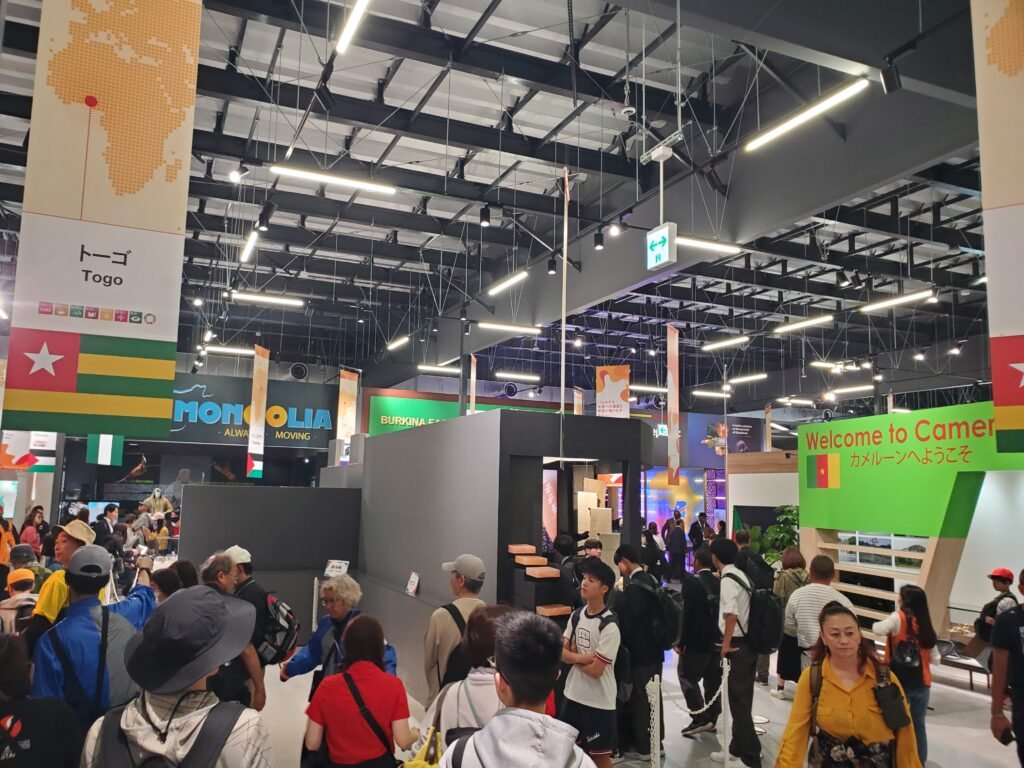
At Expo 2025, the Commons Pavilions were shared spaces for nations that didn’t have the resources to build their own individual structures. Each Commons Pavilion (labeled A through D) grouped together several countries, with each having its own themed booth inside. These displays often showcased local crafts, tourism, and culture, and many featured interactive exhibits or videos.
We had a bit of a line to get in, but no reservations were needed. We didn’t spend too long inside, but it was one of my favorite surprises of the Expo. Some of the countries represented in Commons-D included Togo, Mongolia, Burkina Faso, and Cameroon, each with colorful displays highlighting their national heritage and aspirations for the future.
After this, Carlos chilled for a while in the Progress Plaza – an open area with a variety of food stalls and trucks, inspired by different Expo themes, fun collaborations, or anime tie-ins. For example, Carlos noticed one that had imagery from Spy×Family, an anime he really likes.
While he sat on a bench, I traveled up the escalator to the west side of the Grand Ring. I had some awesome views looking out over the Water Plaza, toward Osaka’s skyline, the shimmering bay, and the distant mountains to the southwest.
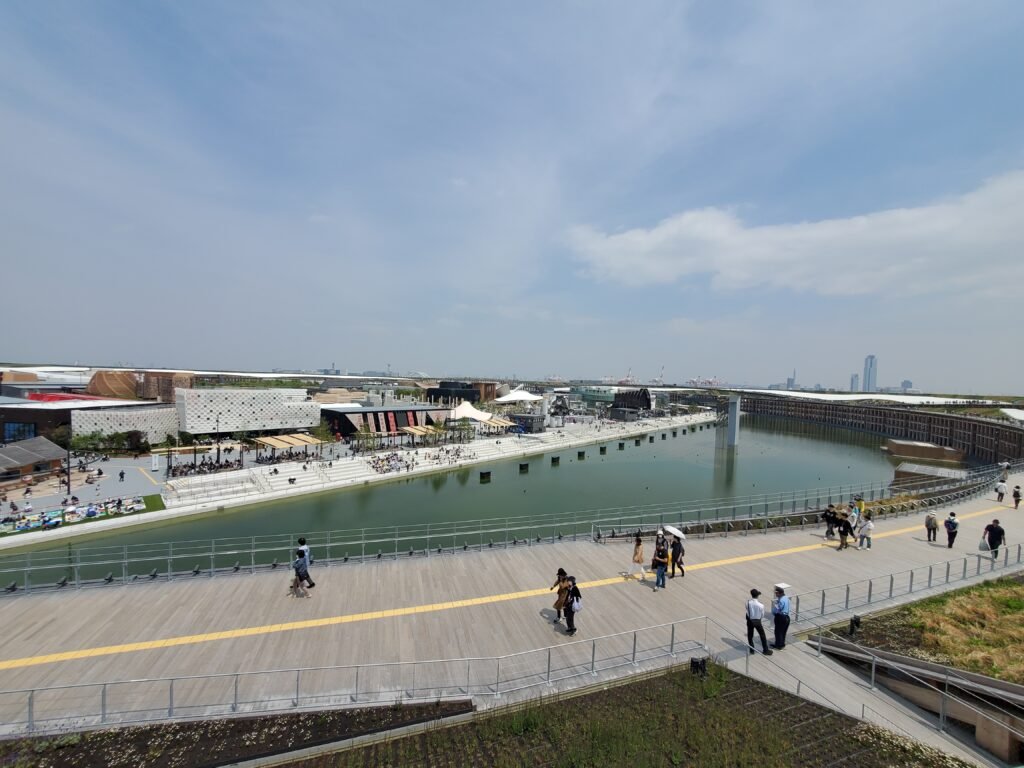
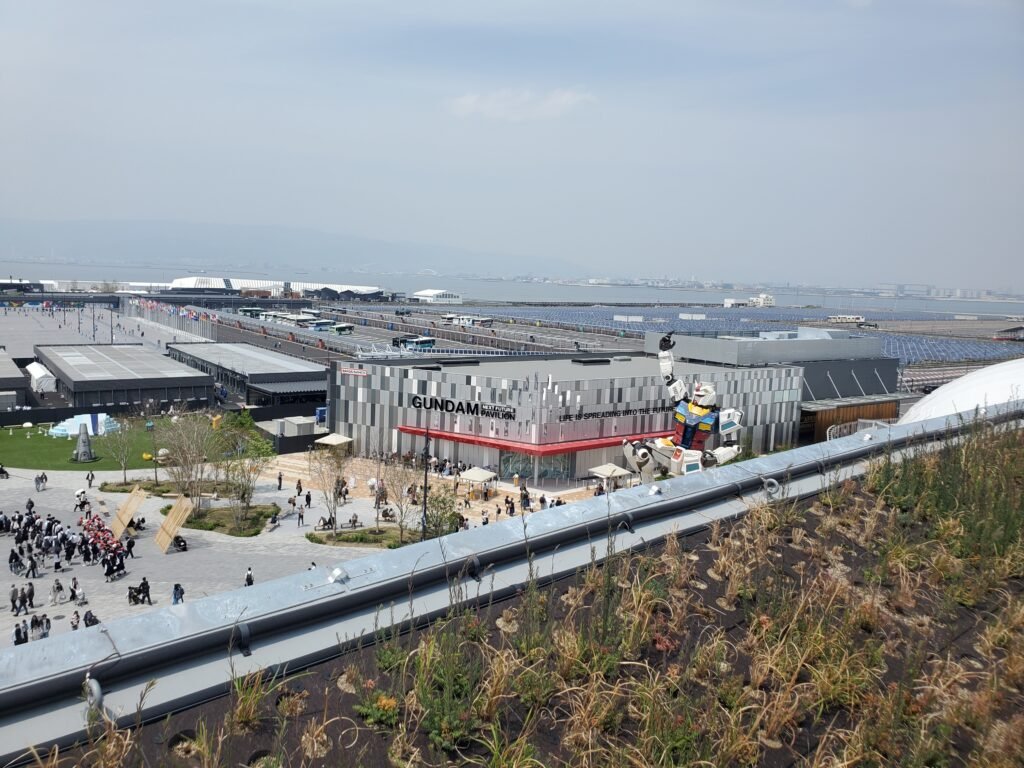
From up here, I could also see the West Entrance, with the highlight being a giant Gundam statue at the Gundam Next Future Pavilion. It was one of the Expo’s most popular attractions, merging pop culture with futuristic innovation and technology.
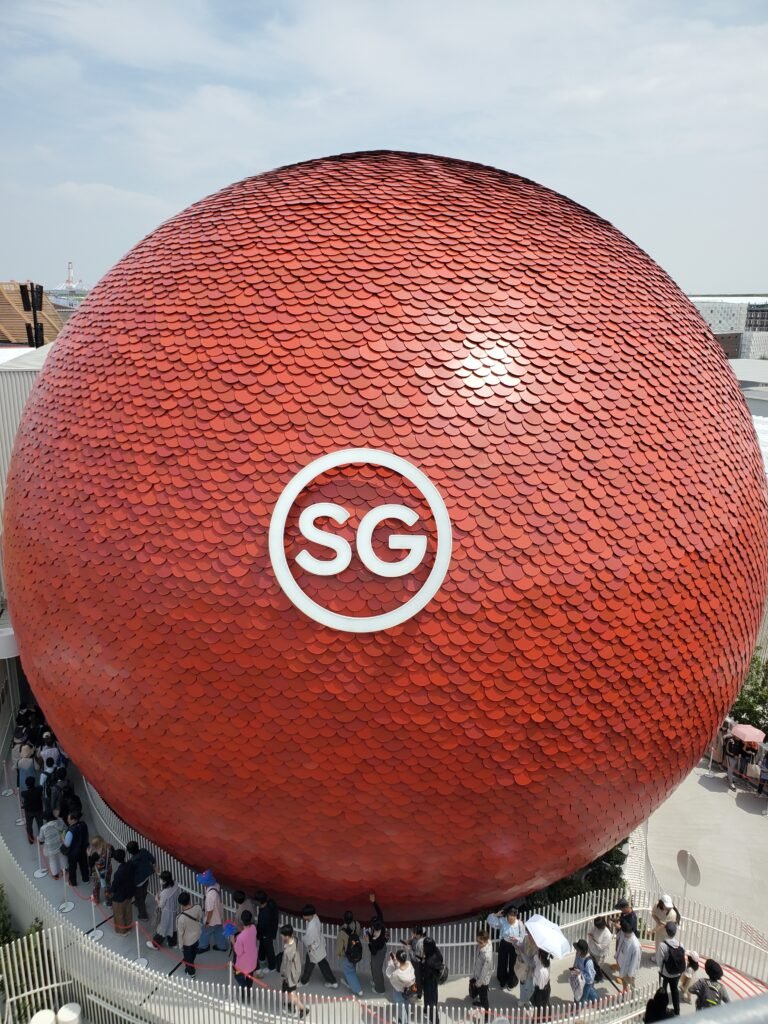
As I walked along the upper level of the Grand Ring back toward Carlos, I passed several more pavilions, including Belgium, Italy, and Singapore. The Singapore Pavilion really stood out – it featured a massive red sphere as part of its design.
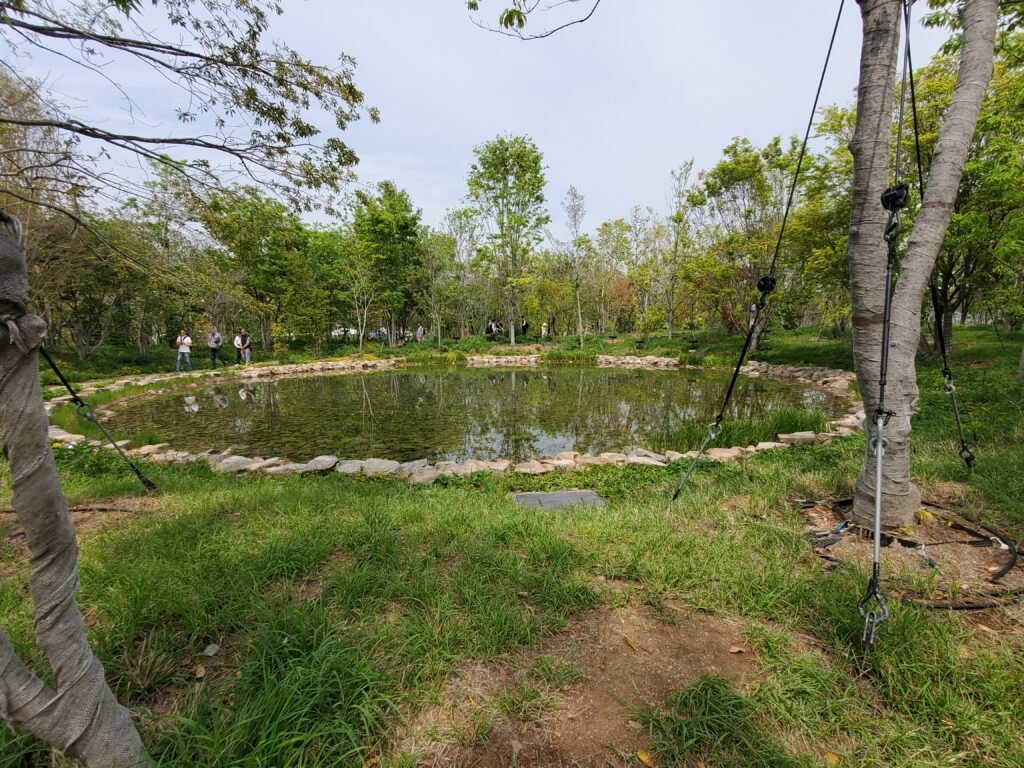
By the time I collected Carlos, it was just before 1 p.m., and we started slowly making our way out. We passed through a large plaza area called Inochi Park, one of the central gathering spaces of Expo 2025 full of art installations and places to rest. From there we continued north to the Forest of Tranquility. It was basically a small nature area with walking paths surrounded by trees, native plants, and birdsong – remarkably peaceful considering it’s on a man-made island! Carlos and I were both really impressed by it – it felt like a hidden oasis within the crowds.
After spending some time there, we began heading toward the exit but lingered briefly in an area called The Future of Life, an open space with gentle concrete slopes that almost felt like a skate park of the future! Finally, we exited through the East Gate, ready to head back toward Yumeshima Station. Looking back, World Expo 2025 was one of the most unique events I’ve ever attended. Even without reservations for the major exhibits, simply wandering among dozens of countries in a single afternoon made for an unforgettable experience. If you ever have the chance to attend a World Expo, I’d absolutely recommend it.
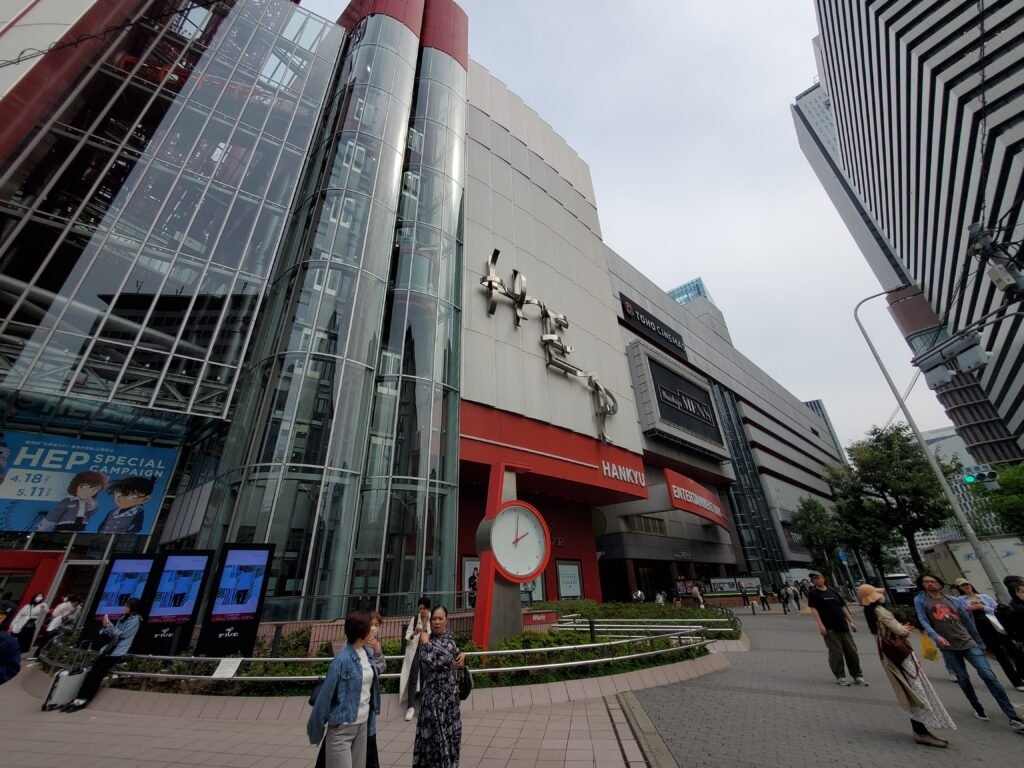
We got off at Umeda Station, one of the largest and busiest train hubs in all of Japan, and made our way toward HEP Five, a massive shopping and entertainment complex in the Umeda district. Short for “Hankyu Entertainment Park”, HEP Five is a shopping mall with tons of clothing stores, arcades, cafés, and pop culture shops, attracting a lot of teenagers and young adults.
Before exploring, though, we were both pretty hungry, so we decided to grab lunch first. I had wanted to try KFC in Japan, since I’d heard it was noticeably different (and much better) than the version back home. We went to the KFC Umeda store, located just a short walk from the station. The layout was a little different from what we were used to: we ordered and paid on the first floor, then took our trays up a narrow staircase to the second floor dining area.
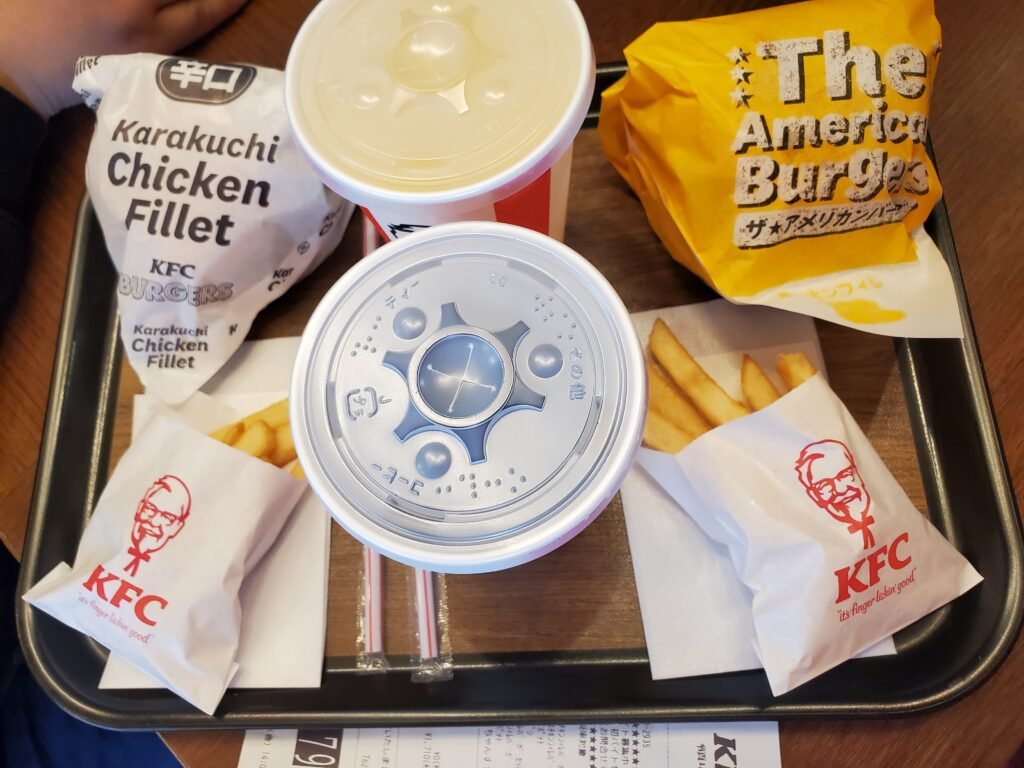
Carlos ordered the American Burger, a limited-edition sandwich featuring crispy chicken, cheese, lettuce, and a tangy special sauce.
I got the Karakuchi Chicken Fillet, which was delicious – “karakuchi” roughly means “spicy” or “hot,” but it wasn’t overwhelming, more of a flavorful peppery heat. The chicken was extra crispy, and the bun was soft and perfectly toasted. The fries were also great – almost like steak fries but just a bit thinner, crisp on the outside and fluffy inside.
To drink, I had Fanta Grape, something I’d tried a few times during the trip. I normally don’t care much for fizzy drinks, but I noticed Japanese sodas seemed to have less carbonation than American ones, and the grape flavor especially was very refreshing. Overall, it was simple, but really tasty!
After finishing lunch, we started exploring HEP Five. The main thing we were looking for was a Tamagotchi for Carlos’s girlfriend – technically two, so they could each have one and connect them. For anyone unfamiliar, these are basically digital pets. We went up through the building, eventually finding the BANDAI NAMCO Cross Store, a large multi-brand pop culture store selling everything from anime figures and games to Gundam models and capsule toys.
As we made our way up, we also saw the mall’s most famous feature: the giant red Ferris wheel that’s actually built into the roof of the building. It’s visible from the street and even part of Osaka’s skyline. The wheel extends out from the top floors, and you can board it directly from inside the mall – offering sweeping views of Umeda and the surrounding city from about 106 meters high. We did find the Tamagotchi section inside the store, but unfortunately, the prices were steep, so Carlos ended up not getting any. After browsing a little longer, we headed back to the hotel to relax after the long morning and early afternoon at the Expo.
By the time we made it back to the hotel, it was a little after 3 p.m. After spending much of the day walking around the Expo and Umeda, we were more than ready to relax for a few hours. Of course, we eventually got hungry and went out for dinner. We went to Gyoza no Ohsho – Taishi, a casual chain restaurant known for its affordable and tasty Japanese-Chinese dishes, particularly gyoza (dumplings).
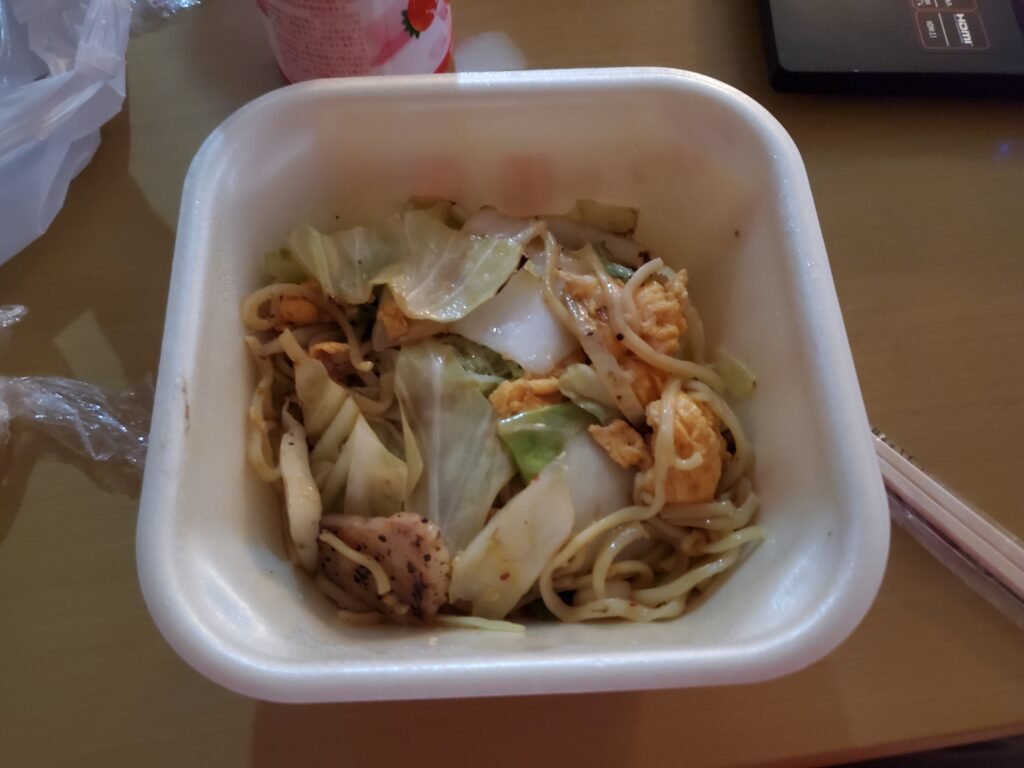
However, I didn’t order any gyoza this time – I wanted to try yakisoba, a stir-fried noodle dish made with wheat noodles, vegetables, and a savory-sweet sauce, often topped with pickled ginger and sometimes meat or seafood (the latter of which we had). It was surprisingly cheap, and Carlos and I both ended up ordering the same thing. It took a while to get our food, but there were a lot of people here (one of the reasons I wanted to visit – it had lots of locals), so we weren’t too concerned. It was absolutely delicious even for a chain – the noodles were perfectly cooked, the sauce had just the right balance of tangy and sweet, and the vegetables added a nice freshness to each bite. After dinner, we spent the rest of the evening relaxing, enjoying some quiet downtime and reflecting on the busy, fun day we had in Osaka and at the Expo.
I was especially looking forward to the next day, as I would be meeting an online friend from Brazil who happened to be studying in Japan, and we would do some exploring around Osaka! I would have plenty to see, from ancient temples to Osaka Castle. It had been a long day, but there was so much more that this city had to offer.
[…] Exploring World Expo 2025 […]